Get Full Government Meeting Transcripts, Videos, & Alerts Forever!
Get email alerts on the Public Space Plaza topic
No spam. Unsubscribe anytime.
Commissioners flag maintenance and access problems at the courthouse square; long-term redesign eyed
Summary
Participants at the March 12 joint meeting raised concerns about frequent damage to the courthouse square's lawn, accessibility for people using wheelchairs and unclear ownership, and discussed potential redesign options including pathways, pavers or historically informed restoration.
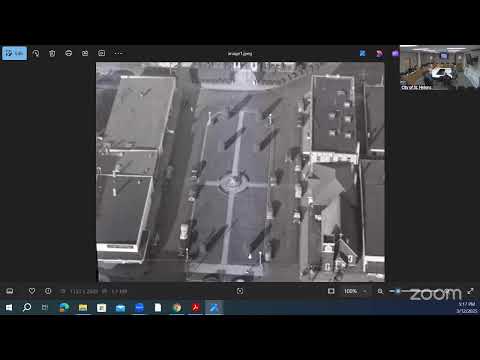
Planning commissioners and councilors raised concerns about the condition and accessibility of the courthouse square (the plaza) at their March 12 joint meeting, urging study of a sustainable redesign that would reduce mud, improve wheelchair access and address unclear ownership and maintenance responsibilities.
Why it matters: Several speakers said the square’s grass is routinely damaged — especially after large events like Halloweentown — and the current condition makes pedestrian access and mobility difficult. The plaza sits on land with mixed or unclear ownership and both city and county crews sometimes maintain it, complicating decisions about major changes.
What was discussed
- Visible damage and accessibility: Commissioners described annual damage to the grass and wheel‑chair accessibility problems. "It's not accessible to anybody that has any challenges," one participant said, calling accessibility a key concern.
- Ownership and partnership issues: Speakers noted that the square is not solely a city property and that county stakeholders must be involved; one commissioner observed the county and city relationship is "fester[ing]" and that any plaza project will need time and intergovernmental cooperation.
- Possible solutions: Ideas raised included replacing worn grass with hard‑surfaced pathways or pavers, improved drainage and irrigation, historically informed restoration of planting patterns, or using donor pavers to help fund design and construction. Some participants cautioned that removing trees or making major changes will require arborist input and sensitivity to the site’s historic character.
- Funding and complexity: Commissioners emphasized the need for design documents, phasing plans and funding before construction. Several speakers said a durable, accessible solution will be more expensive than a temporary fix, and a design process should precede any construction.
Ending
The commission agreed the plaza was a complex item requiring further study and intergovernmental discussion; members asked for arborist assessment, design concepts based on historic precedent and exploration of funding and partnership options before taking formal action.