Get Full Government Meeting Transcripts, Videos, & Alerts Forever!
Get email alerts on the Policing topic
No spam. Unsubscribe anytime.
Central committee debates hybrid policing, funding and 911 dispatch consolidation
Summary
City of Central committee members and the mayor discussed options for policing that mix a smaller Central Police Department with contracted services from the East Baton Rouge Parish sheriff, reviewed possible funding sources and debated consolidation of 911 dispatch services; staff will prepare formal proposals for the council.
City of Central officials debated whether to pursue a hybrid policing model that would keep a scaled Central Police Department focused on uniform patrol while relying on the East Baton Rouge Parish sheriff's office for major crimes and specialized units.
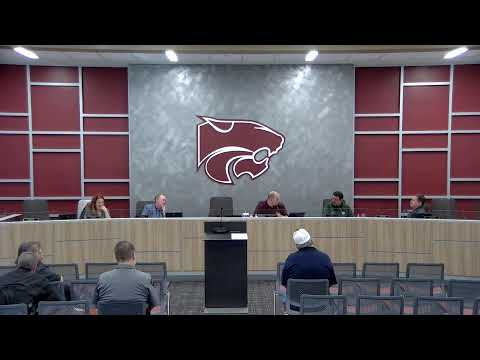
The discussion at the committee-level meeting centered on costs, staffing numbers, dispatch consolidation and revenue options to support any new police structure. Mayor Wade Evans said the city needs a guaranteed, specified number of officers dedicated to patrolling Central. "I want a specified number of people working the roads in central," Evans said. "I don't care who digs the ditch. I want it done." Evans and committee members repeatedly said doing nothing was not an option.
Committee members and police leaders reviewed several cost and staffing data points as part of the conversation. The mayor and others cited a private, third‑party crash- and incident-reporting service operating in other Louisiana localities that was described in the meeting as costing about $200,000 per unit. Participants discussed how such a firm responds to accidents, prepares same‑day reports and would coordinate with local law enforcement; committee members noted that contractors would still call law enforcement when they encounter criminal matters.
Speakers also discussed a sheriff's request figure in the neighborhood of $2.5 million and compared Central's options to New Iberia, which the committee described as spending roughly $8.3 million annually on its police department and employing about 73 officers. Committee members said New Iberia had been used as a case study — both as an example of rapid department stand-up and as a cautionary tale about long-term cost and contract terms. "We have a case, or an example where it didn't go well," one committee member said, urging the group to study the New Iberia experience before recommending a contract.
The committee explored a range of funding options for a city police presence, including revenue from mayor's court, school‑zone speed cameras with revenue-sharing, a property tax millage (the example used was 4 mills) and a quarter‑cent sales tax (estimated in the discussion at roughly $1.375 million based on current numbers). A company identified in the transcript as "Blue Line" was described as preparing a cameras proposal being considered for school-zone enforcement.
911 dispatch and report-management systems drew sustained attention. Mayor Evans and others urged consolidation of PSAP (public-safety answering point) functions at the parish or regional level to reduce duplication and central costs, noting the parish 911 commission currently supplements some local dispatch services. Committee participants said consolidation could cut overhead and improve 911 response transfers.
Committee members and law‑enforcement representatives also discussed retirement and benefit costs as a major constraint on building a traditional municipal police department. The group referenced rising employer contributions to the municipal police retirement system and noted that opting out is legally constrained.
No formal council vote was taken at the meeting. Committee members agreed to prepare and present three models — the current split model, a full Central Police Department model and a hybrid model — to the City Council and mayor for further review. Staff and police leaders said they will return with a more detailed proposal, budget estimates and supporting documents at the next meeting.
Ending: The committee did not reach a final decision and directed staff and police leaders to refine written proposals for presentation to the council. Members said the next step is formal cost estimates and written contract proposals to be reviewed by the City Council before any binding action.