Get Full Government Meeting Transcripts, Videos, & Alerts Forever!
Get email alerts on the Property Tax Circuit Breaker topic
No spam. Unsubscribe anytime.
Evanston finance committee advances review of property-tax and rent “circuit breaker”; staff asked for data
Summary
The City of Evanston Finance & Budget Committee moved up discussion of a proposed property tax and rent “circuit breaker,” heard public comment urging swift action to help long‑term residents, and directed staff to return with county data and cost estimates for committee consideration next month.
Evanston’s Finance & Budget Committee on Wednesday advanced discussion of a proposed property tax and rent “circuit breaker” designed to help long‑term residents stay in the city, asking staff to gather Cook County and city data and return with more specifics next month.
The measure, referred as agenda item D5 by Council member Claire Kelly and co‑referrers Council members Eleanor Revelle, Tom Suffredan and Devon Reed, did not receive a formal vote Wednesday. Instead, the committee agreed to move the item up the agenda so members and members of the public in attendance could hear the preliminary discussion and to allow staff time to compile eligibility and cost estimates.
The proposal aims to target long‑term homeowners and renters who are being priced out as property taxes and living costs rise. During the committee’s public‑comment period, several residents and homeowners described personal and neighborhood impacts and urged committee members to accelerate work on the program rather than wait for action at the county or state level.
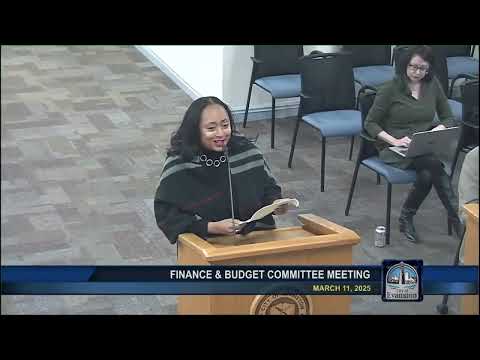
“My name is Malika Gardner, and for the past 10 years I’ve been deeply engaged in the Evanston community,” said Malika Gardner, identifying herself as a community organizer and Evanston Live TV host. “One of the biggest concerns I hear from long‑term residents is that they won’t be able to age in place.” Gardner asked the committee to table adoption until “the full research is presented” so any program would be based on facts and accurate counts.
An online commenter identified as “Miss Payton,” who said she owns rental property in Evanston, told the committee that a city program could help landlords maintain participation in rental voucher programs: “If I don’t have some kind of program like this, then I probably will not be able to accept any more vouchers,” she said, adding that cuts to federal HUD programming increase the urgency.
Darlene Cannon, who identified herself as a Second Ward resident, and Tricia Connolly, also a Second Ward resident, urged the committee to move forward while staff compiles data. A written comment from Fran Joy, a resident of about 40 years, described the program as “urgent” and urged committee support.
Committee members and staff said key details remain to be determined. Committee discussion included these points:
- Eligibility and targeting: Sponsors initially suggested the benefit could be limited to residents with about 20 or more years of residence; it would not necessarily be age‑restricted and could include people in their 50s who have lived in Evanston for decades.
- Interaction with existing programs: Speakers and staff noted existing tools, including the Cook County senior exemption/senior freeze (which currently has an income cap cited in public comment of about $65,000) and limited programs run by the Housing Authority of Cook County. Committee members stressed the need to understand overlaps so benefits are targeted to residents not already receiving comparable exemptions.
- Data needs and timeline: Kelly and others said they have started discussions with the Cook County assessor’s office but do not yet have full counts on how many Evanston households would qualify under different eligibility rules; the committee directed staff to collect county and city data and to return with ballpark cost estimates, with the aim of having specifics for the next committee meeting.
- Funding and tradeoffs: Committee members emphasized that any new, ongoing subsidy will need a revenue source. Committee member Livingston noted the city’s budget is already under pressure from planned pension contributions and urged that any new program identify incremental revenue rather than rely on existing general‑fund capacity.
Council member Claire Kelly, one of the item’s sponsors, described the proposal as intended to “help offset the cost of living for long‑term residents,” and said she hoped staff could provide the necessary statistics so the committee could consider program rules and potential funding sources at a future meeting.
The committee also heard related budget and pension briefings earlier in the meeting; staff said the pension funds had performed well and that more audit detail will be available later this spring. Committee members said they preferred to resolve the pension presentation before fully turning to the circuit‑breaker item, but agreed to move the D5 discussion up so in‑room commenters could hear the conversation.
Votes at a glance
- Approval of minutes (Feb. 11): Passed. Committee member Livingston recorded an abstention; Chair Raikes (agree), Council member Burns (aye), Council member Kelly (aye), Council member Winn (aye), Council member Nussma (aye). (Motion to approve moved and seconded; tally: 5 ayes, 1 abstain.)
- Resolution supporting preservation of federal tax exemption for municipal bonds: Committee signaled general support and asked that the item be referred into the formal referrals process before council consideration; committee did not take a formal roll‑call vote on the resolution at this meeting.
What’s next
The committee asked staff to compile Cook County and city data on homeowners and renters who would meet possible eligibility rules, to estimate the program’s fiscal cost under several design options, and to return with a memo and numbers at the next Finance & Budget Committee meeting. Committee members also recommended involving the city’s housing and finance staff in follow‑up work and folding the discussion into the city’s broader strategic housing planning where appropriate.
No ordinance, financial appropriation, or eligibility rule was adopted Wednesday; the item remains at the data‑gathering and referral stage.