Get Full Government Meeting Transcripts, Videos, & Alerts Forever!
Get email alerts on the Comprehensive Plan Envision Evans topic
No spam. Unsubscribe anytime.
Preservation commission presses for clearer implementation, mapping and protections in Envision Evanston draft
Summary
Commissioners reviewed the draft Envision Evanston comprehensive plan, urging a more robust implementation chapter, clearer mapping of historic resources (including individual landmarks and eligible districts), and consideration of neighborhood conservation districts and advisory review mechanisms for properties adjacent to landmarks.
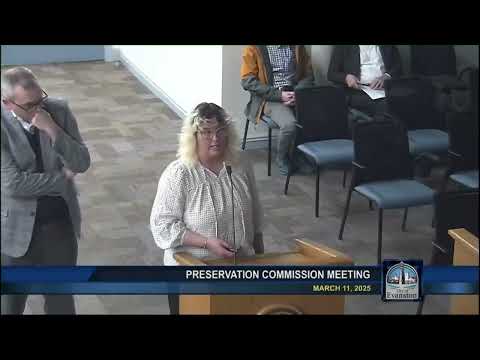
The Evanston Preservation Commission spent its meeting reviewing the revised Envision Evanston draft and urged city staff to strengthen the plan’s implementation details, mapping of historic resources and policies to safeguard existing landmarks and historic districts.
The discussion matters because commissioners said the comprehensive plan will guide future zoning and must clearly identify what to protect, how actions will be implemented and who will be responsible for execution.
Staff member Cade summarized comments the commission previously submitted and explained which items had been folded into the revised draft. Commissioners and participants praised additions — including a neighborhoods and places chapter, a community systems chapter and more explicit references to adaptive reuse — but said several substantive gaps remain. Major concerns included: (1) the implementation chapter reads like a statement of intent rather than a time‑mapped action plan; (2) the historic resources map omits or layers incorrectly several expected elements (for example, the Northwest Historic District eligibility and locally designated boundaries); and (3) the plan lacks clearer policy language safeguarding existing local landmarks and historic districts from demolition or incompatible new construction.
Commissioners discussed neighborhood conservation districts (NCDs) as a potential tool to preserve local character at a smaller scale than full historic districts. Speakers noted NCD programs vary widely: some are community‑driven with high homeowner buy‑in thresholds, others work as zoning overlays with specific design standards. Commissioners suggested the plan should include layered maps (zoning, landmarks, proposed conservation districts, school attendance zones and other overlays) to help future zoning decisions and public engagement. Several commissioners proposed educational outreach and pilot presentations (for example, inviting representatives from jurisdictions with active NCD programs) to inform stakeholders.
On regulatory protections, staff and commissioners debated whether to ask the plan to recommend advisory review procedures for projects adjacent to individual landmarks and properties within National Register districts that lack local protections. Some commissioners supported advisory review as a technical assistance tool; others cautioned mandatory review could become a regulatory “slippery slope” without clear statutory authority and additional staff capacity. Commission members called for explicit language to “safeguard the integrity of the city’s landmarks and historic districts,” stronger implementation commitments (including a timeline and funding strategy) and addition of demolition‑delay and deconstruction ordinance recommendations.
The commission agreed to prepare a follow‑up letter that would prioritize specific edits and to offer staff assistance in drafting text or participating in working sessions. Staff said they would coordinate next steps, and commissioners suggested public outreach events, including a possible demonstration/presentation on NCDs and neighborhood meetings where the commission could “take the road show” to affected communities.
No formal motion was recorded on Envision Evanston at the meeting; commissioners asked staff to draft a focused follow‑up communication to the planning team.