Get Full Government Meeting Transcripts, Videos, & Alerts Forever!
Get email alerts on the Criminal Justice Expungement topic
No spam. Unsubscribe anytime.
Appeals court hears dispute over expungement when firearm license expired at time of arrest
Summary
The Massachusetts Appeals Court heard arguments over whether a 1997 conviction for carrying a firearm without a license can be expunged under changes to chapter 140, §131; the panel took the case under advisement.
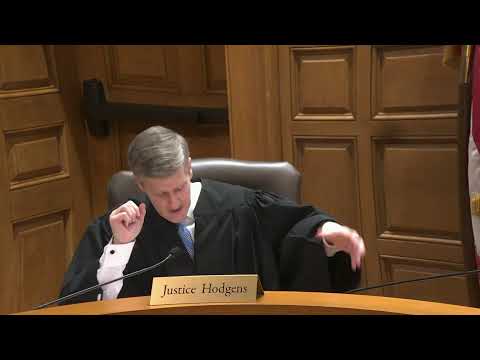
Chief Justice Amy Blake and Justices Christopher Hodgins and Robert Toon heard oral argument Thursday in Commonwealth v. John Doe, docket 24P397, on whether changes to the firearm licensing statute allow expungement when a conviction involved an expired license.
The case centers on a 1997 arrest for carrying a firearm without a license. Patrick Noonan, counsel for the appellant identified as John Doe, told the court that the appellant’s license to carry (LTC) was issued April 18, 1991, and that statutory changes in 2004 extended LTC validity from five to six years. "Under the new firearm licensing laws, he would have been in possession of a valid license to carry," Noonan said, arguing that the offense would no longer be a crime under today’s statute and therefore that the record should be expunged.
Karen Palumbo, arguing for the Commonwealth, urged the court to apply the statute as written today and highlighted a 2014 amendment to chapter 140, §131 that creates a narrow safe harbor for expired licenses only when the licensee applied for renewal before expiration. Palumbo said the trial judge correctly denied expungement because the offense remains a crime under current law: "It is a very limited exception or very limited safe harbor. And I believe that the language of the statute is unambiguous and clear as to the intent of the legislature." She told the panel the judge’s written denial was legally sufficient to dispose of the petition.
Justices questioned whether the court should assess expungement eligibility based on the law at the time of conviction or on the statute as it stands now, and probed whether the Commonwealth’s statements below — "the Commonwealth takes no position and would defer to the court's discretion" — amounted to taking no position. Noonan noted the probation department likewise had taken no position, which he said should carry weight for the court’s consideration.
The panel asked whether the defense needed to show the appellant had attempted to renew the LTC before it expired; Noonan relied on jury instructions and appeals-court precedent (Farley, Indresano) to argue a renewal application is not a strict prerequisite for the statutory exemption. Palumbo emphasized the trial judge’s conclusion that possession with an expired license is still a crime and asked the court to affirm the denial.
The court took the case under advisement and told counsel it had read the briefs and would decide from the record.
This argument focused solely on statutory interpretation and expungement procedure; no criminal sentence or new evidence was introduced during oral argument.