Get Full Government Meeting Transcripts, Videos, & Alerts Forever!
Get email alerts on the Education Cybersecurity topic
No spam. Unsubscribe anytime.
Committee hears 'Hacker Act' to fund statewide K‑12 cybersecurity, seeks $10 million annual appropriation
Summary
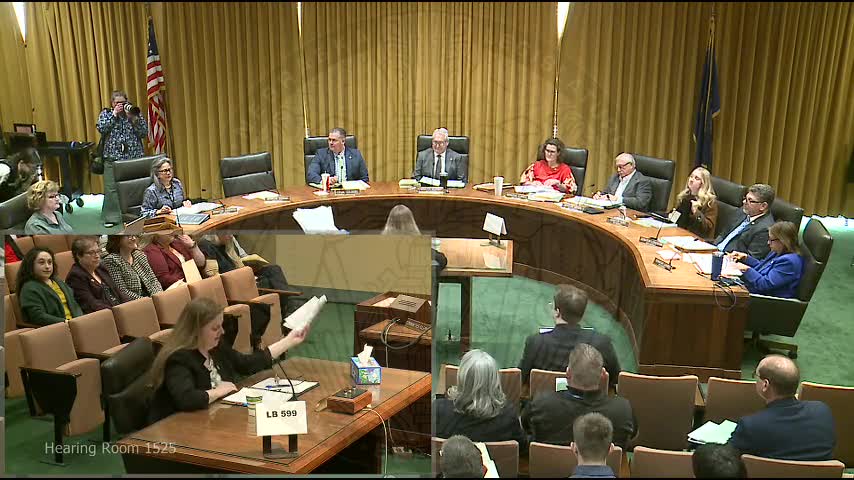
Senator Wendy DeBoer introduced LB599, the Holistic Approach to Cybersecurity for K‑12 Education Resources Act, which would require cyber readiness assessments, provide statewide implementation teams through ESUs and request $10 million a year to improve cybersecurity across Nebraska schools.
Senator Wendy DeBoer introduced LB599, the Hol istic Approach to Cybersecurity for K‑12 Education Resources Act, saying the bill would create a statewide framework and funding mechanism to strengthen cybersecurity across Nebraska public and private schools and educational service units (ESUs).
The measure would require districts to complete a cybersecurity readiness assessment to be eligible for funding, direct the Department of Education working with the ESU Coordinating Council and the Office of the Chief Information Officer (OCIO) to develop a model cybersecurity policy and framework, create a team under the ESUCC to assist districts with implementation and training, adopt digital citizenship standards, and establish a student career pipeline program. Senator DeBoer said LB599 “seeks to address cyber security issues for public and private schools and educational service units in Nebraska” and presented the bill as a scalable program that would request $10,000,000 in recurring annual funding for full implementation.
Proponents at the hearing said Nebraska already has uneven cybersecurity capacity across districts and ESUs, and that central funding and coordination would make protections more equitable and efficient. Lariann Polk, CEO of the ESU Coordinating Council, described the bill as “not an unfunded mandate” and said it would allow ESUs to formalize procurement consortia and provide assessments and implementation teams tailored to district needs. Andy Bell, director of the Nebraska Cybersecurity Network for Education, testified that NCNE’s free assessment tool had increased voluntary testing participation and that broader access would improve the security of the whole statewide network.
ESU and district witnesses described current capacity limits: Ron Cohn (ESU 10) said there are only six dedicated cybersecurity professionals across ESUs and that districts “face prioritization and funding hurdles” when buying and implementing security products. Testimony noted the Office of the CIO has a joint security operations center in development and would coordinate on vendor vetting, while ESUs would serve as the regional implementation arms.
Supporters repeatedly emphasized two program elements: (1) a readiness assessment to identify tiered needs so funding can be targeted, and (2) a 10‑person statewide implementation team to provide regional hands‑on support. Testifiers also said the bill includes a scholarship/pipeline component to encourage students into cybersecurity careers, modeled in part on existing workforce efforts. Several student speakers and local technology directors described educational pathways that produce in‑state talent and urged the committee to view the bill as both infrastructure protection and workforce development.
Committee members questioned the scale and duration of the requested funding. Senator Glenn Meyer and others asked whether the $10 million would be annual and permanent; witnesses said the figure would support full implementation but the program is scalable and the long‑term amount could be reconsidered. Senator Meyer and others also asked whether the Department of Education would mandate particular vendors; Senator DeBoer and ESU witnesses said the bill would not require specific products or vendors and deliberately avoided creating a single commercial solution.
Several proponents said federal or county resources — including the Department of Homeland Security and existing NCNE and ESU efforts — already provide assistance, but that a dedicated state program would fill gaps, especially for small and rural districts that lack local expertise. No opponents offered testimony at the hearing. Senator DeBoer waived closing remarks; the committee recorded 27 proponents and two opponents submitted electronically.
The hearing produced no formal committee vote; witnesses and members agreed to continue work on details including program scope, fiscal magnitude and statutory language.