Get Full Government Meeting Transcripts, Videos, & Alerts Forever!
Get email alerts on the Mining Reclamation Funding topic
No spam. Unsubscribe anytime.
Senate redirects more mine‑license tax to abandoned‑mine fund, adds advisory committee and reporting
Summary
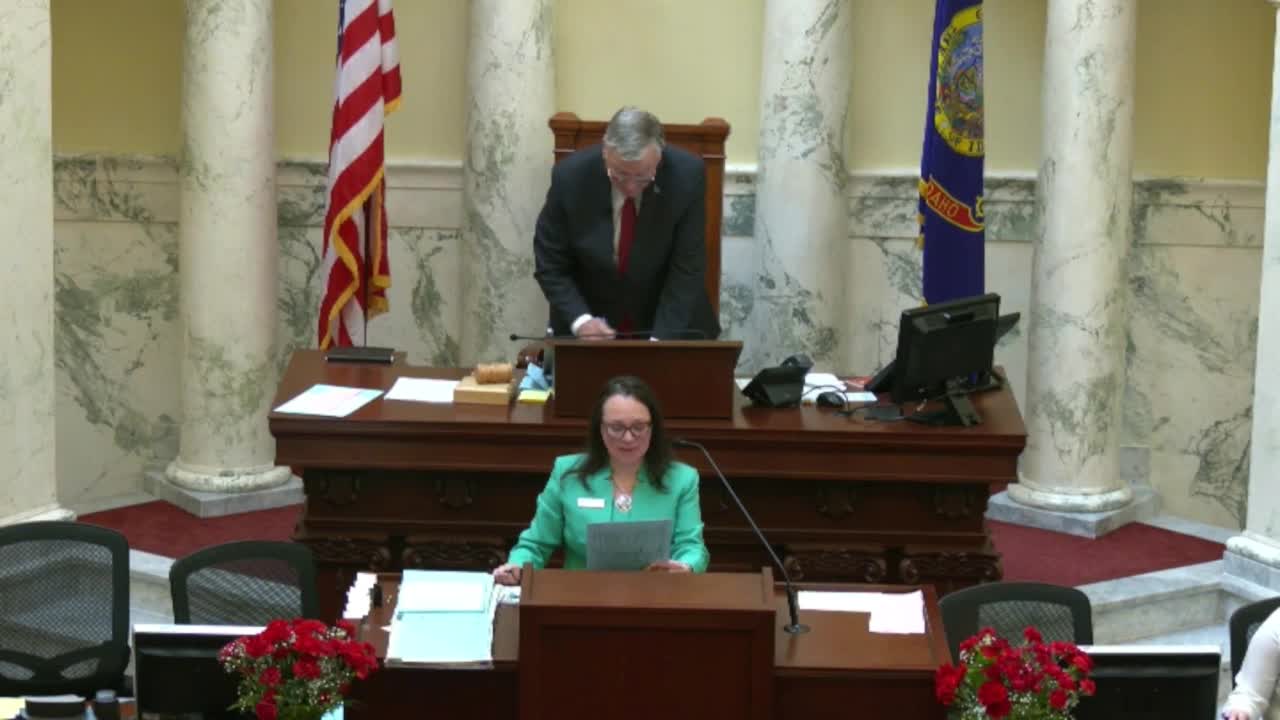
House Bill 2‑26 passed the Idaho Senate March 10, 2025. The measure redirects a greater share of the mine‑license tax into the Abandoned Mine Lands Fund, allows voluntary contributions, establishes an advisory committee, and requires annual reporting and a prioritized reclamation plan.
The Idaho Senate passed House Bill 2‑26 on March 10, 2025, aimed at stabilizing funding for the Abandoned Mine Lands Fund by redirecting a larger percentage of the mine‑license tax, adding a public advisory committee, and tightening transparency and reporting for reclamation projects.
Sponsor remarks: Senator Harris, presenting the bill, said the fund was created to clean up lands abandoned by historic mining activities and that the fund’s revenue had declined with a multi‑year drop in production and prices. She said the bill “stabilizes the fund so the down cycles, we won't see the same pattern repeated.”
Key provisions: The bill (1) increases the portion of the mine‑license tax dedicated to abandoned‑mine cleanup; (2) allows voluntary contributions to the fund; (3) requires that a majority of deposits be used for eligible abandoned‑mine projects; (4) creates a public advisory committee with county, agency, conservation, and industry representation; and (5) requires the department to maintain an eligible‑mine list and report annually on expenditures and project priorities.
Vote and context: The Senate roll call showed unanimous passage on the day (35 in favor, none opposed). Supporters said the measure is needed to avoid repetitive shortfalls when mineral production cycles down, and to set clear priorities and public oversight for reclamation work.
Next steps: The bill passed the Senate and will be returned to the House. Supporters said the advisory committee and reporting requirements will guide project prioritization and provide public transparency.