Get Full Government Meeting Transcripts, Videos, & Alerts Forever!
Get email alerts on the Public Health Budget topic
No spam. Unsubscribe anytime.
JFAC advances Department of Health and Welfare public health budget with added positions, immunization and prevention funding
Summary
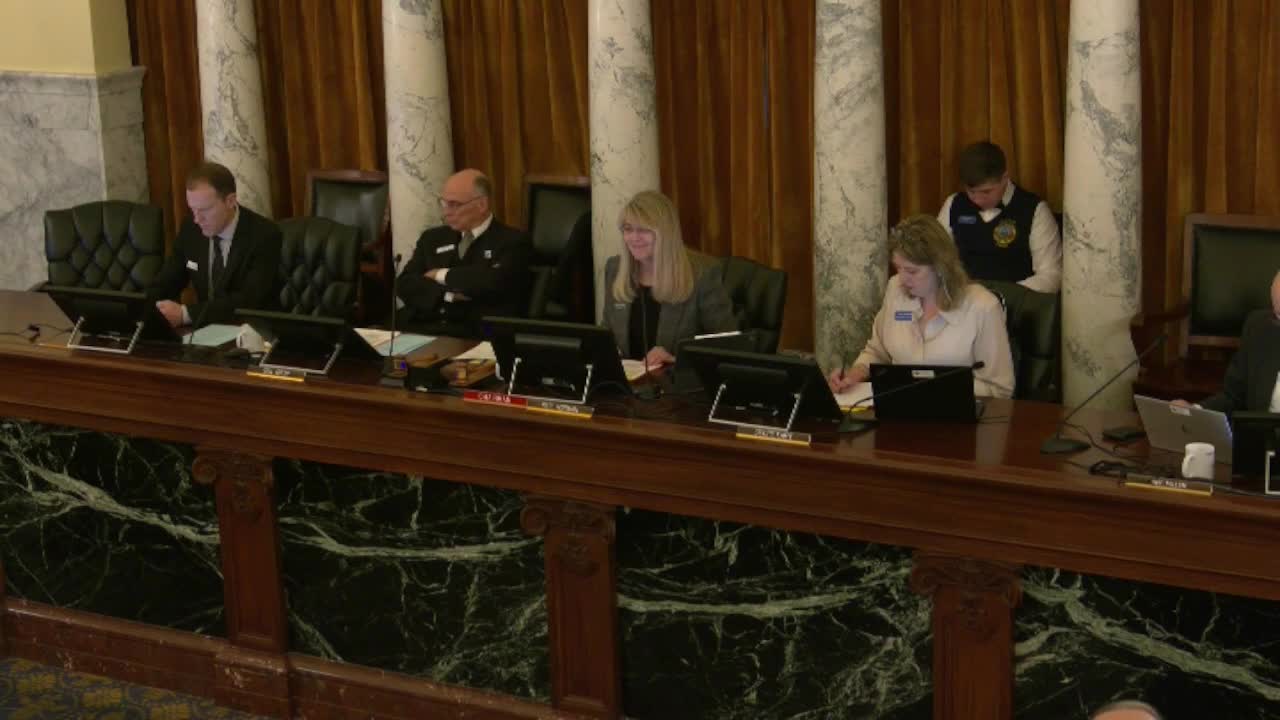
A committee motion to add staff and funding for the Department of Health and Welfare’s Division of Public Health Services passed the Joint Finance‑Appropriations Committee on March 12.
A committee motion to add staff and funding for the Department of Health and Welfare’s Division of Public Health Services passed the Joint Finance‑Appropriations Committee on March 12.
The committee approved an enhancement package that included four additional full‑time equivalent positions, multiple program restorations and targeted funding for immunizations, home visiting, HIV and hepatitis prevention, and ARPA‑funded multi‑year programs. Representative Furness moved the substitute motion; Senator Wintrow seconded.
The motion directs additions to the FY2026 JFAC program maintenance budget and change‑adjustments in the division’s budget. Under that motion the package included, among other line items, approximately $2,236,300 ongoing from the general fund (motion language and subsequent restatements referenced $2,236,300 and other adjustments), $2,650,000 from dedicated funds, and roughly $20,196,700 from federal funds (total dollar figures in the motion as read to the committee were presented as about $25.08 million). The packet and discussion named discrete items: program restoration for suicide prevention and drug overdose prevention; Alzheimer’s and dementia programs; Fit & Fall Proof; the WIC food program and temporary assistance to needy families; a $2.5 million immunization assessment fund request to expand free immunizations for children; ARPA multi‑year program support (about $6,085,700 one time); home visiting funding adjustments; and governor’s initiative funding for a rural physician incentive program (a $500,000 ongoing request identified as a governor initiative).
Committee members discussed the policy effects of converting ongoing authority to one‑time funding for certain prevention programs. Senator Wintrow and others urged caution about moving established prevention programs (notably the home visiting program and the immunization assessment fund) to one‑time funding because that can reduce budget predictability for multi‑year staff and services. Representative Tanner and supporters said using one‑time authority in some cases gives the committee time to review program details before committing ongoing resources. The record shows both views were stated during debate and entered into committee discussion.
The substitute motion carried on a recorded roll call that produced a combined total of 14 ayes, 4 nays and 2 absent/excused. The committee’s chair directed that, without objection, the motion carry a due‑pass recommendation.
The committee also approved several pieces of bill language related to the division. Those language items instruct the department to: notify committee leadership when applying for or reapplying for federal grants; identify and address any double‑billing instances between federal grants and Medicaid; examine transitioning pass‑through clinical service grants from the seven public health districts to federally qualified health centers and other safety‑net providers; evaluate options for transferring the Alzheimer’s and related dementia GRAMA to the Commission on Aging and the Fit and Fall Proof program to the Commission on Aging; and perform cost‑benefit analyses of moving the 988 crisis line contract and the cancer data registry to different vendors or in‑house provision. Several of those language sections were adopted by unanimous consent following discussion or by roll call where recorded.
Why it matters: the package funds core prevention and surveillance programs that support immunizations, communicable disease response, opioid and overdose prevention and maternal/child home visiting. Committee debate highlighted the tradeoff between legislative oversight (using one‑time authority to review programs) and program stability (the value of ongoing funding for multi‑year prevention services).
The committee recorded the motion and directed staff to incorporate the approved language and funding changes into the committee’s fiscal recommendation for the upcoming budget bill cycle. Further statutory or budgetary steps will be required to finalize appropriations and to implement program transitions identified in the adopted language.
Ending: The approved package and language move forward in the JFAC process; committee members signaled further review will occur as part of the budget reconciliation and any implementing trailer legislation.