Get Full Government Meeting Transcripts, Videos, & Alerts Forever!
Get email alerts on the Healthcare Conscience Rights topic
No spam. Unsubscribe anytime.
Senate approves Medical Ethics Defense Act after lengthy debate over conscience protections
Summary
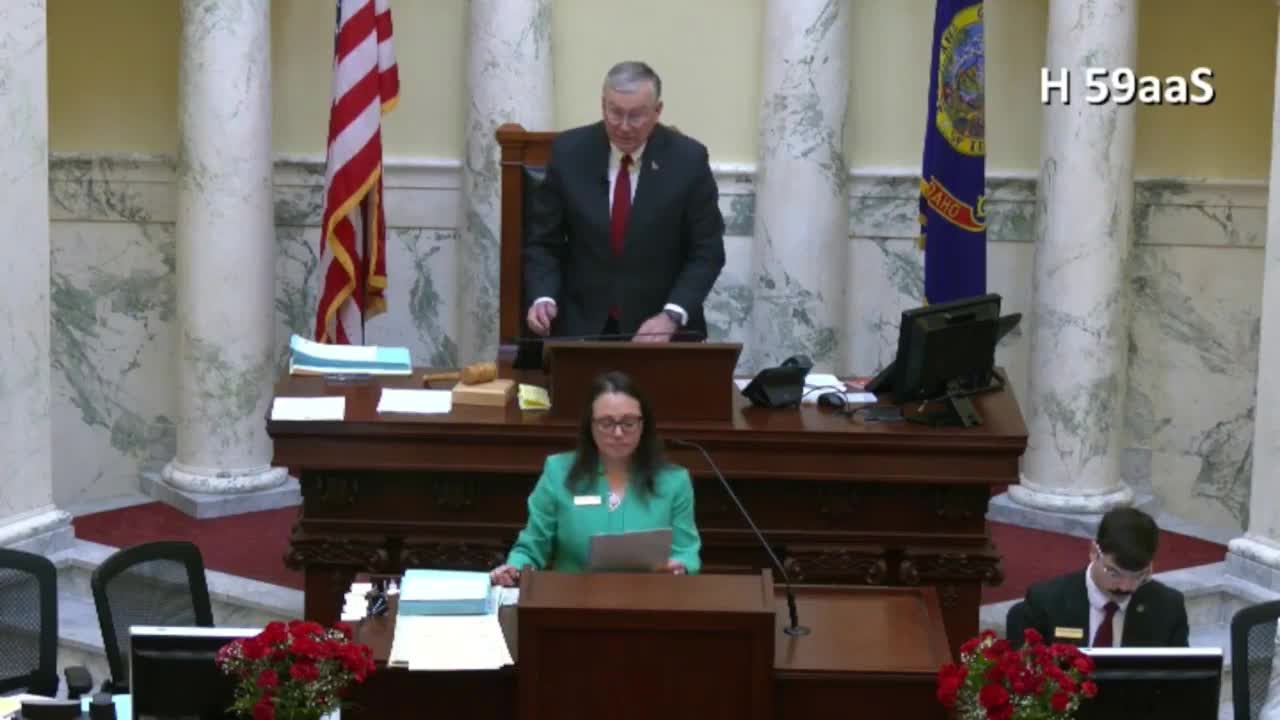
House Bill 59, the Medical Ethics Defense Act, passed the Idaho Senate on March 10, 2025, expanding conscience protections for health‑care providers and entities. The floor debate included supporters who framed it as free‑speech and conscience protections and opponents who warned it could restrict patient access to care.
The Idaho Senate passed House Bill 59 as amended on March 10, 2025, approving a measure that broadens legal protections for health‑care professionals and health‑care entities that refuse to participate in non‑emergency procedures on conscience grounds.
Sponsor and supporters: Senator Biocchi (presenter) described the bill as intended to “protect conscience rights of health care professionals and health care entities,” telling colleagues the legislation prevents providers and institutions from being forced to participate in non‑emergency procedures that would violate sincerely held religious, moral or ethical beliefs.
Opposition and concerns: Opponents warned the bill could impede access to treatment, particularly in rural areas with limited providers. Senator Taylor said, “This bill in its current form, I believe, would transform Idaho's health care system from 1 based on patient needs to 1 based more on provider preferences.” Senator Wintrow and others gave concrete scenarios—ambulance refusal, denial of transfusions, or refusal to treat life‑threatening miscarriage care—that they said showed potential harm if professional duty were subordinated to individual conscience claims.
Amendment and clarification: Lawmakers added a provision (Section 1, Subsection 13) to prevent conscience protections from being used to evade malpractice liability, a change described on the floor by Senator B. R. King as intended to “differentiate between your right to not perform certain procedures, but also to not use your conscience or your beliefs as a means to kind of get out of being held liable potentially for something that you do in a malpractice scenario.” Sponsors also said the bill provides whistleblower protections, nondiscrimination protections for those who refuse to participate, and does not increase state or local costs.
Vote and next steps: The vote count reported on the floor was 28 in favor, 6 against and 1 absent. The bill passed the Senate; the title was approved and the bill will be returned to the House of Representatives.
Context: Supporters framed the bill as protecting clinicians’ free‑speech and conscience rights and as a response to perceived corporatization of medicine. Opponents said the measure risks patient access, especially in communities with few providers.