Get Full Government Meeting Transcripts, Videos, & Alerts Forever!
Get email alerts on the Education Budget topic
No spam. Unsubscribe anytime.
Goochland leaders discuss unfunded school priorities including interventionists, security and CTE costs
Summary
At a joint March 11 meeting, Goochland County school and supervisor leaders reviewed tiered unfunded needs including three academic intervention positions ($282,435 total), a planned ESL and agriculture FTE ($94,145 each), a $121,231 work-based learning coordinator, and debated funding priorities, capital projects and after-school program costs.
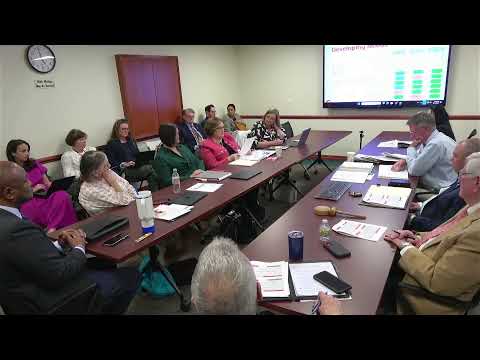
Goochland County officials and school leaders on March 11 reviewed a list of unfunded school-division priorities and debated which items should be funded if county surplus money becomes available.
Dr. Camardi, superintendent of Goochland County Public Schools, told the joint meeting that “these numbers are not reflected in the current school board budget,” and introduced a set of tiered requests that school staff had labeled tier 1 through tier 3. He said the top-tier request for academic interventionists totals $282,435 and “represents salaries and benefits.”
The school’s prioritized unfunded needs include three interventionist positions (the $282,435 figure covers salaries and employer benefits for three individuals), one additional full-time equivalent (FTE) English‑as‑a‑second‑language teacher budgeted at $94,145, and a full FTE to expand the agriculture program at $94,145. A work‑based learning coordinator was listed at $121,231; converting middle‑school coaching stipends to a percentage‑based model to achieve equity was estimated at about $32,000; an assistant robotics coach stipend at roughly $2,000; and other items were described but left as lower‑priority or tier 3 without dollar figures.
Why it matters: county supervisors said there is some year‑end carryover and that a modest amount of funds could be allocated now, but they emphasized they cannot cover the full list this year. County Administrator Alvarez and supervisors said the board must weigh the county’s own departmental needs, capital projects and commitments from prior years before adding personnel costs that would be ongoing.
Capital projects and referendum funds
School and county officials also discussed capital projects tied to the 2021 bond referendum. School leaders said about $2 million would be needed initially for architectural and engineering work for a career and technical education (CTE) and arts addition at the high school, and they noted the total facility cost could be far higher. One county official said roughly $17 million remained available from referendum‑related bonds as a planning figure for the schools, and another supervisor described ongoing cost overruns on prior school construction as a reason for caution in reallocating carryover funds.
Security, technology and buses
Supervisors and school staff also raised safety and operational items. Chair Moses and other supervisors asked about weapon/metal detector systems, noting prior discussion to include detectors in the capital improvement plan (CIP) for 2027 and asking whether that timeline should be accelerated. Officials referenced a Louisa County Public Schools visit as an example and estimated Louisa had invested in the area of roughly $500,000 for its system; speakers also highlighted that up‑front hardware and software implementation costs are followed by ongoing personnel costs to operate checkpoints.
On transportation, staff said two buses already were ordered and paid for with proffers, two more were included in the operating budget for the coming fiscal year, and the division’s fleet is behind replacement schedule. The meeting record included a staff estimate that the division is about a dozen buses behind a typical replacement schedule; the commonly cited replacement thresholds discussed were about 250,000 miles or 15 years of service.
After‑school program and foundation funding
School board members raised the county’s prior commitment of $300,000 over three years to the Gibson Education Foundation (as presented in the meeting) to support after‑school reading programs. Board members and supervisors discussed program cost and equity: presenters said the proposed private after‑school program carries a fee (about $105 per week, or roughly $420 per month) and that families with the greatest need may be least able to pay unless scholarships or direct funding cover enrollment. Dr. Camardi warned the board that after‑school volunteer programs are not substitutes for skilled, paid instructional staff: “If anybody could walk off the street and advance literacy, I’d argue we’d have far less illiteracy than we currently do,” he said, stressing that qualified staff and curriculum alignment are required to remediate students effectively.
Instructional priorities and performance metrics
Dr. Camardi and school staff described current performance levels and the rationale for interventionists. The division reported roughly 18 percent of students not meeting literacy proficiency and 17 percent not meeting math proficiency; staff explained that some Title I schools have additional specialists funded through federal programs, creating differences across campuses. School leadership said principals preferred hiring flexible academic interventionists rather than narrowly defined reading or math specialists, because interventionists can be shifted to the most acute needs as they evolve.
Budget process and next steps
Supervisors said county staff will develop allocation options and present them at upcoming 2‑by‑2 sessions and future budget talks. County leaders described a constrained picture: they said available carryover and projected revenues would permit funding some top priorities, but not all, and stressed the need to account for other county commitments such as courthouse and sheriff’s office projects. Several supervisors urged focusing on people and retention — pay and benefits for teachers — when weighing one‑time funds versus ongoing personnel costs.
Meeting close
The joint meeting concluded without any formal vote to fund the listed school requests. The last formal recorded action in the transcript was a motion and second to adjourn; the chair called for “aye” and voices in the record said “aye,” and the meeting was adjourned.
Ending
County and school leaders agreed to continue the conversation in budget sessions and future joint meetings, with staff tasked to produce options that show how much of the tiered list the county could fund now versus in the next fiscal year.