Get Full Government Meeting Transcripts, Videos, & Alerts Forever!
Get email alerts on the Orphaned Wells Sb1146 topic
No spam. Unsubscribe anytime.
Committee considers bill letting operators pay to plug orphaned wells without assuming liability
Summary
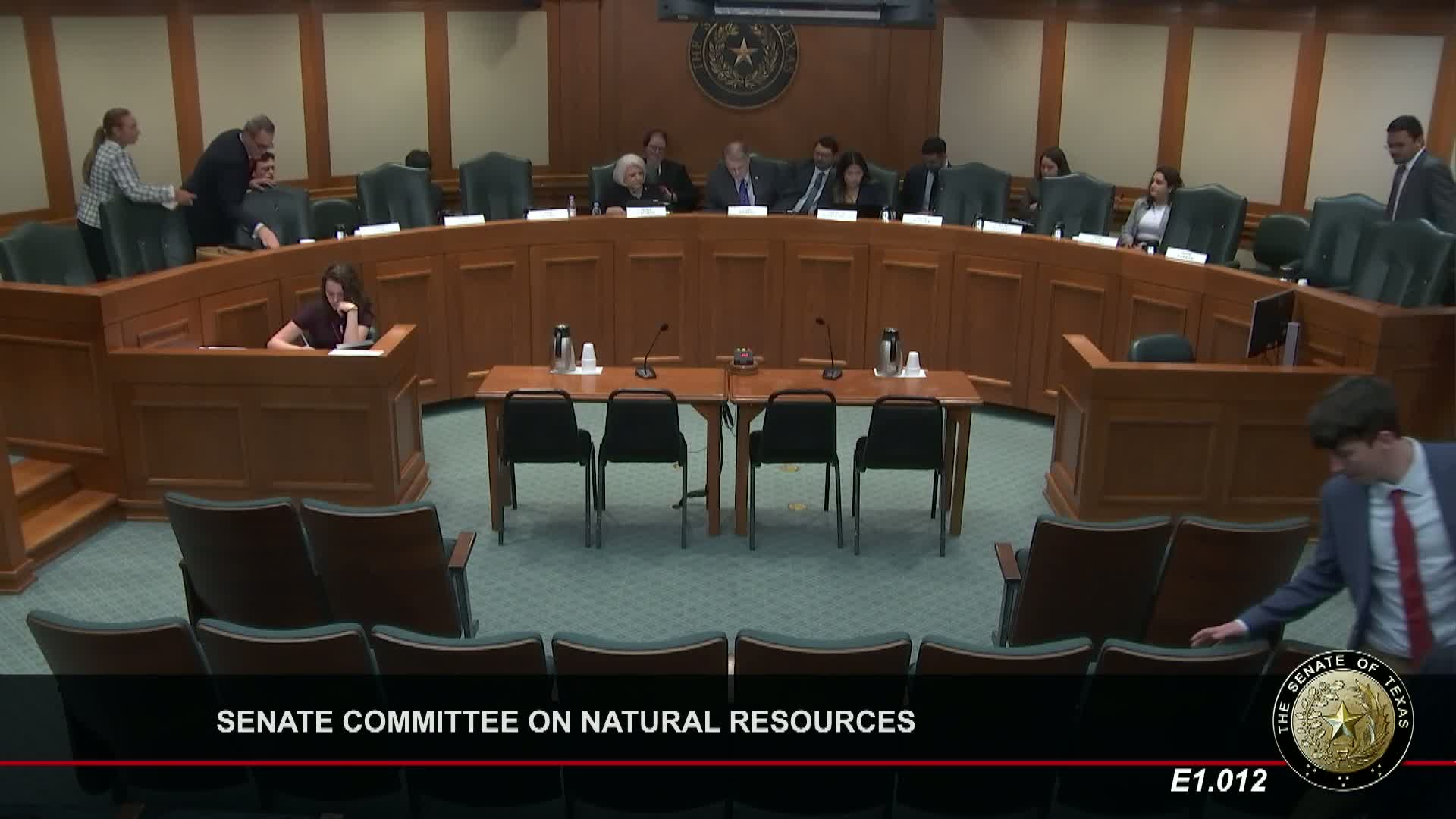
Senator Birdwell, author of Senate Bill 1146, told the Senate Committee on Natural Resources & Economic Development that the bill would allow operators who hold an interest in a current oil-and-gas lease or mineral estate to pay the Railroad Commission or an RRC-approved well plugger to plug or replug an orphaned well without assuming liability for the well.
Senator Birdwell, author of Senate Bill 1146, told the Senate Committee on Natural Resources & Economic Development that the bill would allow operators who hold an interest in a current oil-and-gas lease or mineral estate to pay the Railroad Commission or an RRC-approved well plugger to plug or replug an orphaned well without assuming liability for the well.
Orphaned wells, Birdwell said, are "inactive non compliant wells that have been inactive for a minimum of 12 months, and the responsible operators organization report, the form P-5, has been delinquent for more than 12 months." He said the state currently assumes liability for such wells in perpetuity and that SB 1146 aims to allow willing operators to expedite plugging in some cases while avoiding shifting perpetual liability to private parties.
The bill as presented would require a well plugger who contracts to plug or replug an orphaned well to mail notice to the operator of the plugger's intent within 30 days and perform the work under Railroad Commission rules. Birdwell said SB 1146 would also grant the Railroad Commission rulemaking authority "to adopt any rules reasonably necessary to implement the bill." He told the committee he planned to file a committee substitute that would remove an inadvertently added provision and clarify liability language.
Senator Birdwell and his staff described the expected committee substitute as removing a problematic subsection (referred to in committee as "section c2") and as preserving the status of liability with the state for current state plugging activities. The substitute would, according to Birdwell, add oversight by a Railroad Commission employee and provide that plugging or replugging actions would not be deemed complete or eligible for lease unless the Railroad Commission approves the work performed.
Resource witnesses from the Railroad Commission were made available to answer questions. During public testimony, Michael Lozano of the Permian Basin Petroleum Association testified in support of SB 1146. Todd Staples of the Texas Oil and Gas Association said, "this is a common sense bill that is a win for the landowners," and said the legislation could free private money to address orphaned wells. Skyler White of Goldsmith noted an existing program from the 79th Legislature (House Bill 2161) that provided reimbursement to surface owners for plugging orphan wells and commented that the 50% reimbursement level in the rules has not encouraged participation; he suggested increasing the reimbursement level and removing surface-owner perpetual liability to spur use of that program.
Cyrus Reed of the Lone Star chapter of the Sierra Club said he believed the committee substitute was "heading in the right direction," noting the importance of rulemaking and RRC oversight and urging enforcement mechanisms in cases where plugging is not performed correctly. Committee members asked questions about Railroad Commission oversight, including whether RRC staff review plugging methods and inspect operations in certain cases; a committee member clarified that the Railroad Commission would perform oversight and that agency personnel do not attend every plugging but do oversee high-risk operations (for example, wells with hydrogen sulfide or other emergency characteristics).
There was no final committee vote on SB 1146; the chair closed public testimony and left the bill pending while the committee awaits the committee substitute and final language from legislative counsel. The author said he expects to send the substitute up for discussion when it is available.
Ending: The bill remains pending before the Senate Committee on Natural Resources & Economic Development pending receipt of the committee substitute and final review by legislative counsel.