Get Full Government Meeting Transcripts, Videos, & Alerts Forever!
Get email alerts on the Uranium Mining Permitting topic
No spam. Unsubscribe anytime.
Bill would limit repeat hearings for uranium production area authorizations inside approved mine areas
Summary
Senate Bill 1061 would remove automatic contested‑case hearings for each newly authorized uranium production area within a previously approved area permit, preserving hearings only for changes affecting groundwater wells, monitoring, area expansion or spacing/quantity requirements.
Senate Bill 1061, carried by Senator Parker, would streamline the permitting process for uranium mining by eliminating routine contested‑case hearings for each newly authorized production area inside a previously approved area permit. The bill preserves hearings when proposed production areas or amendments involve unapproved groundwater wells, changes to monitoring wells, expansions of the permitted area, or noncompliance with well‑spacing or quantity requirements.
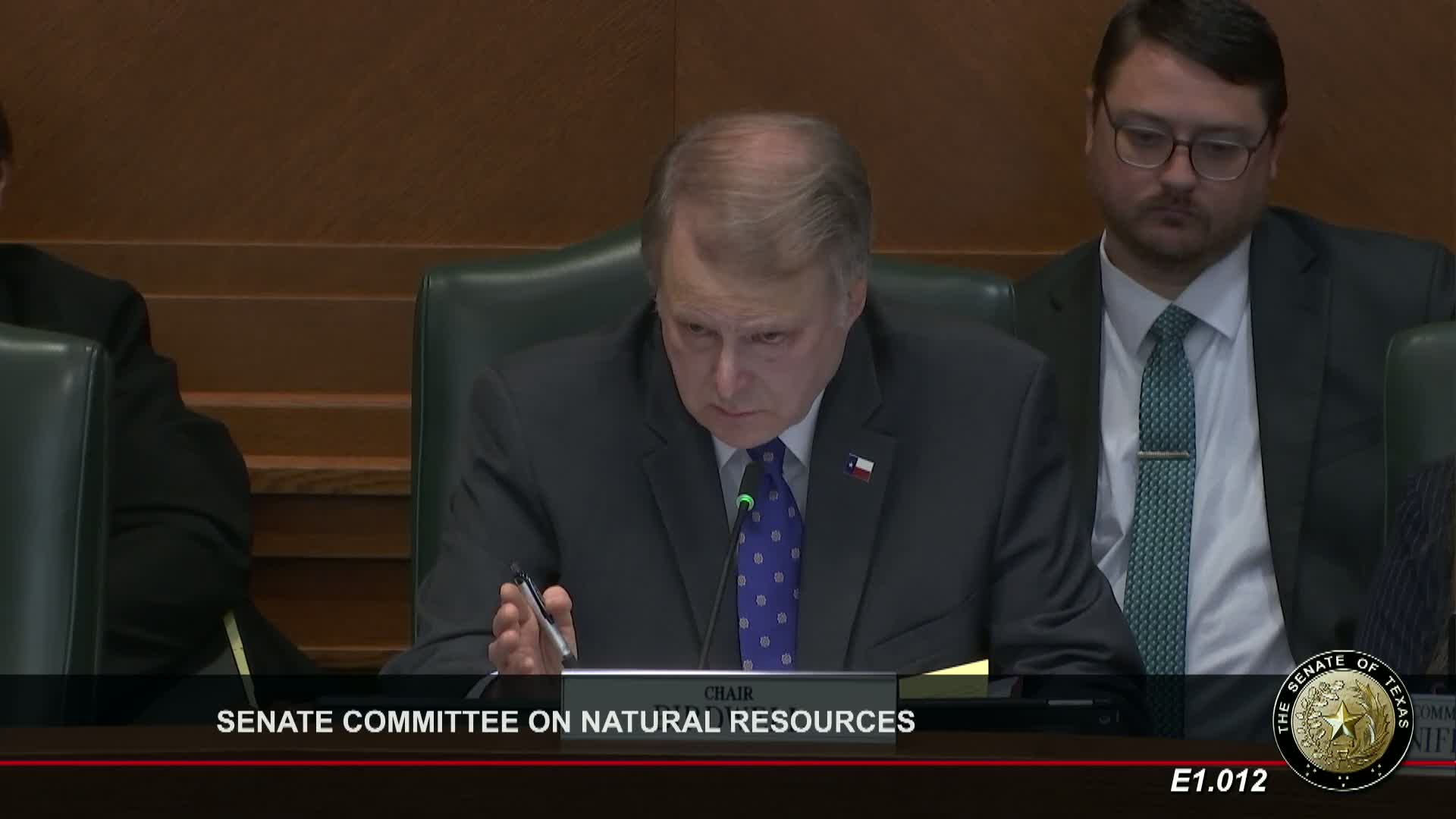
Senator Parker said the change is intended to reduce redundant administrative hearings and allow better scheduling of mining operations once the broader area permit — which already establishes pre‑mining groundwater baselines and has undergone a comprehensive administrative hearing — is in place. “This permit determines pre mining low and high values of groundwater quality to measure post mining groundwater restoration,” Parker said during the hearing.
Stakeholder testimony showed a mix of positions. Industry witnesses, including Ty Embree and Peter Luthiger of Encore Energy and the Texas Mining and Reclamation Association’s uranium committee, supported the bill as a way to reduce repeated, costly hearings that duplicate review already completed at the area‑permit stage. Environmental stakeholders were neutral after changes made in prior discussions: Cyrus Reed of the Lone Star Chapter of the Sierra Club said his group moved to a neutral position following amendments that preserve contested‑case hearings where monitoring or baseline conditions would change.
TCEQ resource staff were present but did not register opposition; the committee heard no formal votes. The committee left the bill pending for further consideration.
Ending: supporters say SB 1061 would make permitting more efficient while preserving public‑process protections when groundwater monitoring or permit boundaries change; no committee vote was taken and the bill remains pending.