Get Full Government Meeting Transcripts, Videos, & Alerts Forever!
Get email alerts on the Genetic Privacy topic
No spam. Unsubscribe anytime.
Senate committee hears bill to give Texans property rights in their DNA; experts urge broader protections
Summary
Senate Bill 315 would create a property right in an individual’s DNA sample; invited experts urged expanding coverage to genetic information and adding enforcement mechanisms. Supporters and a public witness discussed privacy and consumer protection concerns; committee left bill pending.
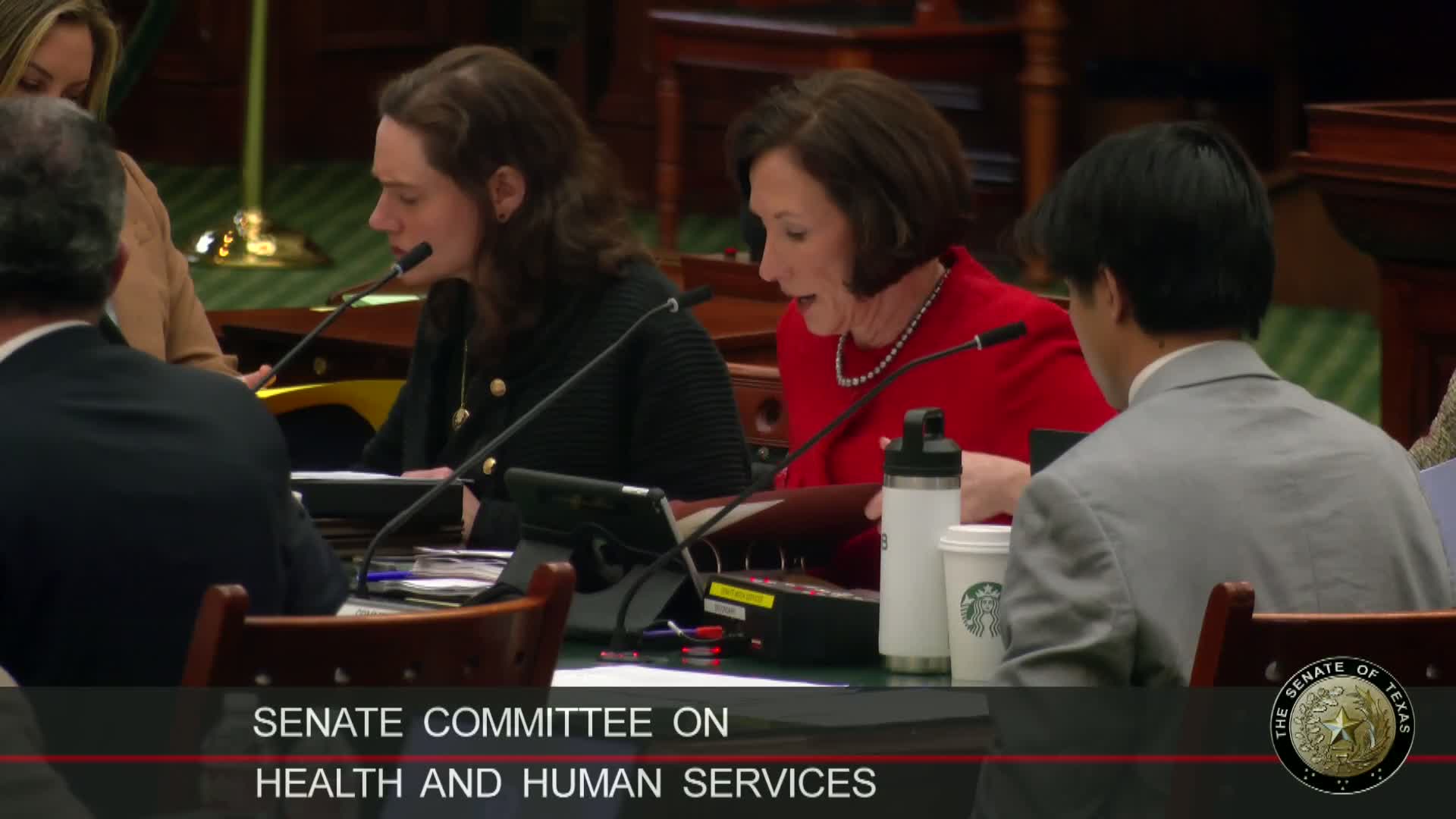
The Committee on Health & Human Services heard Senator Charles’ (Chair) explanation and invited testimony Wednesday on Senate Bill 315, which would recognize property rights in an individual’s DNA sample and aims to prevent unauthorized collection, analysis or commercial use of genetic material.
Chairman Coccourse (Senate) framed the bill as protecting Texans from unauthorized genetic testing and commercialization of DNA. He told the committee “the purpose of this bill is to grant Texans exclusive property rights over their DNA and genetic information to provide protections currently not granted under Texas law.”
Jessica Roberts, a law professor who researches genetics and the law, testified in support but urged substantial amendments. Roberts recommended that the bill create a property right in both the physical DNA sample and the results of DNA analysis, require written informed consent for collection, analysis, retention and sharing, expand the definition of “genetic characteristic” beyond disease predisposition, and strengthen enforcement by allowing individuals a private right of action and damages rather than exclusive enforcement by the attorney general. She also recommended an explicit newborn-screening exception so the bill would not disrupt required public-health screening programs.
A public witness, Michelle Evans of Texans for Vaccine Choice, testified in favor and framed the bill as protecting Texans’ DNA from modification without consent and as offering “an extra layer of protection for health care transparency, patients’ rights, informed consent, and vaccine choice.”
Senators and witnesses discussed existing state and federal protections. Roberts referenced the Genetic Information Nondiscrimination Act (GINA) and said federal and state rules still leave gaps in how genetic information can be collected, sold, or analyzed. Committee members thanked the witness and noted they expected a committee substitute to reflect technical and scope changes as the bill moves forward. The chair left public testimony closed and left SB 315 pending.
Why it matters: The bill addresses an evolving area of consumer privacy and medical-technology law at the intersection of health, research and commerce. Experts asked the committee to expand protections to genetic information and to add enforcement mechanisms to ensure the law can be enforced on behalf of individuals.
Outcome: No vote; SB 315 left pending for drafting of a committee substitute that may incorporate witnesses’ recommendations.