Get Full Government Meeting Transcripts, Videos, & Alerts Forever!
Get email alerts on the Blood Donations topic
No spam. Unsubscribe anytime.
Texas Senate committee weighs bill to protect directed and autologous blood donations after families say access was cut
Summary
Lawmakers heard emotional testimony from families and physicians urging protection for directed and autologous blood donations after a local blood center curtailed the practice; hospitals and blood centers warned the bill as written could create safety and operational problems. The measure was left pending for further work with stakeholders.
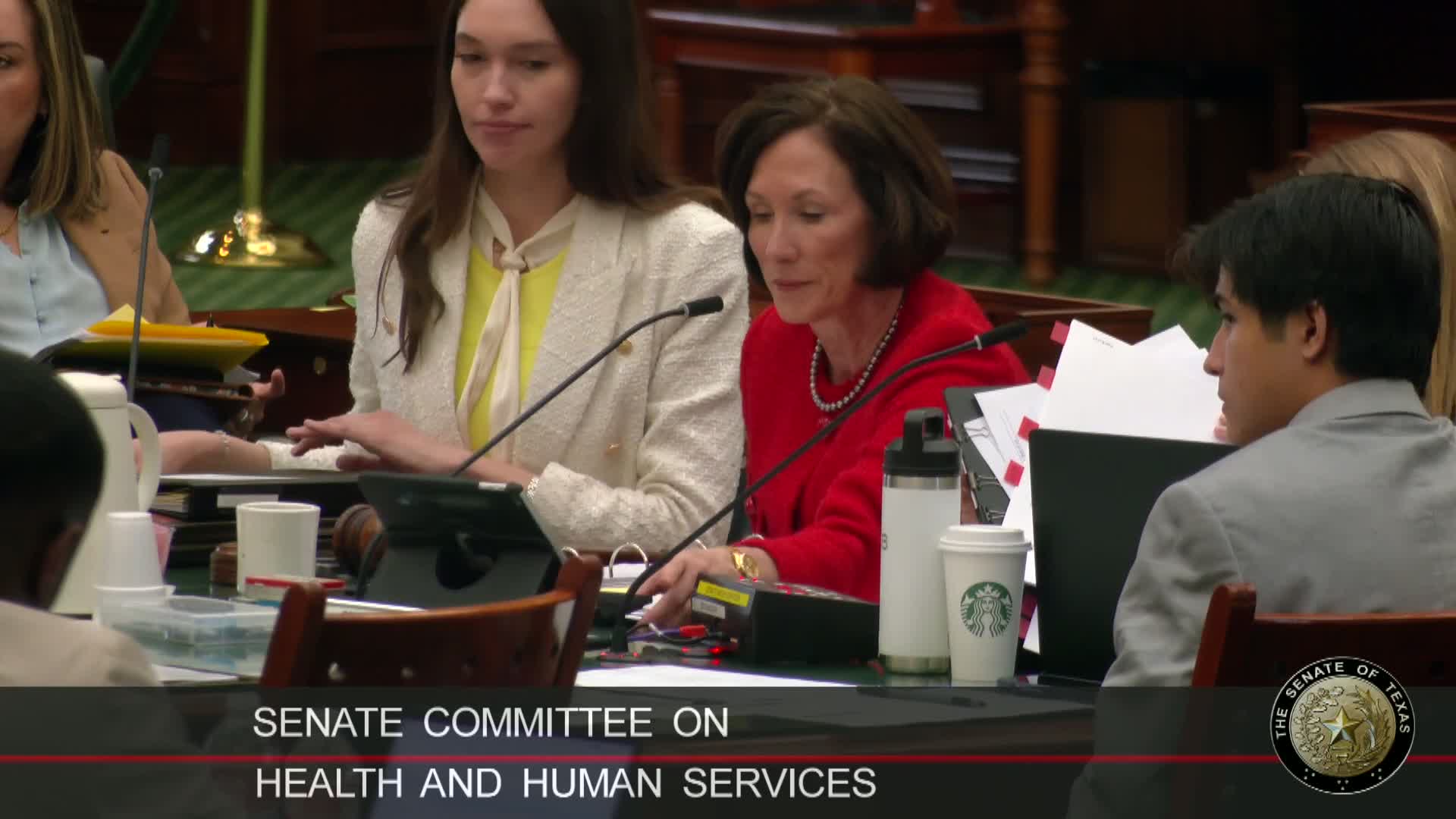
Senators in the Committee on Health & Human Services heard more than two hours of testimony Wednesday on Senate Bill 125, a bill by Sen. Charles Hall that would require certain hospitals and blood centers to accept and facilitate directed and autologous blood donations for planned procedures when a patient (or the patient’s representative) provides notice in advance.
Supporters said the practice allows patients with rare blood types or chronic transfusion needs to receive fresher, better-matched blood and can cut the frequency of transfusions. Dr. Gloria Danielle Gamboa, a licensed physician who treats two children with homozygous beta thalassemia major, told the committee the girls “stopped getting sick” after the family organized known donors and used directed donations. Mother Tanya Lair said the family’s health “got turned upside down” in 2023 when Carter Blood Care told them their donors could no longer donate for the children, and that the children’s hemoglobin fell and their energy and school performance declined until the family found another hospital and donor source.
“The girls stopped getting sick, their hemoglobin stayed normal,” Dr. Gamboa said, describing how access to directed donors allowed transfusions to be spaced to once every four weeks instead of every two or three. Tanya Lair said, “I’m here today with my girls, begging you, once again, to support this bill.” Both girls provided brief statements describing improved health and activities after their donors were restored.
Opponents, including representatives of Carter Blood Care, We Are Blood and the Texas Hospital Association, told the committee SB 125 in its current form raises feasibility and safety concerns. BJ Smith, chief operating officer at Carter Blood Care, said blood centers must follow federal Food and Drug Administration (FDA) rules, that autologous and directed donations require special handling and testing, and that a 72-hour processing mandate in the bill could be impractical. Nicole Losarti of the Texas Hospital Association said “most Texas hospitals don’t have the infrastructure to comply” with FDA registration and that proper testing and preparation “typically takes between 7 and 14 days.”
We Are Blood’s vice president, Nicholas Canedo, said his center collected roughly 66,000 donations last year and that only 30 were directed or autologous based on physician orders; he said the bill lacks language to distinguish medically necessary directed donations from voluntary preferences and that removing a physician-order requirement could increase demand on blood centers and the risk of diverting resources from the community blood supply.
Committee members pressed both sides for practical fixes. Senator Hall and others said the bill’s committee substitute will narrow requirements to hospitals that already facilitate directed/autologous donations and will add language to preserve physician oversight and medical necessity. The committee left the bill pending and directed staff to continue working with stakeholders on a substitute.
Why it matters: Families of patients who depend on chronic transfusions told the committee the change in donor policy had immediate health effects. Lawmakers must weigh those individual impacts against operational and regulatory constraints raised by blood centers and hospitals.
Votes/actions: No final vote occurred; SB 125 was left pending for a committee substitute and additional stakeholder negotiation.
Ending: Committee members asked authors and opponents to meet on bill language. The chair closed public testimony and left the bill pending, noting a committee substitute would address many of the operational and scope concerns raised.