Get Full Government Meeting Transcripts, Videos, & Alerts Forever!
Get email alerts on the Medical Ethics Defense topic
No spam. Unsubscribe anytime.
Committee approves Medical Ethics Defense Act after testimony on conscience protections for clinicians
Summary
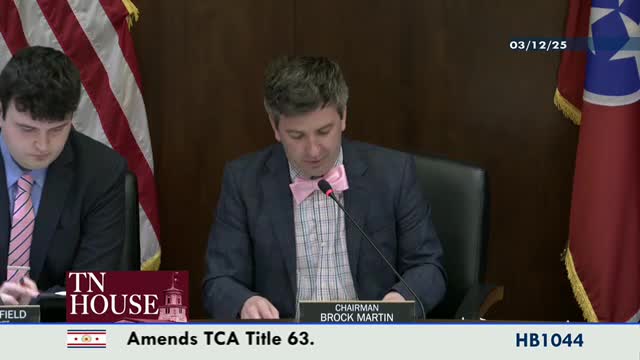
The House Health Committee approved the Medical Ethics Defense Act (HB 10‑44) by a 7–2 vote after sponsor remarks and supporting testimony from Alliance Defending Freedom.
The House Health Committee on March 12 approved House Bill 10‑44, the Medical Ethics Defense Act, by a 7–2 vote. The bill would protect doctors, nurses, pharmacists and medical students from being required to participate in non‑emergency procedures, treatments or services that conflict with their moral, ethical or religious beliefs, while maintaining that emergency‑care requirements under federal law would continue to apply.
Sponsor remarks described the measure as designed to reduce “moral injury” to clinicians and to help recruit and retain physicians. The sponsor said the bill would not permit refusals of emergency care covered by federal law and that payers could not withhold contractually obligated payments solely because a provider invoked a conscientious objection.
Erica Steinmiller Perdomo, an attorney with Alliance Defending Freedom, testified in support. She described national cases where practitioners or students were disciplined after asserting conscientious objections and said HB 10‑44 would protect providers from being forced to perform specific non‑emergency procedures. “There’s no right in this bill to refuse to serve a person because of a specific trait,” she told the committee, and she emphasized the bill’s carve‑outs for emergency treatment under EMTALA.
Committee members asked multiple questions about emergency exceptions, access to care in life‑threatening situations, and whether similar laws in other states had led to documented access problems. The attorney said seven other states have enacted comparable protections (examples cited included Illinois and Mississippi) and that there had been no documented instances in those states of patients being denied emergent or sought‑after care because of conscience protections.
Representative Mitchell and Representative McKenzie pressed the witness and sponsor on emergency scenarios and whether the bill would impede life‑saving care. The testimony and sponsor statements repeatedly referenced EMTALA (the federal Emergency Medical Treatment and Labor Act) as the controlling law for emergency care obligations. The committee approved the bill; Madam Clerk announced 7 ayes and 2 nays, and the chair said HB 10‑44 moves to the Health Full committee.
What the bill would do: HB 10‑44 establishes conscience protections for non‑emergency procedures, preserves EMTALA obligations for emergencies, and bars payers from declining payment for procedures they contractually must cover. The bill’s sponsor and supporters characterized it as a tool to protect clinicians’ conscience rights and to address workforce retention concerns.