Get Full Government Meeting Transcripts, Videos, & Alerts Forever!
Get email alerts on the Paid Family Caregivers topic
No spam. Unsubscribe anytime.
Senate committee advances bill to make it easier for provider agencies to hire family caregivers for TennCare recipients
Summary
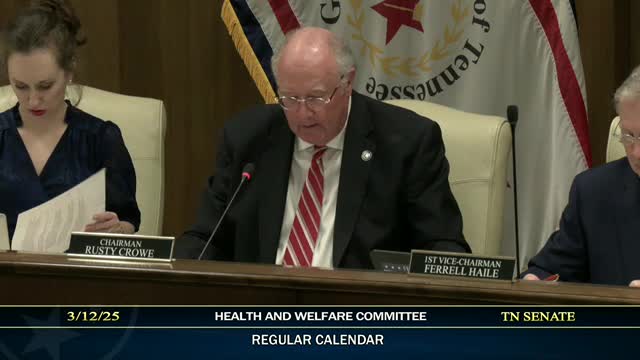
The Senate Health and Welfare Committee voted unanimously to advance Senate Bill 1178 after amendments clarifying conservatorship language and requiring guidance from TennCare and the Department of Disability and Aging on how provider agencies may hire family members to provide home- and community-based services.
The Tennessee Senate Health and Welfare Committee advanced Senate Bill 1178 on a unanimous voice and roll-call vote after testimony from TennCare officials and a family caregiver.
The bill, sponsored in the Senate by Sen. Akbari, would require TennCare and the Department of Disability and Aging to develop guidance on how a Medicaid-participating provider agency may hire a family member to provide home- and community-based services and long-term supports for a loved one with a disability. A floor amendment changed language to make the rules prospective and adjusted wording related to conservatorship so the bill would not apply retroactively to existing conservatorship arrangements.
The measure grew from lawmakers’ concerns about a workforce shortage in home- and community-based services (HCBS) and long-term supports and services (LTSS). Supporters argued that allowing provider agencies to hire qualified family members would help fill gaps when agencies cannot supply a worker and would reduce negative outcomes for people with disabilities and their caregivers, such as financial insecurity or lost employment.
TennCare representatives described how the policy would operate under existing program rules. James Held, legislative liaison with TennCare, said the amendment aligns with current TennCare and DDA policy and retained conservative reciprocal language intended to fit agency rules. Katie Evans, chief of long term services and supports at TennCare, said it was possible the change could increase expenditures in some situations but that she and TennCare staff expected the fiscal impact to be small because many services are already funded when a person is approved; the change primarily affects who provides funded services rather than adding new funded services. TennCare also described oversight mechanisms: provider agencies, not the consumer-directed program, would hire family caregivers, allowing agency supervision, background checks and agency monitoring; managed care organizations would continue medical necessity determinations and care coordination.
Committee members pressed on oversight and on whether a family caregiver would lose pay while pursuing conservatorship. Sen. Massey asked whether a paid family caregiver would lose funding during conservatorship proceedings; TennCare offered to follow up with additional detail. Sen. Watson asked about the scale of fraud, waste or abuse tied to paid family caregivers; TennCare said it does not yet have complete data on how many family members are employed through agencies and that tracking such arrangements can be difficult, but that provider-agency oversight is intended to mitigate risk. Several members, including Sen. Massey, said Tennessee’s protections for vulnerable people and provider monitoring provide confidence that abuses would be limited and caught when they occur.
A family member, Billy Boywood, testified in support and described the financial and personal sacrifices his family made to care for a medically complex child, arguing that paying qualified family caregivers saves the state money by avoiding institutional care.
The bill drew a fiscal-question exchange on the record. Senator Hensley noted a fiscal note labeled “not significant”; TennCare said it had not submitted a separate fiscal impact under amended guidelines. TennCare and committee leaders characterized the change as primarily guidance and rule changes, not a broad new funding commitment. The sponsor and TennCare said hiring would occur through provider agencies rather than consumer-directed programs so agencies retain responsibility for oversight and background checks.
On a roll-call vote the committee recorded nine ayes and no nays; the bill was advanced to the calendar.
Copies of the amendment text and TennCare’s guidance offer were requested during the hearing; TennCare indicated staff would follow up with additional details for members who raised specific procedural questions.