Get Full Government Meeting Transcripts, Videos, & Alerts Forever!
Get email alerts on the Committee Roundup Votes topic
No spam. Unsubscribe anytime.
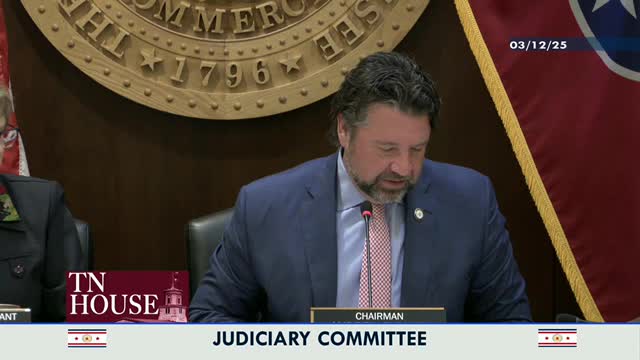
House Judiciary Committee advances multiple criminal‑justice and public‑safety bills; roundup and votes at a glance
Summary
The committee advanced a package of bills on hemp regulation, DNA collection, fentanyl penalties, probate payments, rideshare impersonation, child‑safety funding and other measures. This roundup lists each bill, the committee action and key details.
The House Judiciary Committee considered a full calendar and advanced a mix of public-safety, criminal-justice and administrative bills. Several drew brief discussion; others prompted more extensive debate and public testimony. Below are the key outcomes and short notes on each docketed item recorded in committee minutes.
Votes at a glance
- House Bill 9-62: Approved to Commerce (16 ayes, 0 nos, 1 present not voting). The bill permits local governments to form hemp/CBD boards, working with the ABC; sponsor described it as permissive and complementary to pending state-level enforcement changes.
- House Joint Resolution 100: Approved to calendar and rules (20-0). Urges opioid-abatement administrators to dedicate 25% of funds to naloxone purchases and public awareness (see separate article).
- House Bill 7-51 (as amended): Approved to calendar and rules (16 ayes, 2 nos, 2 present not voting). The sponsor raised penalties for possessing fentanyl or derivatives around children (class C and B felony tiers discussed). The amendment tightened language about knowingly having fentanyl in proximity to children.
- House Bill 7-55 (as amended): Approved to calendar and rules (21-0). Removes a $10,000 cap on immediate payments to estates or replaces an old statutory cap so that wages owed are paid to families without being delayed in probate.
- House Bill 4-73 (DNA bill, as amended): Approved to finance, ways and means (18 ayes, 3 nos). Requires DNA samples be taken at booking when a person is arrested and indicted for a felony, with destruction rules for nonconvictions discussed.
- House Bill 7-86 (as amended): Approved to calendar and rules (20-0). Increases penalties for impersonating rideshare or taxi drivers to protect riders and drivers.
- House Bill 11-48 (as amended): Approved to finance, ways and means (13 ayes, 7 nos, 1 present not voting). Removes THCA and THCP from authorized hemp cannabinoids and includes post-decarboxylation testing language; sponsors and members debated economic and public-health impacts (see separate article).
- House Bill 11-65 (as amended): Approved to finance, ways and means (17 ayes, 1 no, 2 present not voting). Creates an enhancement for adults who coerce minors into committing crimes.
- House Bill 5-82: Approved to calendar and rules (21-0). Codifies Tennessee Bureau of Investigation authority to classify sex offenders, reflecting longstanding practice.
- House Bill 5-47: Approved to finance, ways and means (20-0). Creates a public safety fund for district attorneys, funded by a $12.50 charge; modeled on an existing public‑defender fund and subject to local adoption.
- House Bill 8-21: Approved to calendar and rules (20-0). Requires ID checks for all vape and tobacco purchases, aligning practices with alcohol retail ID rules.
- House Bill 6-41: Approved to finance, ways and means (20-0). Seeks to increase funding for Tennessee’s 32 accredited child advocacy centers; sponsors noted current per‑child payments have not kept pace with costs.
- House Bill 33: Approved to finance, ways and means (11 ayes, 5 nos). Adds transparency requirements when a judge or judicial commissioner releases a defendant charged in an offense involving a firearm, requiring findings documented at time of release.
- House Bill 38: Approved to calendar and rules (9 ayes, 8 nos). The Parental Accountability Act would require mandatory parent/guardian penalties for a child’s third or subsequent delinquency adjudication; a Vanderbilt law professor testified in opposition and members raised concerns about judicial discretion and the effect on low-income families (see separate article).
What’s next
Bills that moved to finance and ways and means will receive fiscal review and additional committee hearings as needed. Measures sent to calendar and rules will be scheduled for floor consideration. Several bills that drew objections or narrow votes are likely to see further amendments before final action.