Lifetime Citizen Portal Access — AI Briefings, Alerts & Unlimited Follows
Subcommittee approves bill to add legislative appointees to Tennessee higher‑education boards
Loading...
Summary
House Bill 919, which would increase board sizes and create appointments for the speaker of the house and the lieutenant governor on multiple higher‑education governing boards, was amended and advanced to the full House Education Committee by a 4‑0 vote.
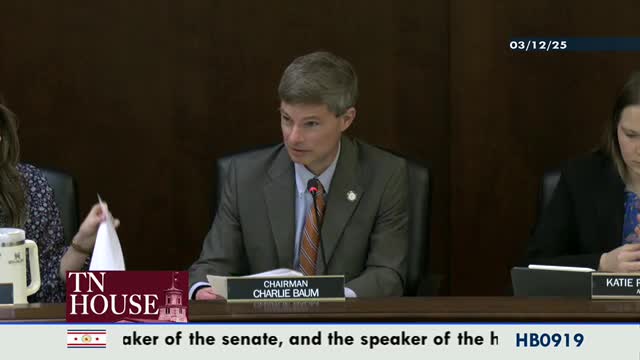
The Higher Education Subcommittee on March 12 adopted an amendment to House Bill 919 and voted 4‑0 to send the bill to the full House Education Committee.
Chairman Supiki, the bill sponsor, said the measure "is designed to make Tennessee's higher education boards more representative, accountable and effective." He explained the bill would increase membership on multiple boards and add seats appointed by legislative leaders: two new positions for the Tennessee Board of Regents (bringing it from 19 to 21), two new seats across state university boards (from 10 to 12), and two added seats on University of Tennessee trustee boards (from 12 to 14). "One will be appointed by the speaker, one will be appointed by the lieutenant governor," Supiki said, adding that when the next two members are up for reappointment the speaker and lieutenant governor would make those appointments, after which the governor's appointment pattern would resume as outlined.
Supiki described the bill as a sectioned proposal that applies the same appointment process across the different governing boards. The subcommittee adopted the rewrite amendment (005166) by voice vote and then recorded a 4‑aye, 0‑nay roll call; the clerk reported the tally and the chairman announced the bill "moves to full education."
No fiscal figures were discussed in detail on the record during committee debate; the sponsor offered to answer questions and members did not request further analysis at the time of the vote.