Get Full Government Meeting Transcripts, Videos, & Alerts Forever!
Get email alerts on the Juvenile Justice Parental Accountability topic
No spam. Unsubscribe anytime.
Heated debate, legal-opinion testimony as Parental Accountability Act advances to calendar and rules
Summary
House Bill 38, which would require mandatory parental financial penalties for a child's third or subsequent delinquency adjudication, drew public legal testimony and concern from juvenile-justice advocates before the committee sent the bill to calendar and rules by a narrow margin.
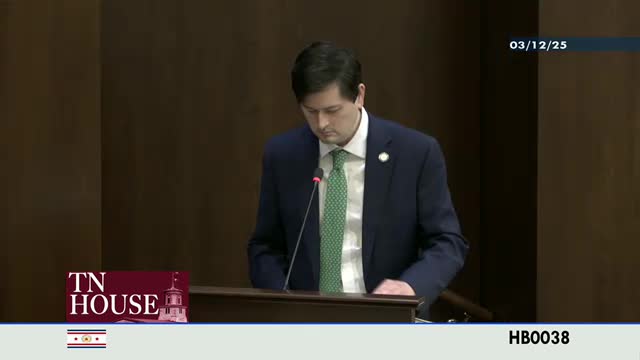
Representative Gillespie sponsored House Bill 38, the ‘‘Parental Accountability Act,’’ and the House Judiciary Committee voted to send the bill to calendar and rules after public testimony and extended questioning.
Under the bill as presented, parents or legal guardians of a child adjudicated delinquent for a third or subsequent offense would face a financial penalty (identified in committee as restitution or a reimbursement) or court-ordered community service if they cannot pay. Gillespie said the measure is intended to force greater parental engagement where a young person repeatedly comes before juvenile court.
Cara Souvall (identified in testimony as Cara Souvall), clinical law professor at Vanderbilt Law School and director of a youth legal clinic, testified in opposition. She said juvenile judges already have discretion under current law to impose financial penalties in appropriate cases, and she warned making penalties mandatory ‘‘would actually damage public safety instead of improving it’’ by diverting scarce resources from services. Souvall said many families the clinic represents are low-income and rely on limited funds and time to obtain services for children and that mandatory fines could reduce their ability to access treatment or supervision.
Committee members questioned whether the bill presumes parental culpability. Representative Bolso (Bolesale) and Representative Johnson asked whether the bill imposes an implicit presumption that parents are responsible; Souvall and members noted the current law allows judicial discretion and that the proposed change makes the penalty mandatory rather than permissive.
Members also raised concerns about terminology and priorities. Representative Johnson said restitution traditionally compensates victims and questioned whether the bill’s use of the term could conflict with victims’ restitution claims or create a perverse incentive. Members asked whether payments would be directed to victims or to law enforcement agencies; testimony indicated the bill would route funds to law-enforcement uses rather than directly to victims, raising separation-of-purpose concerns.
After public testimony and debate the chair called the question. The clerk recorded 9 ayes and 8 nos; House Bill 38 moves to calendar and rules for further consideration.