Get Full Government Meeting Transcripts, Videos, & Alerts Forever!
Get email alerts on the Economic Development topic
No spam. Unsubscribe anytime.
Committee advances update to Gulch redevelopment law, extending bond timeline and tightening eligibility
Summary
House Bill 416 would adjust an existing enterprise-zone-style statute created for Atlanta's Gulch (now Centennial Yards), extending the period tied to bond issuance and closing an eligibility loophole; committee advanced the bill unanimously after developer and sponsor testimony.
House Bill 416, a bill to update the statute created for redevelopment of Atlanta’s former Gulch area (now known as Centennial Yards), was advanced by the committee following testimony from the original legislation’s sponsor and a developer representative about project timing and financing.
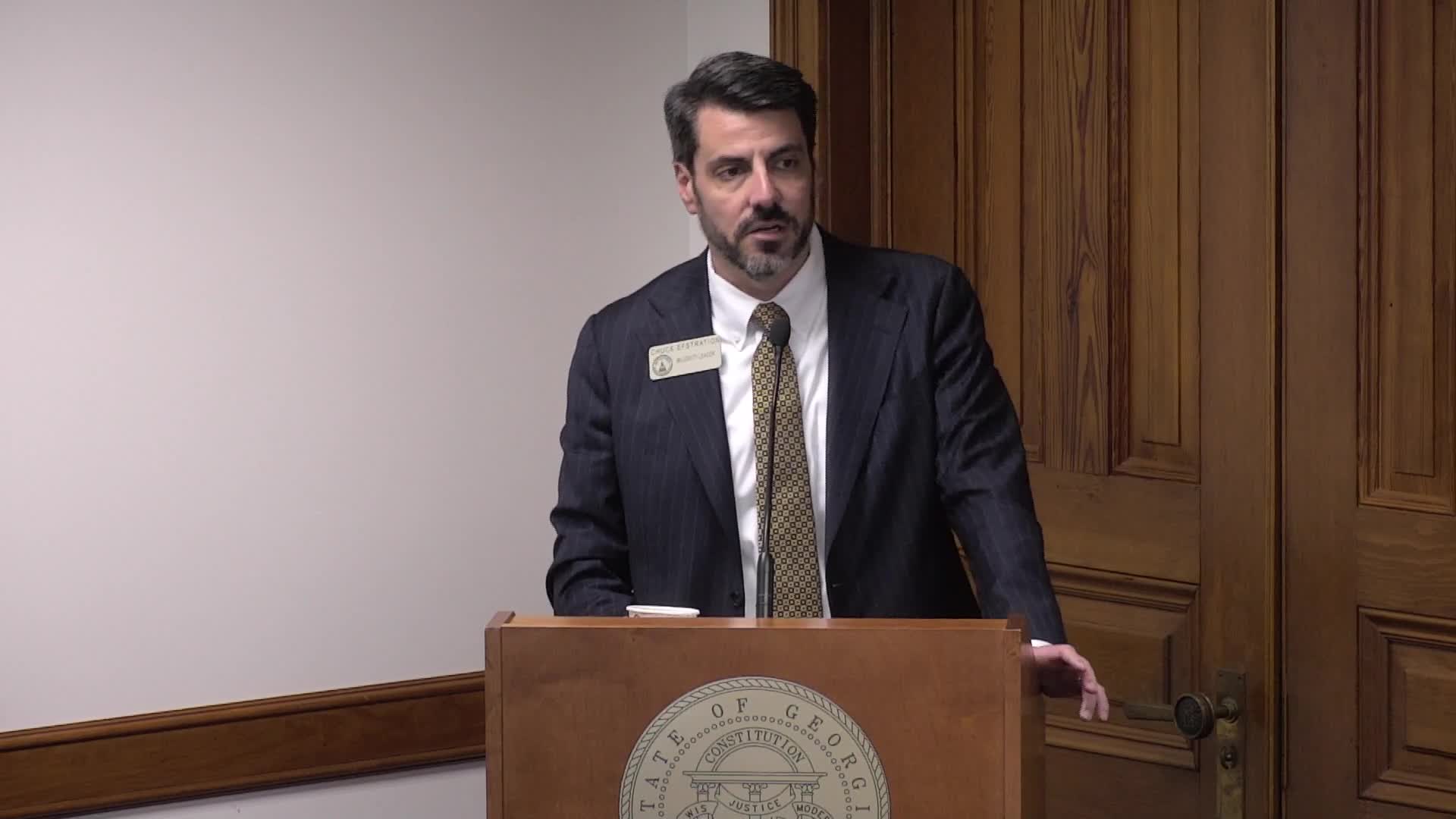
The bill’s sponsor told the committee he originally carried legislation to enable redevelopment of the underused downtown tract and said the new bill “is an attempt to address that, really recognize the realities that occurred, after this legislation was passed.” He described the proposal as creating an enterprise zone structure that could apply statewide but was tailored to the Gulch/Centennial Yards redevelopment and said the bill closes a potential loophole that could otherwise let businesses outside the zone improperly use the incentive.
Robert Highsmith, representing CIM Group (the project developer), described project history and financing. Highsmith said $358 million in bonds were issued last year under the enterprise-zone mechanism and that the total private investment in the project is expected to reach as much as $5 billion when fully developed. He said the existing statute requires a minimum private investment of $400 million to qualify; the Department of Community Affairs certified that the area met the chronic-underdevelopment standard required by law.
Committee members asked clarifying questions about the 30-year bond term and whether rail operations still exist under the site; witnesses confirmed active freight rail and noted infrastructure costs reflect building above the tracks. A motion to give House Bill 416 a favorable report was offered and passed without recorded opposition; the sponsor and committee members discussed coordinating statutory cross-references and finding a Senate carrier.
The committee advanced the measure to preserve the original intent of the redevelopment statute while updating timelines and tightening eligibility language.