Get Full Government Meeting Transcripts, Videos, & Alerts Forever!
Get email alerts on the Film Tax Credit topic
No spam. Unsubscribe anytime.
Committee advances film tax-credit cleanup bill, allows application fees and 'loser pays' appeals
Summary
HB 475, a code-cleanup and clarification for the film tax credit program that authorizes nominal processing fees and a loser-pay rule for appeals, advanced from committee 6–1 after debate over fees and competitiveness.
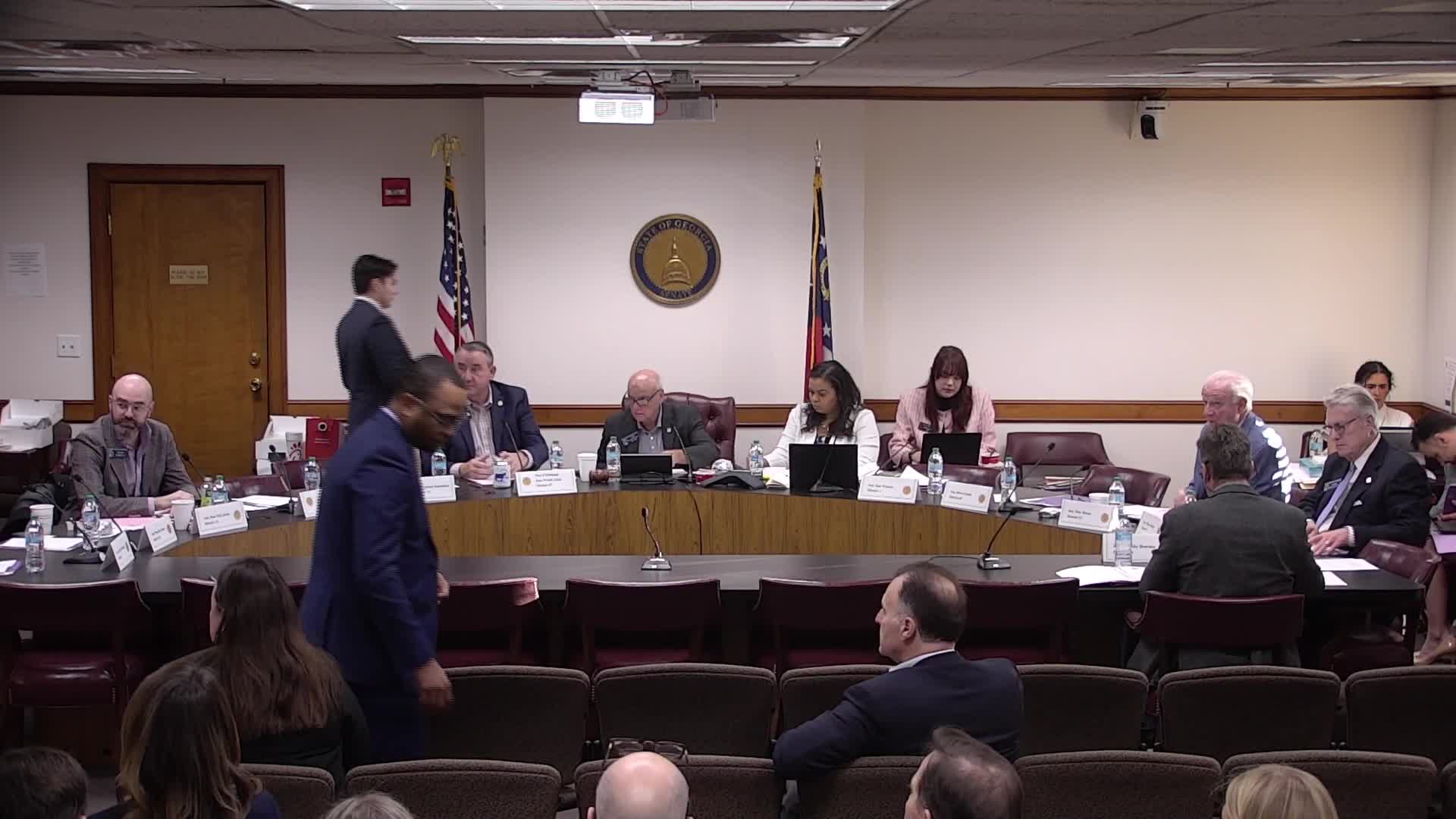
The Senate Economic Development Committee advanced House Bill 475 after a contentious committee vote, 6–1, approving a bill described by its presenter as a non-substantive cleanup of the state’s film tax credit statute that includes authority for the department to charge nominal processing fees and a loser-pays provision for appeals.
Representative Gamble told the committee, “this is not substantive tax policy change on the film tax credit. This is a bill that's designed to clean up, clarify, and confirm.” The bill removes obsolete terminology (for example, references to “televised commercials” and “laserdisc”), clarifies eligibility for modern streaming platforms, excludes short social-media posts filmed on a phone from eligibility, and allows the department to set reasonable fees for expedited or corrective processing. It also permits the state to recover attorney fees from a challenger who brings an unsuccessful appeal.
Josh Stevens of the Georgia Department of Economic Development told the panel the fee authority is intended to address cases where applicants miss deadlines or need expedited handling: “These fees would be utilized for really mitigating those issues that come up in the the process. They're not really intended in any way to be prohibitive.”
Lee Thomas of the state film office said the office supported a narrowly drawn fee authority because it can be a remedy that avoids stripping a credit when paperwork is late and can help productions obtain letters needed to secure financing.
Committee members asked for fee amounts and raised competitiveness concerns because the industry has experienced contractions during strikes; staff said the fees would be nominal and modeled on peer states. After discussion, the committee approved the bill by a 6–1 vote; one senator opposed. The bill now moves forward in the Senate process.