Get Full Government Meeting Transcripts, Videos, & Alerts Forever!
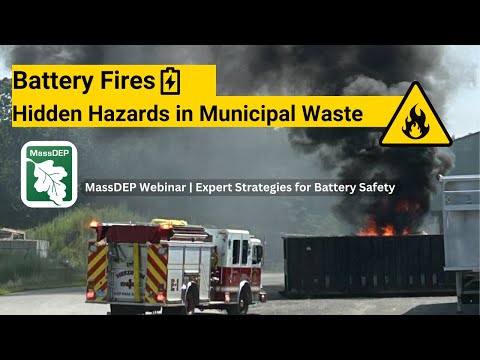
MassDEP webinar: municipalities, fire and police warn lithium batteries are rising cause of MRF and transfer-station fires
Summary
A Massachusetts Department of Environmental Protection webinar on battery safety brought municipal recycling managers, waste processors, Call2Recycle, fire officials and the state police bomb squad together to review recent fires, handling best practices and a push for statewide extended-producer-responsibility for batteries.
A Massachusetts Department of Environmental Protection webinar on battery safety on Feb. 1 brought municipal recycling managers, waste processors, Call2Recycle, fire officials and the state police bomb squad together to review recent fires, handling best practices and plans for an extended-producer-responsibility law for batteries.
Speakers said lithium-ion batteries have become an increasingly frequent cause of fires at materials recovery facilities (MRFs), municipal transfer stations and in homes, and they urged stepped-up public education, consistent on-site handling, stronger partnerships with fire departments and new statewide funding and collection systems.
The session opened with Carrie Parcel, municipal assistance coordinator at the Massachusetts Department of Environmental Protection, saying the meeting would cover “batteries and battery safety, collection, handling, identification, and what to do.” That framing set the tone for roughly 90 minutes of presentations and a wide-ranging Q&A with municipal staff, industry and first responders.
Why this matters
Speakers described repeated, costly and sometimes dangerous incidents that can begin when consumers discard or bring damaged rechargeable batteries mixed with curbside recycling or scrap metal. Brendan Farrell, plant manager at Waste Management’s Avon MRF, said the facility sees “about one fire a month” tied to lithium-ion cells and described a July incident that damaged equipment and forced a shutdown for weeks. Farrell told attendees that MRF environments — heavy machinery, conveyors and balers processing hundreds of tons daily — can physically rupture cells and trigger thermal runaway.
Matthew Demeray, superintendent of recycling and solid waste for Needham, recounted a July 2024 container…
Already have an account? Log in
Subscribe to keep reading
Unlock the rest of this article — and every article on Citizen Portal.
- Unlimited articles
- AI-powered breakdowns of topics, speakers, decisions, and budgets
- Instant alerts when your location has a new meeting
- Follow topics and more locations
- 1,000 AI Insights / month, plus AI Chat