Get Full Government Meeting Transcripts, Videos, & Alerts Forever!
Get email alerts on the Higher Education Financial Aid topic
No spam. Unsubscribe anytime.
Georgia bill would suspend state scholarships for students convicted of campus violence
Summary
Representative Virginia Fleming introduced House Bill 660, a proposal to suspend state scholarship eligibility for one semester for students convicted of certain violent or vandalism-related offenses on campus.
Representative Virginia Fleming introduced House Bill 660, a proposal to suspend state scholarship, grant or loan eligibility for one semester for students convicted of certain acts of violence, vandalism or similar unlawful aggression while attending Georgia postsecondary institutions.
The bill applies to recipients of state financial aid programs, including HOPE, at public and private institutions. "We're not talking here about peaceful protest," Fleming said, adding the penalty would apply only after due process and a conviction for violent or property-damaging conduct. "Once the line is crossed and there are certain crimes you commit, you will lose HOPE if convicted for one semester." (Representative Virginia Fleming, presentation.)
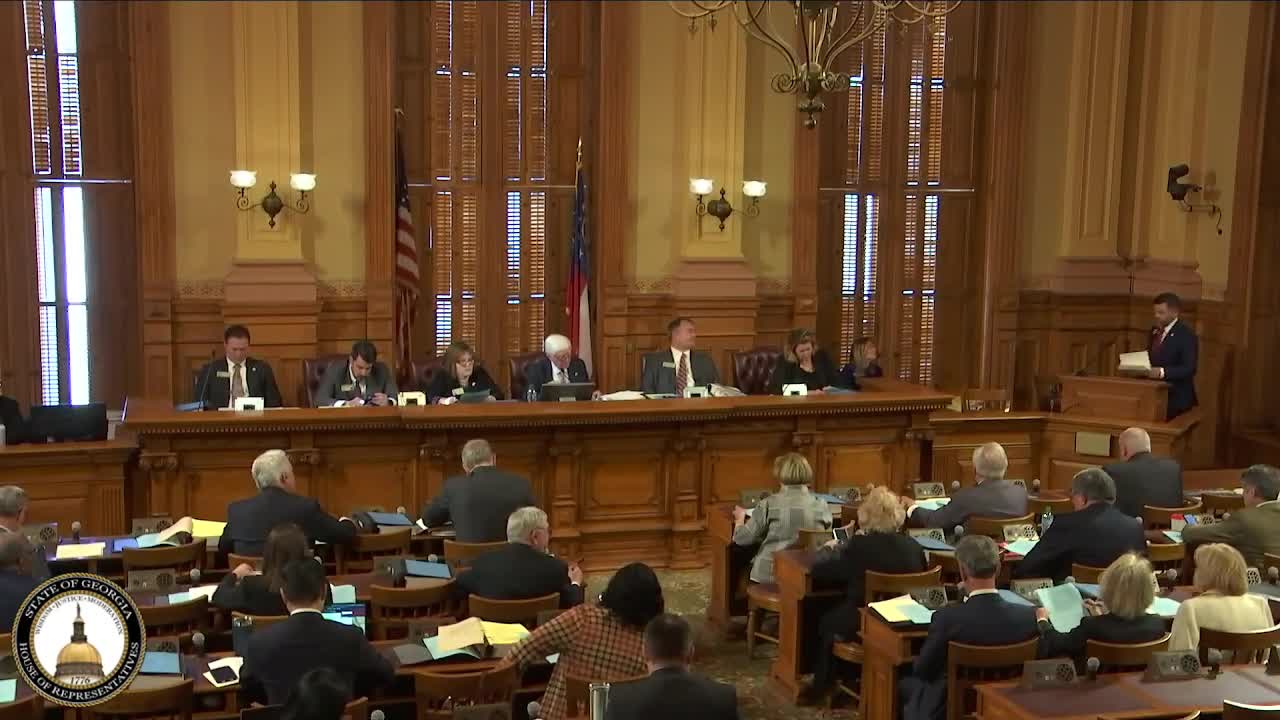
Committee members pressed the author on whether the bill would affect students who engage in nonviolent civil disobedience that nevertheless violates law. Representative Miller and others argued historic civil-rights protests were often peaceful yet unlawful and that removing financial aid could hinder reintegration and rehabilitation. Representative Evans noted a student can be peaceful yet still break the law and be arrested.
Fleming responded that the bill is intended as a tool for institutions and is aimed at unlawful, violent behavior that has crossed a line, not peaceful protest. "We are not going after First Amendment rights," she said. "That is your right to peaceful protest. It is once you cross that line and there are laws broken that this is what we're going after." (Representative Virginia Fleming, later remarks.)
The committee discussion focused on scope and application: the bill requires a criminal conviction before the forfeiture of a semester of state aid; it targets convictions for specified violent or property-damage offenses and is not, per the author, intended to penalize mere loud or disruptive behavior. Several members urged further clarification about the bill's language, including the meaning of the phrase "otherwise unlawful," and how the penalty would interact with campus disciplinary processes and post-conviction remedies.
No formal vote or committee action was recorded on HB 660 during the hearing. The chair urged members to continue conversations outside the hearing and indicated the item would proceed through normal committee scheduling.
Why it matters: The bill would create a statutory link between criminal convictions for certain campus incidents and temporary suspension of state financial aid, affecting students who rely on HOPE and similar programs. Opponents warned the language could sweep in students who engaged in peaceful but unlawful civil disobedience; proponents stressed the requirement of conviction and said the bill targets violent or property-damaging conduct.
What's next: HB 660 remained under discussion at the close of the hearing; the committee did not take a recorded vote and members urged additional conversations and clarifications before further action.