Get Full Government Meeting Transcripts, Videos, & Alerts Forever!
Get email alerts on the Apprenticeship Beauty topic
No spam. Unsubscribe anytime.
Committee advances bill letting barbers and nail technicians use DOL-registered apprenticeships to qualify for licensure
Summary
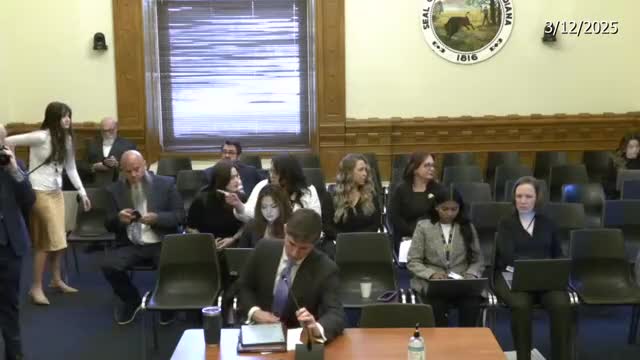
The committee voted 10-1 to move House Bill 13-20, which would allow licensed barbers and manicurists to register Department of Labor apprenticeships that lead to eligibility for state licensure after completing the program and required exams.
Representative Wescow, sponsor in the House, told the committee that House Bill 13-20 would allow licensed barbers and manicurists to register apprenticeships with the U.S. Department of Labor and make apprentices who complete those programs eligible to take licensure examinations.
The bill would let barbers and nail technicians use Department of Labor (DOL) registered apprenticeships as an alternative pathway to licensure, Representative Wescow said, a track that includes at least 2,000 hours of combined on-the-job and instructional time and requires written and practical exams for licensure eligibility.
The proposal drew testimony from salon owners, apprentices and industry advocates who said the apprenticeship model lowers barriers to entry, provides hands-on training in real salon settings and prevents student debt. Marta Robinson, a salon owner who helped run a cosmetology apprenticeship last year, said, “This apprenticeship has opened doors and created a positive atmosphere where learning and growth thrive.”
Two current apprentices described their experience. Casey Strome, a cosmetology apprentice who previously taught elementary school, said the hands-on approach fits how many people learn today and allows apprentices to continue earning income while training. Kaley D'Angelo, identified in testimony as Indiana’s first cosmetology apprentice, said the on-the-job training gave her confidence and practical business skills and allowed her to avoid student debt.
Margaret Ferguson, a licensed cosmetologist and founder of Beyond the Chair, told the committee some stakeholders worried that moving oversight to federal apprenticeship registration could remove state-level protections. Ferguson said the state board of cosmetology and barbers focuses on public safety and that federal registration, she argued, can increase labor protections because DOL-registered programs are tracked and require documentation such as Social Security numbers.
Terry Greenwood, owner of Terry’s Empire Barber Shop in Terre Haute, said his shop has turned away hundreds of potential apprentices in recent years and argued the apprenticeship pathway could revive barbering and help people who cannot afford traditional school.
Committee members asked about interactions with traditional schooling, costs, pay and curricular content. Senator Alexander asked whether the bill would prohibit traditional schooling; Representative Wescow replied it would not and called the apprenticeship an “alternative track.” Senators asked about cost savings and wages: witnesses said most Indiana beauty schools average about $15,000 in tuition and that DOL-registered apprenticeships are paid positions; Robinson said apprentices in her program receive raises during the program and graduate without debt. Robinson said apprentices in her salon are paid and that in her contracts apprentices make $15.75 per hour at the end of the apprenticeship.
Several senators raised concerns about human trafficking awareness and training. Margaret Ferguson and other witnesses said some states include trafficking-awareness training in beauty education and that federally registered apprenticeships can facilitate partnerships with nonprofits that support survivors. A senator suggested adding trafficking-awareness training to the bill; the chair said the committee could study that possibility and consult with the Professional Licensing Agency (PLA) and the Department of Labor before adding amendments.
After discussion the committee called the roll. The recorded vote on moving HB 13-20 was 10 in favor, 1 opposed. Senator Hundley explained a “no” vote while noting general support and a desire to address some concerns later. The committee chair said the bill would be moved today.
The committee’s action advances HB 13-20 to the next stage of the legislative process; the transcript does not specify subsequent committee assignments or a calendar date for further consideration.