Get Full Government Meeting Transcripts, Videos, & Alerts Forever!
Get email alerts on the Local Government Annexation topic
No spam. Unsubscribe anytime.
Committee hears heated debate over Mulberry incorporation: service agreements, annexation and sovereign immunity at issue
Summary
Senators spent the longest portion of the hearing on two linked local measures affecting the newly incorporated city of Mulberry and Gwinnett County: SB 138, seeking to compel a service-delivery agreement under the transition statute, and SB 139, an annexation bill for commercial tracts.
Senators spent the longest portion of the hearing on two linked local measures affecting the newly incorporated city of Mulberry and Gwinnett County: Senate Bill 138, aimed at bringing county practice into alignment with the transition statute and prompting an intergovernmental service-delivery agreement, and Senate Bill 139, an annexation bill for primarily commercial parcels.
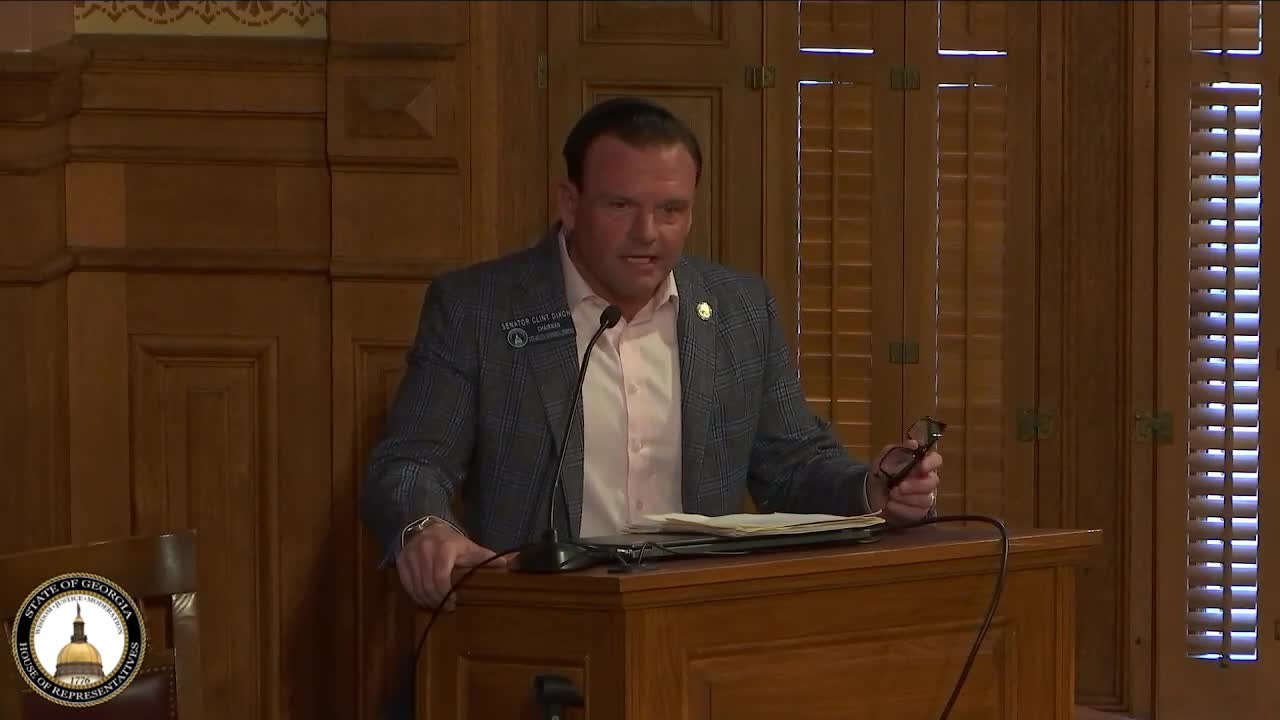
Sponsor Senator Dixon told the committee the county had refused to enter a service-delivery agreement and had not returned the mayor’s calls, and that county crews had refused to repair a knocked-down stop sign on a county road within the new city’s boundaries. Multiple members challenged that account: Representative Whit Parks said he had been shown written communications from Gwinnett County, including a draft intergovernmental agreement, and asked whether the county had provided documentation to the House. Senator Dixon replied that city elected officials had not been able to reach the county chair or county manager and that attorneys for the county had handled communications, and he said the county’s attorney only reached out after the legislation moved from the Senate to the House.
Members raised broader legal questions. One senator recited that several bills this session could allow selective waiver of sovereign immunity; members and the sponsor discussed whether enforcement of the transition statute would leave sovereign immunity intact if the county complied. The transcript records that the Association County Commissioners of Georgia (ACCG) strongly opposes SB 138 on the grounds it would set a precedent of forcing counties into agreements and would implicate sovereign immunity, though the transcript does not contain an ACCG representative’s live testimony.
Sponsor statements included numeric and budgetary claims. Senator Dixon said roughly 41,000 Gwinnett County residents live within the city of Mulberry. He also stated that Gwinnett County’s budget is $2,670,000,000 and that the county’s budget had risen about 30% in the past two years; he characterized the city’s captured revenue as approximately $9,000,000. Those figures were presented by the sponsor in argument and were not independently verified in the hearing record.
Members pressed the sponsor on process and decorum. One member said local-delegation bylaws require a majority of Gwinnett County representatives to support annexation-related legislation and questioned running an annexation as a general bill; the sponsor said running local matters as general bills is common in the Senate’s practice. Another member said that some residents adjacent to the new city had requested annexation; the sponsor said Mulberry had bipartisan support and that some representatives who do not live in the affected areas had sought to block the will of voters.
Both bills were moved and seconded in committee and encountered objections in the voice votes recorded in the transcript; the clerk set a calendar for the next legislative day to continue consideration. The transcript does not record a roll-call tally, and no final adoption or defeat is recorded in the excerpted hearing.
The dispute raises practical questions about intergovernmental communications and the limits of county authority during incorporation transitions. Committee leaders said more Senate bills would appear after the clerk’s reports the following day; both Mulberry bills were advanced to be calendared for further consideration rather than finally disposed of during this session.