Get Full Government Meeting Transcripts, Videos, & Alerts Forever!
Get email alerts on the Bank Of North Dakota topic
No spam. Unsubscribe anytime.
Bank of North Dakota outlines risk management, student‑loan and fintech work; seeks flexibility on FTE pool
Summary
Don Morgan, president and CEO of the Bank of North Dakota, told the House Appropriations Government Operations section the bank manages roughly $10 billion in assets and is pursuing fintech, student‑loan and talent‑management work while asking the Legislature for flexibility on vacant FTE authority.
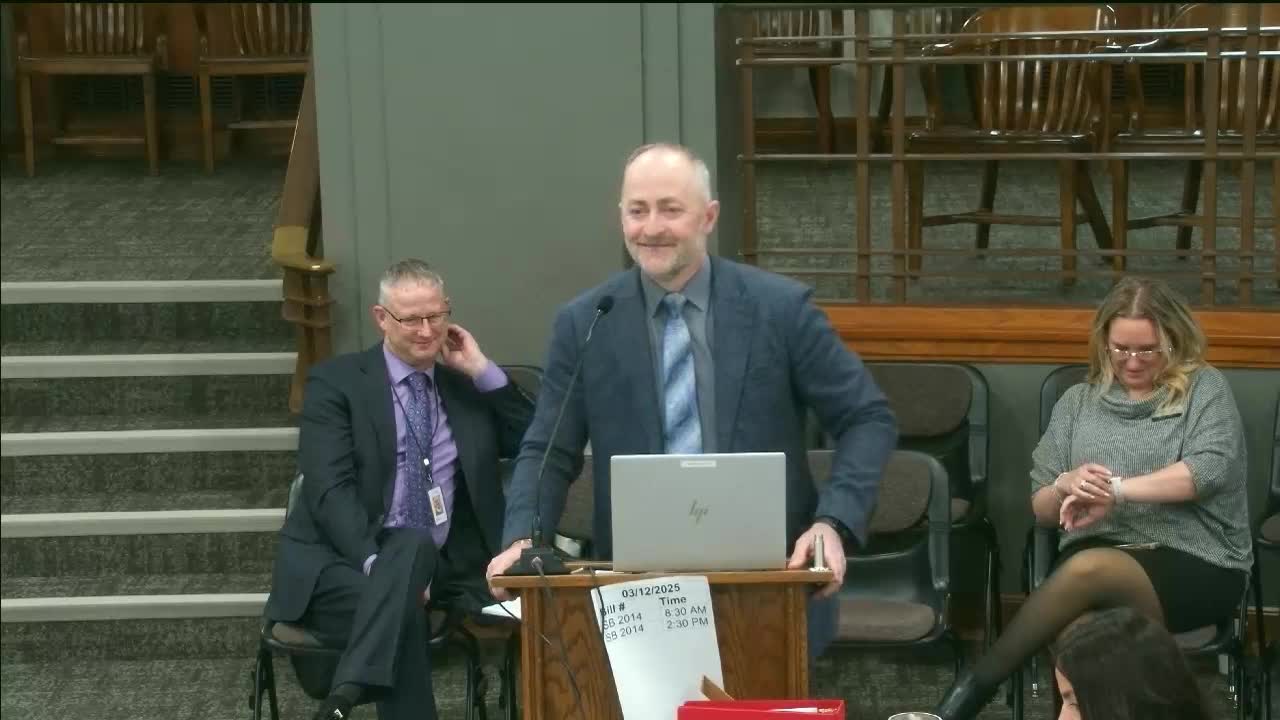
Don Morgan, president and CEO of the Bank of North Dakota, briefed the Government Operations section on the bank’s mission, balance‑sheet risks and strategic priorities, including cash management, digitization and workforce planning.
Morgan said the bank manages roughly $10 billion in assets and holds about $7 billion in state deposits; he described the institution’s core responsibilities as enterprise risk management (liquidity, interest‑rate, credit risk), providing correspondent and other services to community banks and administering legislatively directed programs such as revolving loan funds. He told the committee the bank’s loan portfolio is large and diverse and that the institution acts as a “fund multiplier” that partners with about 80 community banks; BND’s commercial and agricultural lending totals were discussed as a multi‑billion dollar portfolio.
On policy initiatives, Morgan said the bank is reviewing fintech opportunities — including payment and custody services — and exploring where it can partner with community banks and fintechs to provide services and diversify deposit sources. He said the bank has reintroduced a targeted student‑loan program for North Dakota residents and described it as a smaller, mission‑driven program (North Dakota residents or students attending in‑state schools are eligible); he said the program is modeled on standard student‑loan underwriting with deferment while enrolled and normal repayment at completion.
Morgan addressed organizational matters, saying the bank had net growth in assets and net income and that it currently employs roughly 173 staff. He described a recent rise in “assets per employee” (cited in testimony as a productivity metric that rose from about $40 million per FTE to about $60 million per FTE) and said the bank had a pool of vacant FTE authority carried from the previous legislature. Representative Don Bosch and others pressed Morgan for measurable strategic metrics; Morgan said the bank is operating in a transitional strategic framework and will present full metrics and a refreshed strategic plan to the board and to the Legislature following the session.
Why it matters: the Bank of North Dakota manages significant state cash, provides financing and programs that affect local governments and private borrowers, and its strategic choices on fintech, student loans, and cash management have implications for state liquidity and economic development.
Committee members asked about the bank’s staffing and the vacant FTE pool left from prior sessions; Representative Simposch urged the committee to scrutinize large, unspecified pools of vacant FTE authority, and Morgan said the bank seeks flexibility to manage risks but will provide more detailed plans and performance metrics after session.