Get Full Government Meeting Transcripts, Videos, & Alerts Forever!
Get email alerts on the Human Trafficking topic
No spam. Unsubscribe anytime.
Survivor advocates and nonprofits urge increased human‑trafficking grants, describe services and needs
Summary
Representatives from two North Dakota nonprofits and a survivor gave testimony supporting House Bill 1003’s human‑trafficking grant funding, describing outreach, mentorship, housing assistance and the need for state match dollars to secure federal grants.
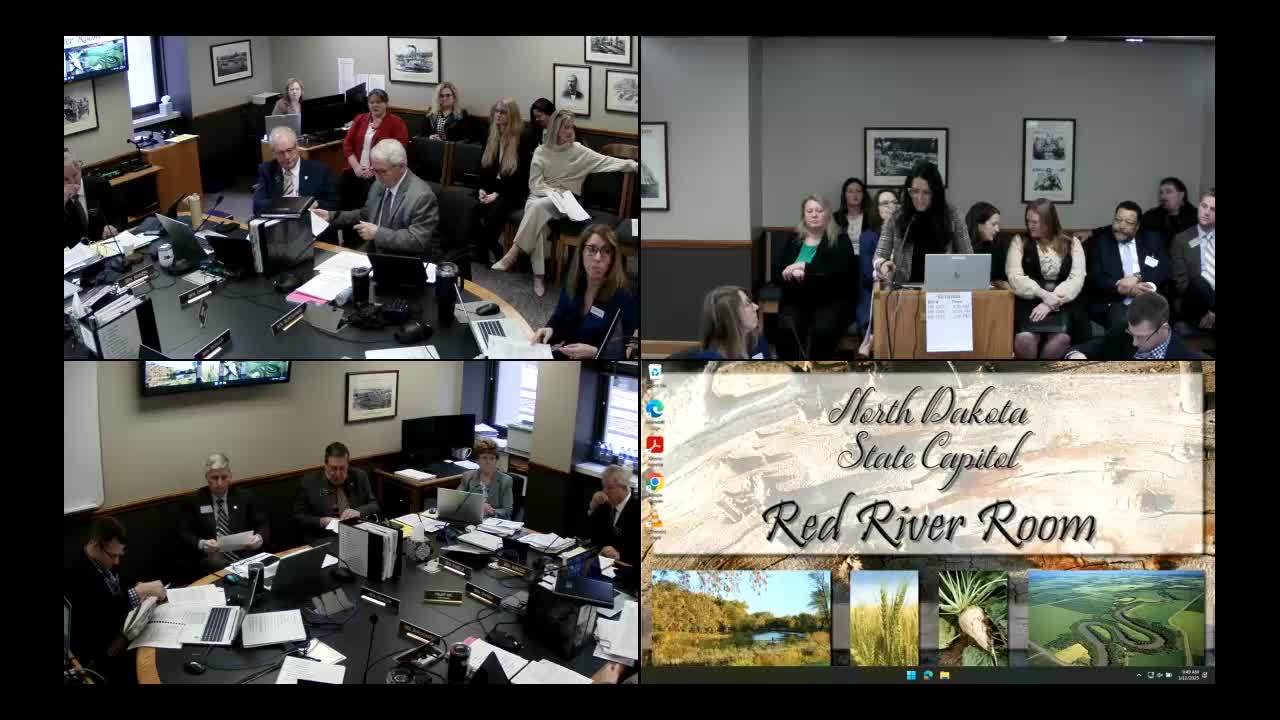
Representatives of two nonprofit victim‑service providers and a survivor gave testimony to the Senate Appropriations Government Operations Division in support of House Bill 1003, which contains funding for human‑trafficking victim services.
Stacy Schafer, executive director of the nonprofit 31 8 Project, described the organization’s demand‑reduction program and survivor mentorship services and said the agency used attorney general grant funding to expand training and support. “The funding we have received through the attorney general's human trafficking grant has a direct impact on the following program areas,” Schafer told the committee.
Piper Berenson, who identified herself as a survivor of human trafficking, described the help she received from 31 8 Project after leaving an abusive trafficking situation and after serving a prison sentence connected to crimes arising from her trafficking. She credited the nonprofit with helping her obtain housing, transportation and work and with pairing her with a mentor: “The 31 8 project found me and changed the course of my life,” Berenson said, and she urged continued funding for survivor services.
Amy Boyd, grant manager for YouthWorks, told senators the agency leverages state funds as the match required for federal Office for Victims of Crime grants: for every $1 of state money, YouthWorks said it typically secures about $3 of federal funding. Boyd presented activity figures showing YouthWorks served 147 suspected or confirmed victims between July 1, 2023 and the present, provided about 3,196 nights of housing and delivered hundreds of hours of clinical and crisis intervention services. She also told the committee the program serves victims statewide, including on all five reservations.
Schafer and Boyd both asked the committee to support increases the House included for human‑trafficking victim grants; the House added $650,000 in human‑trafficking victim grant funding in its package, testimony showed. The witnesses said additional state dollars are required to maintain and expand services, and to qualify for federal matching grants that expand available program dollars.
Committee members thanked the witnesses and had no immediate questions beyond routine clarifications; the testimony was entered into the record for committee consideration in the budget process.