Get Full Government Meeting Transcripts, Videos, & Alerts Forever!
Get email alerts on the Charitable Gaming Veterans topic
No spam. Unsubscribe anytime.
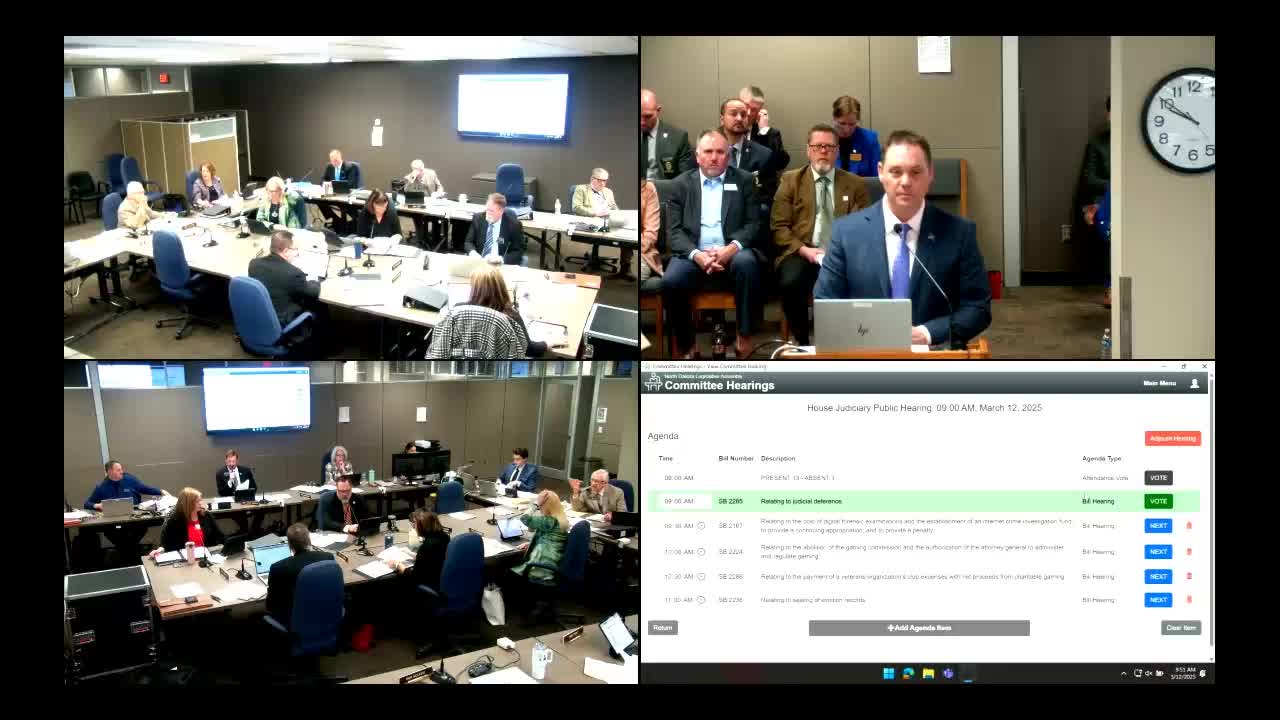
Committee hears support for allowing veterans' clubs to use a portion of gaming net proceeds for food and beverage costs
Summary
Senate Bill 2288 would let veterans organizations use up to 20% of net charitable‑gaming proceeds to cover food and beverage costs for operation of veterans' clubs; sponsors and veterans groups said the change would help keep clubs open and sustain posts that provide community services.
The House Judiciary Committee heard supporters of Senate Bill 2288, which would permit veterans organizations that operate clubs to use up to 20% of their net charitable‑gaming proceeds to pay for food and beverage costs incurred in operating the club. Sponsors said the change is intended to help struggling veterans clubs remain financially viable.
Sen. **** Devere, sponsor, described veterans organizations’ community roles, including honor guards, civics outreach and donations to local projects, and said charitable gaming has historically funded those efforts. “When a club closes, the post suffers,” Devere said, urging the committee to support the measure.
Witnesses from veterans posts and gaming industry groups told the committee 20% was conservative; some speakers proposed higher limits such as 40% or 50% (several witnesses framed 20% as a floor or starting point). Chris Eberts, chairman of the VFW Charity Committee in Bismarck, and Wayne Trottier, a long‑time veterans group leader and former legislator, described how modest additional allowances for operating costs could help re‑open or sustain club facilities that support veterans and community events.
Scott Meske of the North Dakota Gaming Alliance provided a breakdown of typical flows of gaming revenue for context: averages commonly used in industry accounting show most wagers are returned to players, taxes are assessed, and the remaining adjusted gross yields a charity‑eligible pool; the bill would allow veterans posts to use a specified share of that net proceeds pool for food and beverage expenses.
Committee members asked how the percentage would be calculated and whether the change would apply to off‑site gaming sites; witnesses clarified the proposal applies to clubs and that the 20% limit is calculated from the charity‑eligible portion of net proceeds. Supporters said the change would not expand gaming but would allow veteran posts to cover necessary operational costs so they can continue delivering community services.
Ending: The hearing closed after multiple veterans organizations and the gaming industry outlined the proposal and its intended effect on club viability. No opposition appeared on the record before the committee at the close of the hearing.