Get Full Government Meeting Transcripts, Videos, & Alerts Forever!
Get email alerts on the Community Corrections Budget topic
No spam. Unsubscribe anytime.
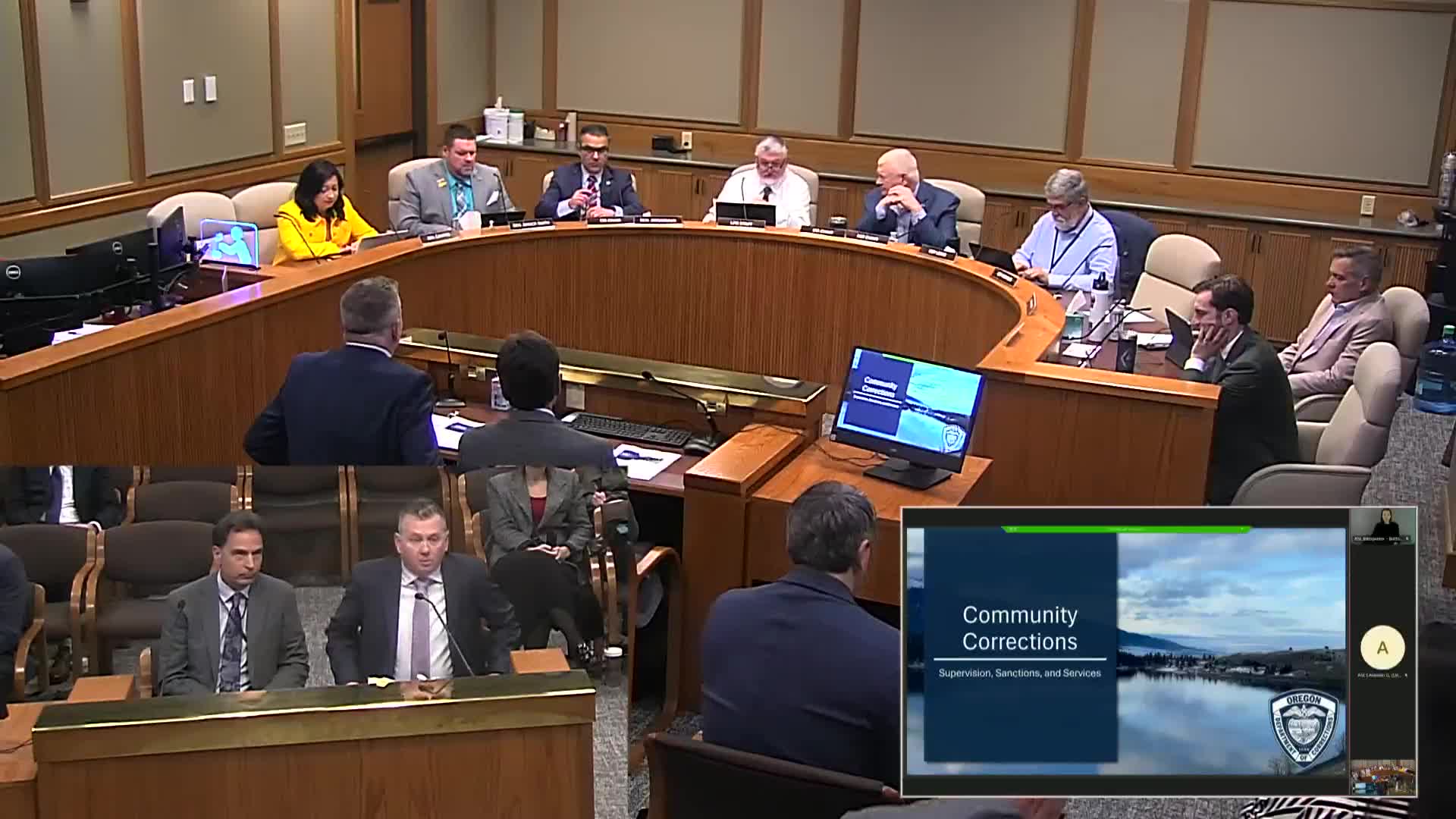
Oregon DOC presents $370M community corrections budget, urges adoption of updated cost study
Summary
The Department of Corrections told the Public Safety Subcommittee on March 12 that community corrections carries an approximately $370 million biennial budget and urged consideration of an updated six‑year cost study that would increase the department's per‑day capitated supervision rate from $15.09 to $18.18.
The Department of Corrections told the Public Safety Subcommittee on March 12 that community corrections carries an approximately $370 million biennial budget and urged consideration of an updated six‑year cost study that would increase the department's per‑day capitated supervision rate from $15.09 to $18.18.
Jeremiah Stromberg, Assistant Director for the Community Corrections Division, told the committee that the department passes most community corrections dollars through to counties for supervision, sanctions and services; the presentation said the $370 million figure and the capitated daily rate are used to calculate baseline funding tied to the state forecast that will be updated April 1. DOC said the $15.09 per‑day rate reflects current statutory baseline calculations; a more recent time study and county financials presented to the committee would set the rate at $18.18 per day and, using the October forecast cited by DOC, corresponded to about $68 million in additional funding needs (the department said this number would change with the April forecast).
The agency described funding streams and program supports that the community corrections budget covers: Measure 57 dollars aimed at repeat drug and property offenders, roughly $1.2 million in transitional funds to support the first six months after release, and pass‑throughs for jail reimbursements tied to Senate Bill 395. DOC told the committee that it has run out of some reimbursement funds in recent biennia and that the governor's budget proposes $8 million to cover jail reimbursements in the next biennium.
DOC covered several programs and outcomes. Staff said the short‑term transitional leave program has released more than 14,000 adults in custody early (mostly about 120 days early) over the last decade and reported an 89 percent success rate (no technical‑violation return to DOC and no new crime for the individuals counted). The earned‑discharge program was described as removing more than 13,000 people from supervision early; DOC said that earned discharge remains calculated in a way that preserves county funding so counties are not financially penalized for moving people off supervision. The family sentencing alternative — an intensive supervision program in five counties for single parents to remain in the home with wraparound services — was described as serving about 340 participants and impacting roughly 600 children; DOC said expanding the program to more counties would cost about $500,000 per county for a two‑year period and that the program base budget is roughly $2.2 million to $2.9 million depending on biennium assumptions.
Stromberg described the department's supervision model, oversight of the interstate compact (DOC said it currently supervises about 1,300 individuals on behalf of other states and has roughly 1,200 Oregonians being supervised out of state), and a statutory requirement cited in the presentation that the department conduct a cost study every six years to reset the community corrections budget. DOC told legislators that counties must submit biennial plans to receive pass‑through dollars and that the department performs biennial reviews of county quality and compliance.
Outcome measures presented included a 58 percent employment rate among people on supervision, a treatment engagement rate of about 30 percent, success rates of about 70 percent for those releasing from DOC and about 62 percent for probationers during their supervision periods, and a continuing decline in reconviction and reincarceration rates in recent years compared with earlier periods. DOC said its recent figures compare favorably with national reconviction rates, which it noted vary by state and measurement.
Why it matters: Adopting a newer time and cost study would increase baseline funding for county supervision and potentially avoid an 'opt‑out' consequence in statute (DOC said baseline funding levels drive opt‑out triggers). The committee discussed options — full adoption of the cost study, partial adoption, or not adopting — and DOC noted the governor's budget included a $20 million infusion above baseline in recognition of funding needs.
Committee members asked for follow‑up data including recidivism broken down by age and sentence length. DOC said it would work with the Criminal Justice Commission and provide additional requested analyses.