Get Full Government Meeting Transcripts, Videos, & Alerts Forever!
Get email alerts on the Long Term Care Personal Needs Allowance topic
No spam. Unsubscribe anytime.
Committee hears bill to raise long‑term‑care residents' personal needs allowance to $110 and add inflation adjustment
Summary
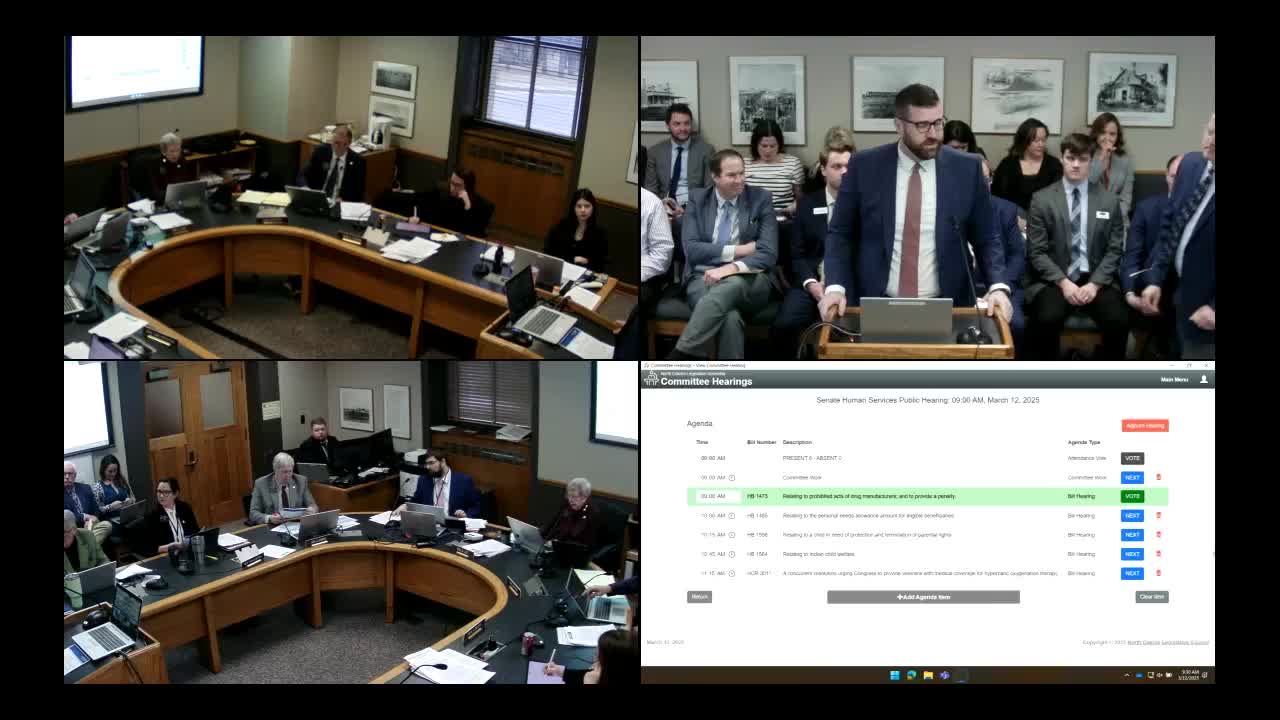
House Bill 1485 would raise the personal needs allowance for most long‑term‑care residents from $100 to $110 per month and require an annual inflation adjustment, supporters told the Senate Human Services Committee.
Representative Carrie McLeod told the Senate Human Services Committee she introduced House Bill 1485 after constituents raised concerns about out‑of‑pocket resources for people entering long‑term care. The bill would increase the monthly personal needs allowance from $100 to $110 and require an annual inflation adjustment.
Rita Matherin, who testified about her father’s recent long‑term care placement, described how quickly assets are spent down and why a small monthly allowance matters for items such as clothing, a blanket or a phone subscription. "A hundred dollars a month does not go very far," she told the committee, and said adding an inflation factor would preserve dignity for elderly and disabled residents.
Nikki Wagner of the North Dakota Long Term Care Association said the allowance — the portion of a resident’s income exempted from Medicaid calculations to cover personal items — has lagged inflation. Wagner told the committee the 2023 legislative increase brought the allowance to $100 for skilled nursing residents but that continuing the allowance without an annual adjustment will erode purchasing power.
Shelly Peterson, a longtime consultant with the Long Term Care Association, explained the broader Medicaid recipient‑liability framework: most residents spend income and assets down to qualify for Medicaid, keeping a limited personal needs allowance for incidentals. Witnesses and several committee members noted the state fiscal office had prepared a fiscal note; committee members asked Health and Human Services staff whether an annual adjustment could use the Consumer Price Index as the mechanism for the increase.
Supporters emphasized the bill affects a modest number of residents but has tangible effects on daily life in facilities: examples cited included costs for clothing, haircuts and a personal phone plan. Opponents offered no organized opposition at the hearing; several neutral witnesses — including the Department of Human Services — said the department could implement an annual adjustment but requested clear statutory language on which inflation gauge the legislature prefers.
The committee closed the hearing and indicated it may request a revised fiscal note if the legislature adopts specific indexing language.