Lifetime Citizen Portal Access — AI Briefings, Alerts & Unlimited Follows
'Patterson's Law' advances after victims and advocates urge second‑opinion protections in abuse probes
Loading...
Summary
CS for SB 304 (Patterson's Law) was reported favorably. The bill requires additional medical review in certain child‑abuse investigations involving rare genetic or metabolic conditions, allows parents to request specified examinations, and mandates documentation from mandatory reporters to rule out differential diagnoses.
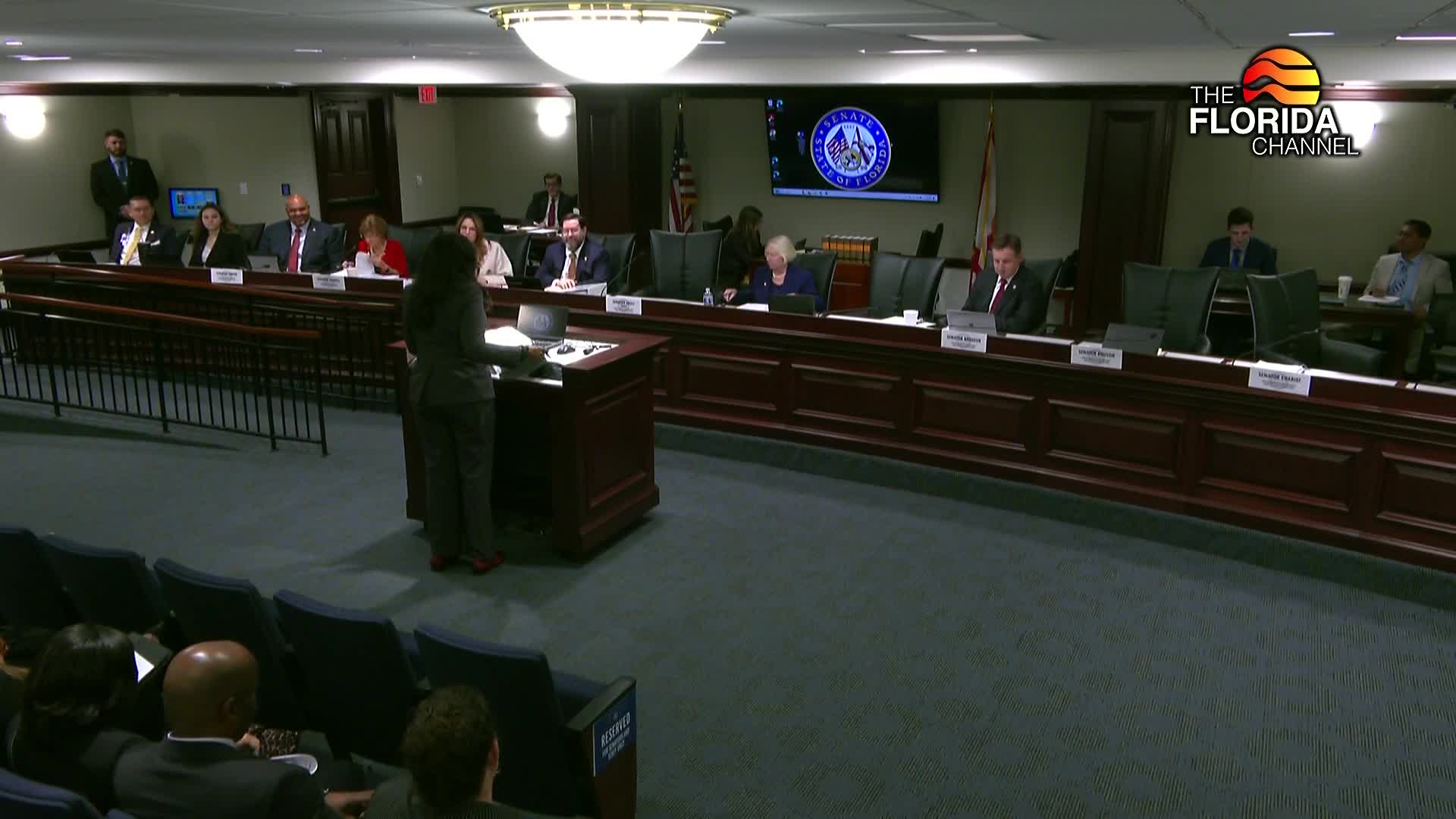
The Senate Committee on Children, Families, and Elder Affairs reported favorably CS for SB 304, known as "Patterson's Law," a bill that seeks to reduce wrongful separations of children from families when underlying genetic or metabolic conditions can mimic signs of abuse.
Sponsor Senator Sharif told the committee the bill "ensures that children with preexisting genetic conditions are not wrongfully separated from their families during child abuse investigations." The delete‑all amendment requires certain mandatory reporters to include a summary analysis used to rule out differential diagnoses when a preexisting medical condition is alleged; it requires child protection teams to consult with an experienced physician or APRN when evaluation reports identify possible genetic or metabolic conditions; and it allows parents, in some circumstances, to request examinations or second opinions to rule out conditions such as Ehlers‑Danlos syndrome, osteogenesis imperfecta or vitamin D deficiency.
Parents and attorneys gave emotional testimony. Tasha Patterson, whose case inspired the bill, said genetic testing later showed she and her twins "have Ehlers Danlos syndrome as well as metabolic bone disease." She and other family members described long separations, termination of parental rights and delays in obtaining diagnostic testing. Attorney witnesses and Disability Rights Florida argued the change would protect family integrity and speed accurate diagnosis and treatment. Supporters cited examples where child‑protection teams lacked condition‑specific expertise; one attorney said a CPT doctor in a case admitted to having "virtually no knowledge about Ehlers Danlos" in a later deposition.
Committee members praised the sponsor for negotiating amendments and said the final language preserves urgent child‑safety protections while adding procedures to consider differential diagnoses. The amendment was adopted and CS for SB 304 was reported favorably by roll call.