Get Full Government Meeting Transcripts, Videos, & Alerts Forever!
Get email alerts on the Seafood Byproducts topic
No spam. Unsubscribe anytime.
Bill would fund research to turn Oregon seafood byproducts into higher‑value products; $840,000 proposed
Summary
House Bill 2969 (dash-2) would appropriate $840,000 to the Oregon Coast Visitors Association to support '100% fish' research and light manufacturing pilots modeled on Iceland's Ocean Cluster, proponents told a March 12 committee hearing.
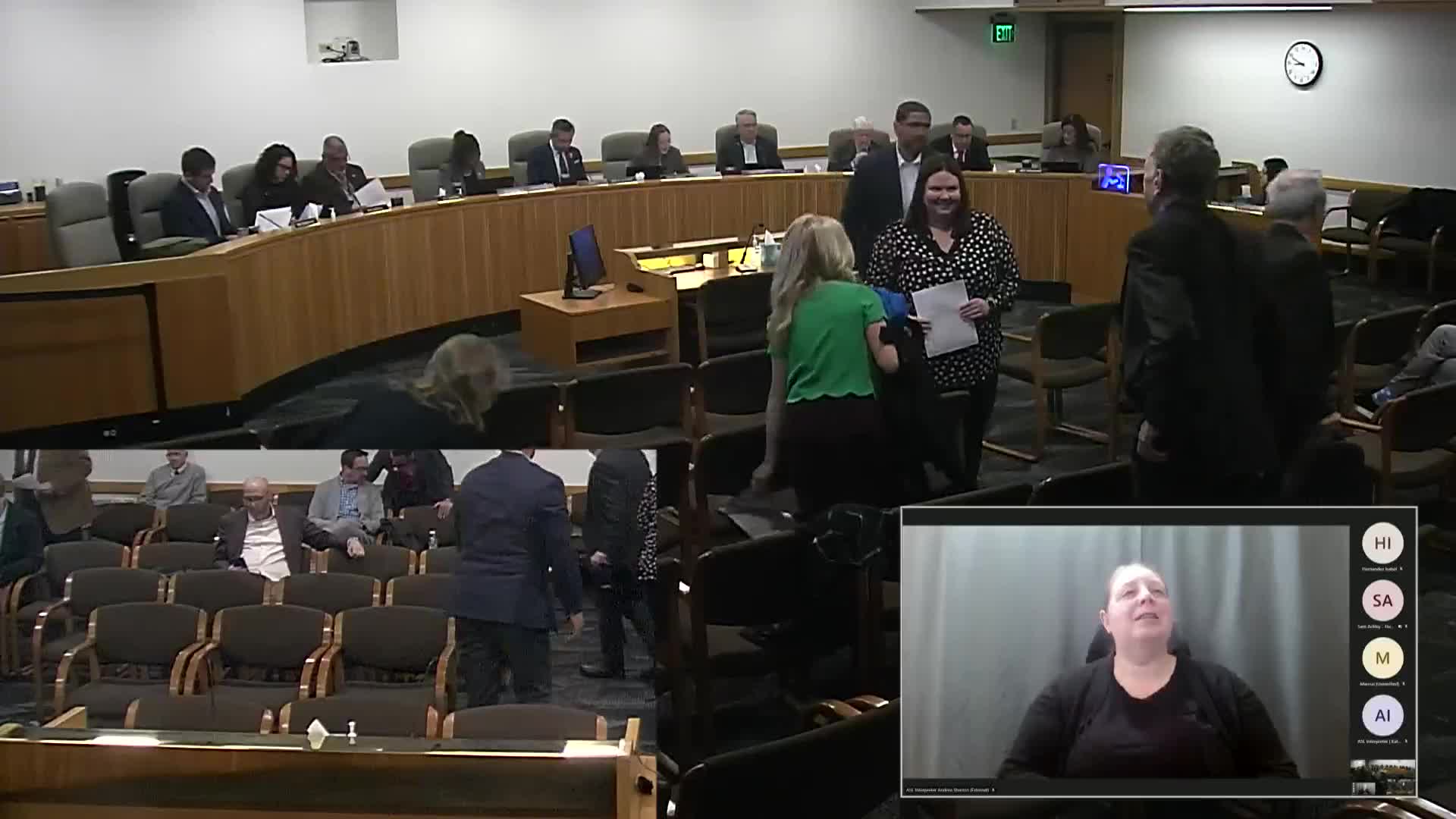
The House Committee on Economic Development, Small Business and Trade held a public hearing March 12 on House Bill 2969, which would appropriate $840,000 to the Oregon Coast Visitors Association (OCVA) to support research, development and light infrastructure aimed at increasing the value of seafood byproducts for nonfood uses.
Representative David Gomberg (House District 10), who presented the bill, said the proposal draws on work by the Iceland Ocean Cluster and would fund research and product development to extract high‑value materials from seafood byproducts. "They've been pioneering a 100% fish utilization project to better capture the value of seafood byproduct," Gomberg said, later citing Iceland examples that converted the value of a single cod from about $12 to $4,700 by developing biomedical, leather and specialty products.
Marcus Hinns, executive director of the Oregon Coast Visitors Association, told the committee the dash-2 amendment would fund laboratory research and short‑run product testing, and that OCVA has identified facilities in Oregon for research and early manufacturing. Hinns said the appropriation would support analyzing skin, bones and scales to identify the highest‑value market opportunities and produce prototypes for testing. "We have their expertise with us in this project, and the funds provided by HB 2,969 with the dash 2 amendment would allow us to conduct the preliminary research and development to scientifically extract these properties," Hinns said.
Testimony described potential nonfood applications including collagen for biomedical uses, enzymes for medical products, fish‑skin grafts, fish leather goods and specialty animal treats. Witnesses said such work could support light manufacturing jobs, new product lines for seafood processors and additional retail products for coastal tourism markets.
Committee members asked why OCVA would be the grant recipient rather than a research university or a development agency, and whether lodging tax revenues could be used. Hinns said OCVA is a business association that has worked on seafood marketing and workforce programs and has existing industry connections; he said some jurisdictions could use the discretionary portion of local lodging tax revenue for related projects but that the statute limits lodging tax use in most places.
The dash-2 amendment sets a project budget and anticipates spending on research and development, light infrastructure and coordination capacity to replicate aspects of the Iceland model in Oregon. The committee discussed industry readiness and existing processing assets; witnesses said Oregon has suitable labs and short‑run manufacturing capacity and that private investment could follow once initial product proofs are developed.
No committee vote was taken at the hearing. If enacted, the appropriation would fund OCVA to carry out staged R&D and pilot production intended to help Oregon seafood processors capture higher value from byproducts.