Get Full Government Meeting Transcripts, Videos, & Alerts Forever!
Get email alerts on the Passenger Ferry topic
No spam. Unsubscribe anytime.
Frog Ferry group pitches passenger ferry pilot to reconnect Portland riverfronts, seeks $20M startup
Summary
Frog Ferry nonprofit presented an eight‑year body of feasibility work and asked the legislature for pilot startup funds (about $20 million) to put a passenger ferry into service between Cathedral Park and Riverplace as a proof of concept; proponents cited climate, congestion, equity and emergency‑response benefits.
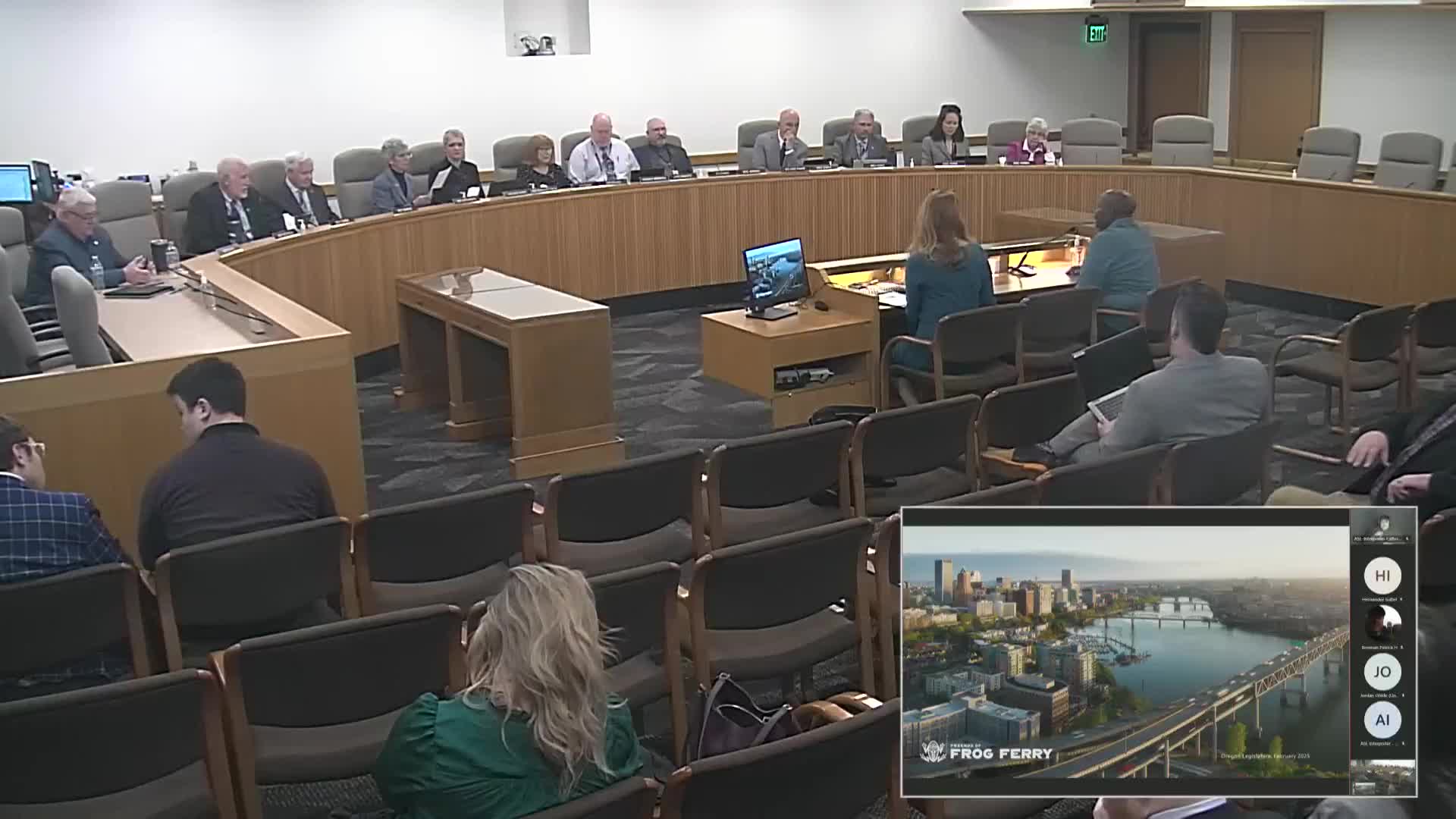
Representatives of Frog Ferry told the Joint Transportation Committee on March 11 that a pilot passenger ferry between Cathedral Park and Riverplace could be built and operated as a demonstration of larger riverfront service connecting Portland and Vancouver, and that an initial startup package of roughly $20 million would cover vessel construction and first‑year operations.
Susan Bladholm, Frog Ferry founder and president, summarized more than eight years of research, pro‑bono technical work and engagement with PBOT, TriMet, ODOT and Metro. She said the nonprofit has delivered operational feasibility work and that the group intends to start with a pilot route, using existing city docks where possible. "We believe we need to do things a little bit differently in Portland and continuing to just focus on the status quo," Bladholm said.
Why supporters say the pilot matters: Frog Ferry argued a passenger ferry could reduce congestion on I‑5, provide an electric passenger ferry option with low greenhouse‑gas intensity, improve access for OHSU employees and other downtown commuters, and serve as another emergency‑response tool if surface bridges or roadways are disrupted. The group cited national ferry funding opportunities but asked for a state startup grant (they indicated interest in a Project of Statewide Significance / PSEF application and a possible state subsidy of about $2.5 million per year for operations in early years).
Costs and scope: Bladholm and board chair James Paulson provided a planning‑level budget: approximately $20 million to build two vessels and operate early service out to two years (the group also cited a $49 million, two‑vessel pro forma tied to a grant application). They said a future buildout could include nine stops with seven vessels, but the pilot would use two vessels and existing municipal docks to limit capital needs.
Questions and next steps: committee members asked about cost, docks and potential state grant applications. Frog Ferry said city partnership would be needed for use of existing docks and that the group planned to pursue federal passenger ferry grants but requested state startup support to make the pilot viable in the near term.
Ending: Frog Ferry said it will file grant applications, continue municipal coordination and provide materials on costs and projected ridership. The committee took no action on funding at the hearing.