Get Full Government Meeting Transcripts, Videos, & Alerts Forever!
Get email alerts on the Shelter Rehousing Report topic
No spam. Unsubscribe anytime.
OHCS reports progress on shelter and rehousing; lawmakers express spend‑down concerns
Summary
The Housing and Community Services Department told the Transportation and Economic Development Subcommittee it has exceeded some rehousing targets and expanded shelter capacity, but legislators pressed officials on uneven county coverage and the pace of spending. The subcommittee acknowledged receipt of the seventh quarterly report.
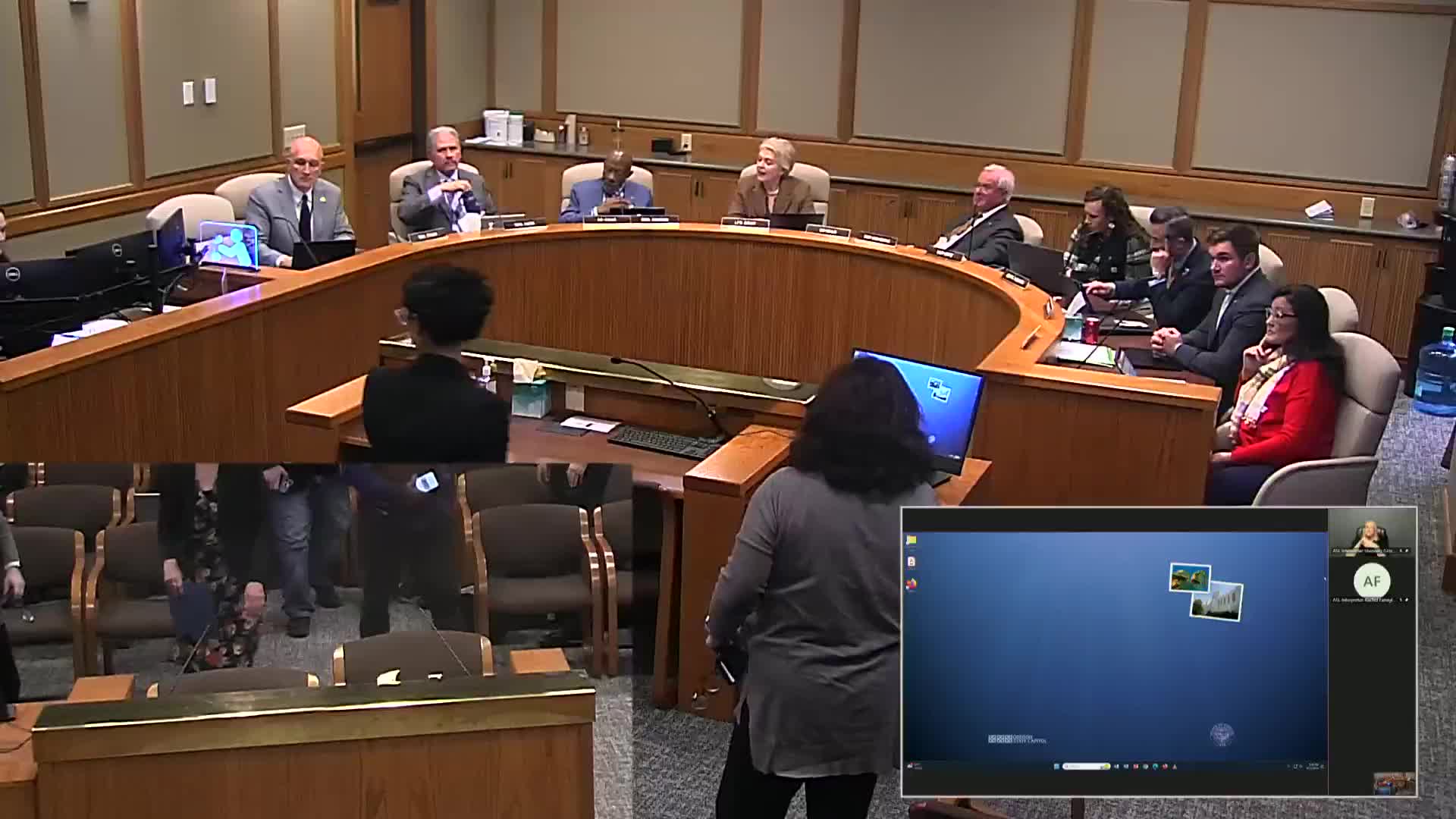
The Housing and Community Services Department presented its seventh quarterly report on statewide shelter and rehousing investments to the Transportation and Economic Development Subcommittee and asked the committee to acknowledge receipt of the report.
OHCS officials said the emergency response resources appropriated earlier in the biennium have produced measurable results: as of the report, the department expects to have supported more than 4,800 shelter beds, prevented about 24,000 households from becoming homeless and re‑housed roughly 3,300 households by the end of the biennium. Officials also said the department has exceeded rehousing goals in some regions and is on track for prevention goals through the end of the biennium.
Mike Savara, special initiatives adviser at OHCS, and Liz Weber, director of the agency’s housing stabilization division, reviewed interactive dashboards showing regional outcomes and noted that many rural communities face low vacancy rates that complicate rehousing. Savara said the balance‑of‑state effort “exceeded” an initial shelter target—reaching 387% of the original target in aggregate—but added that 10 counties still had no shelter beds under the funded projects and that capital needs limited the number of shelters that could be funded.
Lawmakers pressed OHCS on spend‑down rates and program deployment. Senators and representatives said they were concerned that, with the biennium three‑quarters complete, several large line items showed modest expenditure rates. OHCS staff said some programs began late in the biennium (for example, long‑term rental assistance awards began deploying after October) and that they expect spend‑down to accelerate as programs are fully stood up.
On administrative costs for eviction prevention grants administered through community action agencies, OHCS staff said the standard administrative rate is 15 percent, though some grantees use lower de minimis or indirect cost rates.
Committee members noted pending legislation to create a statewide shelter program (House Bill 3644) and asked for additional detail on spend‑down and deployment timelines. The Fiscal Office and Department of Administrative Services recommended that the subcommittee acknowledge receipt of the report. A motion to acknowledge receipt was moved (as the Legislative Fiscal Office recommendation); the recorded vote was 7 yeas and 1 nay. Representative Kate voted no; Representatives Nguyen, Scarlottis and Watanabe, Co‑chair Gomberg, Senators Meek and Starr and Co‑chair Woods voted yes. The motion passed.
Ending: OHCS will return with additional detail on spend‑down and program deployment; the subcommittee recorded formal receipt and will consider the department’s follow‑up materials in subsequent meetings.