Get Full Government Meeting Transcripts, Videos, & Alerts Forever!
Get email alerts on the Odot Budget topic
No spam. Unsubscribe anytime.
Public testimony urges full funding for ODOT during SB 5541 hearing
Summary
Union leaders, transit advocates and local officials told the Transportation and Economic Development Subcommittee that cuts to the Oregon Department of Transportation would harm safety, rural communities and everyday travel. ODOT director answered detailed questions about staffing, consultant use and a recent financing error.
Members of the Transportation and Economic Development Subcommittee heard more than an hour of public testimony urging lawmakers to fully fund the Oregon Department of Transportation during a public hearing on Senate Bill 5541.
Speakers from labor unions, transit agencies, conservation groups and local government said cuts to ODOT’s operating budget would reduce routine maintenance, slow response to landslides and storms, and increase safety risks for motorists and nondrivers alike.
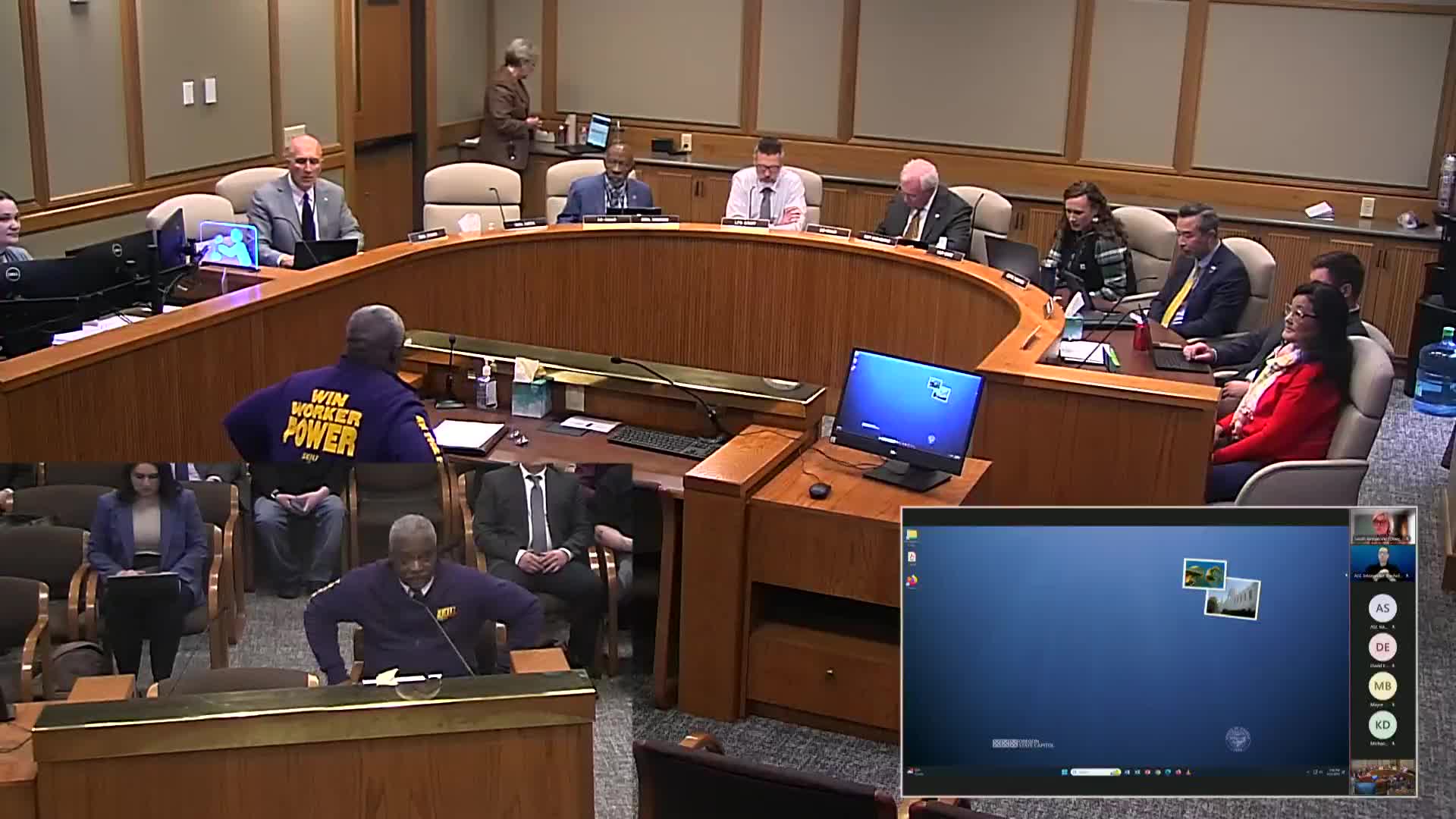
Union leaders framed the funding question as a safety and jobs issue. Johnny Earl, president of SEIU 503, told the committee his union represents “72,000 workers who provide critical services in every corner of the state” and said ODOT has warned of a potential layoff of about 1,000 workers without legislative action. “Our transportation system connects our communities, supports local businesses, and drive[s] our state economy,” Earl said.
Jason Lawrence, an ODOT employee and vice president of SEIU sub-local 730, described maintenance crews as first responders and said they maintain almost 20,000 lane miles and respond to “more than 40,000 crashes annually.” He warned that staffing cuts would hit coastal and rural areas hardest: “A 20% or more reduction to those crews would leave us with significantly fewer people covering much larger areas.”
Other witnesses echoed that message and pressed for funding to preserve safety programs and multimodal investments. Sarah Iannarone, executive director of The Street Trust, urged the committee to protect safety and multimodal programs used by people who walk, bike or rely on transit: “Safety as a first priority is nonnegotiable regardless of mode,” she said. The Wildlands Network requested a $5,000,000 annual appropriation for ODOT’s Wildlife Vehicle Collision Reduction program to build additional wildlife fencing and crossings.
TriMet’s representative noted that 30 percent of Oregonians cannot or do not drive and supported the governor’s recommended funding for ODOT’s public transportation division and six new positions to improve grant oversight.
ODOT director Chris Strickler answered extended questions from committee members about the department’s structure and recent budgeting problems. He described an 11‑FTE Office of Innovative Funding that supports road‑usage charge work and public‑private partnership readiness and said 29 communications positions appear in the budget but that seven of those were identified as nonessential and are not expected to be filled. On the use of consultants, Strickler said the agency has targeted about 70% consulting on design work and about 40% consulting for construction administration and defended that mix for large projects with complex stakeholder needs.
Several legislators pressed Strickler on accountability after a recent overprojection of federal funds that his office described as a cash‑flow and programming error rather than a spending error. Strickler said the agency has hired a new finance and budget division director, changed its cash‑flow modeling, and implemented additional checks. “The billion dollar error while significant, was not a spending error. It was an error in over projection of federal dollars,” he said.
Committee members debated funding options raised by witnesses. One senator recapped the governor’s proposal and asked witnesses whether they would support revenue increases; union leaders said they would consult membership before endorsing specific tax proposals. Committee members also asked for more detailed data on consultant spending, communications staff, government relations positions and the agency’s use of outside contractors on major projects.
The subcommittee did not vote on SB 5541 at this hearing. The record contains multiple requests from committee members for additional documentation and a follow‑up on consultant and communications expenditures.
Ending: The hearing record will remain open to the subcommittee for follow‑up questions; ODOT and stakeholders were invited to provide more detailed cost and staffing data to inform budget deliberations.