Get Full Government Meeting Transcripts, Videos, & Alerts Forever!
Get email alerts on the Housing And Homelessness topic
No spam. Unsubscribe anytime.
Healy‑Driscoll House 1 proposes record housing investment, higher voucher funding and more public‑housing support
Summary
At a Ways and Means field hearing, the Executive Office of Housing and Livable Communities outlined the administration's House 1 FY26 housing package — including a record $1.2 billion in targeted investments, a larger rental voucher program, increased public housing support and emergency assistance stabilization.
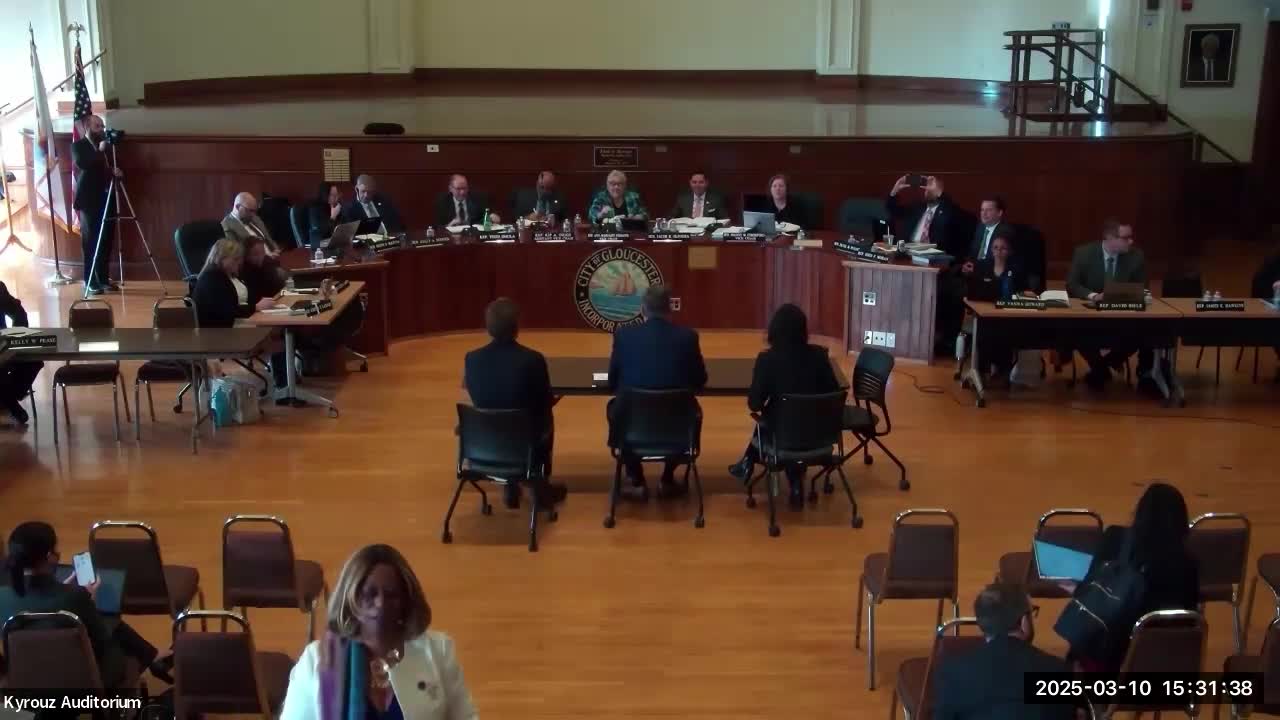
The Executive Office of Housing and Livable Communities told the Joint Committee on Ways and Means in Gloucester that the Healy‑Driscoll FY26 House 1 budget proposes a major housing package, with the administration recommending $1.2 billion in targeted and strategic investments to expand and preserve affordable housing across the Commonwealth.
Secretary Gus Bickford (as introduced) told the committee the proposal includes $125,000,000 for public housing programs — a roughly 4% increase over FY25 — and $115,500,000 in operating subsidies to local housing authorities to raise per‑unit caps and help authorities keep pace with inflation. The budget would add $7,500,000 for resident service coordinators to help preserve tenancies for elderly and disabled residents and said the program preserved about 2,600 tenancies in the prior year.
On homelessness, the House 1 recommendation holds $325,000,000 for emergency assistance (EA) shelter and services and $57,000,000 for HomeBASE rapid rehousing assistance. The administration also proposes $202,500,000 for RAFT (rental assistance for families in transition) and would expand the alternative housing voucher program to support more than 800 vouchers at a $19,500,000 appropriation. The budget proposes $16,500,000 for rental support tied to Department of Mental Health clients and $3,000,000 for reentry housing assistance.
Secretary Gus told lawmakers the administration is phasing out hotel and motel reliance for family shelter, improving diversion and rapid rehousing, and increasing voucher support. The Commonwealth Rental Voucher Program would receive a historic increase to $253,000,000 (about a 16% increase), maintaining a payment standard at 110% of small‑area fair market rents and supporting just over 11,000 vouchers, including 130 new project‑based vouchers.
Committee members asked for data on the split between long‑term Massachusetts residents in shelters and newly arrived residents; the secretary said recent presentations show a roughly 75% share of current EA presentations are Massachusetts residents, with new arrivals accounting for about 25% at the front door, and emphasized that the administration’s retooling of EA aims to increase exits to permanent housing.
Ending: The administration framed FY26 House 1 as both a stabilization and production package — bolstering public housing, preserving tenancies, expanding vouchers and investing in rapid rehousing while implementing policy changes to reduce dependence on hotels and increase exits from shelter.