Get Full Government Meeting Transcripts, Videos, & Alerts Forever!
Get email alerts on the Workforce Development topic
No spam. Unsubscribe anytime.
Labor & Workforce Development outlines FY26 workforce investments; seeks to expand YouthWorks, CTI and apprenticeship capacity
Summary
Secretary of Labor and Workforce Development presented the administration’s FY26 proposal emphasizing youth employment, career technical training, registered apprenticeship expansion and continued DUA modernization to address customer service and claims backlogs.
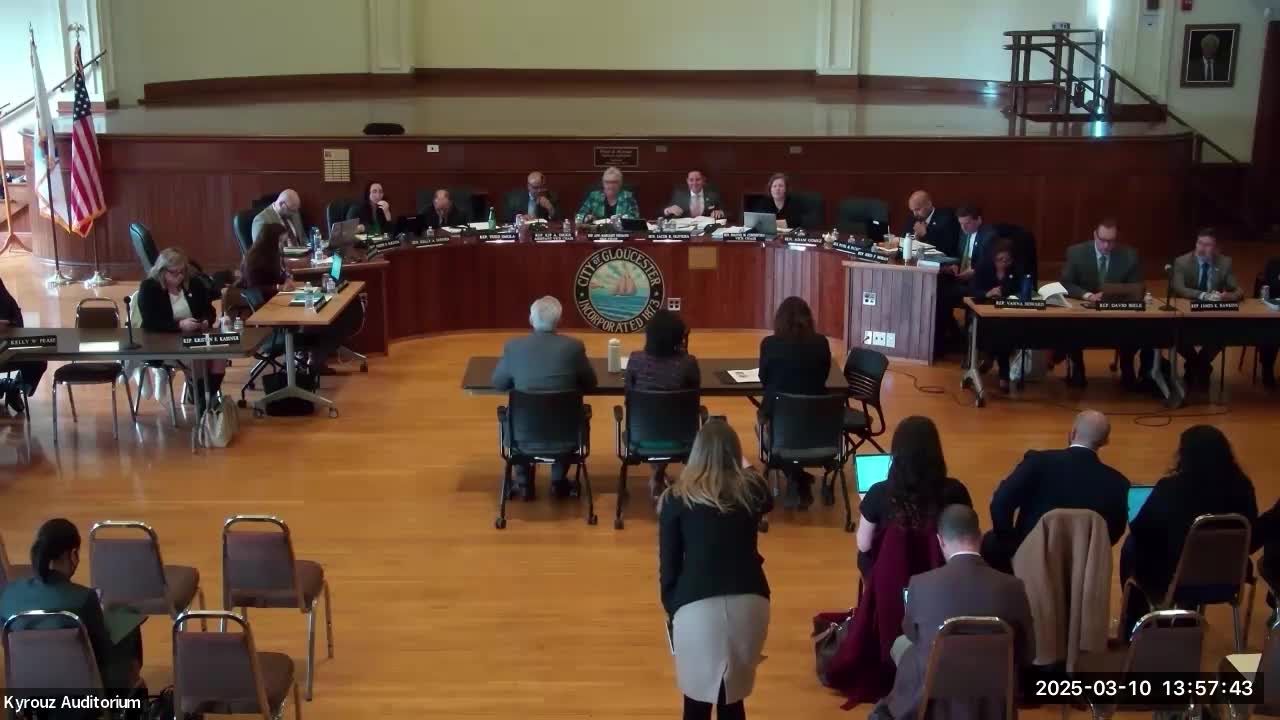
The Executive Office of Labor and Workforce Development told the Joint Committee on Ways and Means in Gloucester that the Healy‑Driscoll FY26 budget proposes $112,900,000 in state funding for LWD and associated departments, supplemented by federal funds for core programs.
Secretary Lauren Jones said the administration’s workforce strategy centers on four pillars — reducing barriers to employment, increasing labor market participation, developing career training in key industries, and fostering equitable regional opportunity — and tied several FY26 line items to those pillars.
Highlights the secretary identified include a proposed $15,700,000 for YouthWorks to provide subsidized and experiential summer and year‑round work plus soft‑skills instruction, an expanded $14,000,000 commitment to the Career Technical Initiative (CTI) to grow adult technical training through vocational schools, and $3,300,000 to expand registered apprenticeship into both traditional trades and “expanded industries” like life sciences and advanced manufacturing. The administration also proposed a $10,000,000 appropriation for the Workforce Competitiveness Trust Fund, which funds employer‑linked sector training delivered through Commonwealth Corporation and regional Workforce Boards.
Secretary Jones said registered apprenticeship and CTI together will increase placements in construction, advanced manufacturing and health‑care occupations and argued these are proven pathways to middle‑class wages. The LWD also asked the committee to establish a new line item for the Division of Apprentice Standards (a net‑neutral move in structure) to streamline operations.
The Department of Unemployment Assistance remains a focus: Jones described ongoing DUA modernization work and said the claimant experience portal launch is planned for May 2025 as part of a multi‑year rollout that has already modernized employer filing. To address phone and adjudication backlogs the office has temporarily added 40 call agents and is seeking procurement options and longer‑term staffing and automation improvements; the secretary said additional short‑term emergency staffing and technology measures were already moving and that committee follow‑up would be provided on performance metrics.
Members pressed the administration about serving migrants and newly arrived residents; Jones said coordinated casework with housing, HHS and MassHire has helped place more than 4,675 shelter residents into employment opportunities and that regional MassHire offices and community partners are engaged in targeted hiring initiatives.
Ending: LWD framed its FY26 package as a mix of targeted workforce investments, flexible grant tools for training providers and capitalized trust funds that together aim to fill employer talent needs while improving DUA service through IT modernization and temporary staffing increases.