Get Full Government Meeting Transcripts, Videos, & Alerts Forever!
Get email alerts on the Cannabis Industry Regulation topic
No spam. Unsubscribe anytime.
Cannabis Control Commission seeks $30.08M in FY26 to bolster inspections, testing and social equity programs
Summary
The Cannabis Control Commission told the Joint Committee on Ways and Means it needs $30,080,000 in FY26 — including funds to develop a state standards lab, expand social equity training and upgrade IT systems — warning that underfunding has delayed inspections, licensing and equity support.
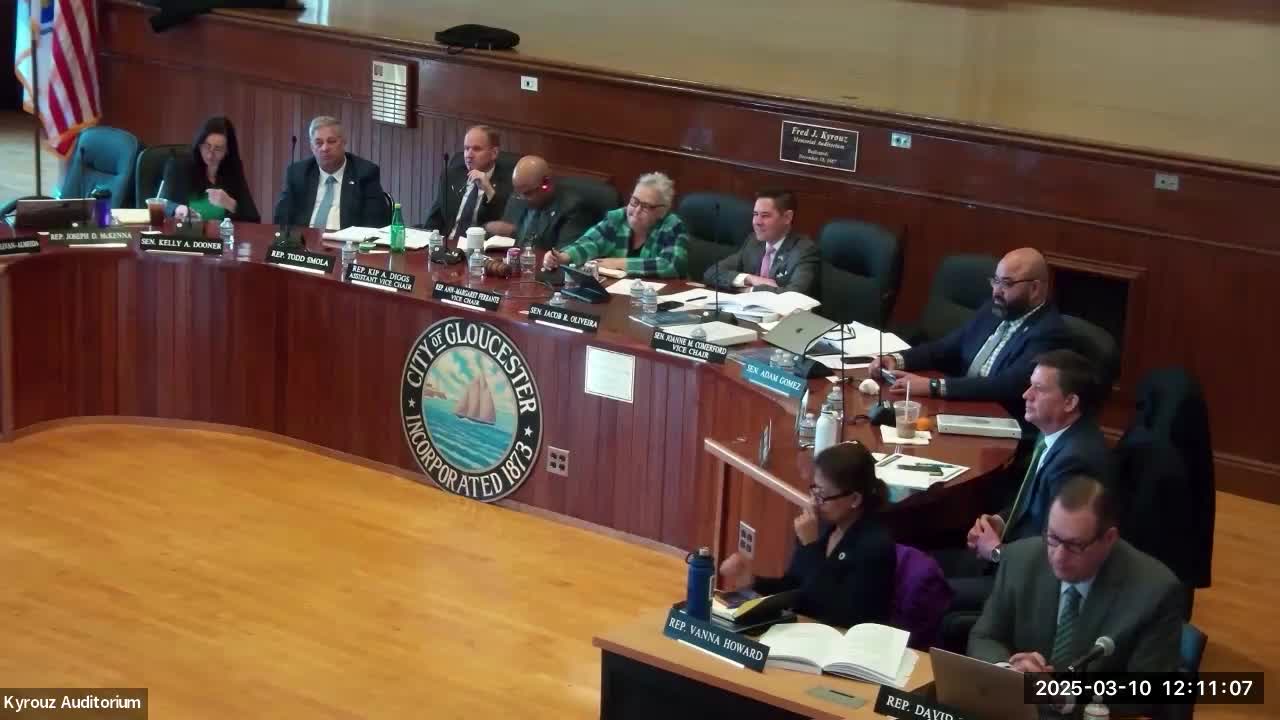
The Cannabis Control Commission asked the Joint Committee on Ways and Means in Gloucester for a $30,080,000 FY26 appropriation to cover core operations and to fund specific expansionary initiatives that the commission says are necessary to protect public health and sustain the regulated market.
Commission members told lawmakers the industry has grown rapidly — more than $8 billion in business‑to‑consumer sales since adult use began and $272,000,000 in tax revenue in FY24 — while commission resources have lagged. The commission said its licensing caseload and number of operational licenses have grown by roughly 25% since FY23, but agency funding rose only about 3% in the same interval.
The CCC described the FY26 request in two parts: $26,120,000 to maintain regulatory operations, and $3,960,000 for targeted expansion. Among the expansion items are a state‑run standards laboratory to provide independent confirmatory testing and better post‑market testing capability; investments to upgrade a fragmented patient and licensing IT platform; and restored funding for social equity technical assistance that the commission says fell from $400,000 in FY24 to $100,000 in FY25.
Commissioners and the agency’s new executive director said testing inconsistencies and isolated contamination incidents in early 2025 have prompted advisories and confirmatory enforcement actions. They argued an independent standards lab would allow the commission to verify inconsistent independent lab results, limit costs of recurring confirmatory panels and determine when robust recalls are necessary.
The commission also asked for staffing increases — investigators, licensing specialists and attorneys — and stepped up public education funding for upcoming social consumption license rollouts. Commissioners described the social consumption framework under review as requiring training for staff, municipal input and consumer awareness campaigns to prevent underage consumption and impaired driving.
Lawmakers pressed the commission on youth use trends, impaired driving education and the effects of competition from neighboring states. Commissioners said Massachusetts has led several prevention efforts — including a driver's‑education curriculum called Shifting Gears used in driving schools — but warned that the commission has limited budget authority to run broad public awareness programs and has not received dedicated funding for those campaigns since September 2023.
The CCC asked the committee to treat the FY26 request as an investment in public health and market stability, saying the Marijuana Regulation Fund and local option taxes have already returned significant revenue to the state and municipalities and that industry growth supports more than 17,000 employees and over 1,000 licensees.
Ending: The commission left the committee with a data‑driven budget request focused on testing infrastructure, equity programs and IT modernization; commissioners warned continued underinvestment will lengthen licensing and inspection backlogs and impair consumer safety oversight.