Get Full Government Meeting Transcripts, Videos, & Alerts Forever!
Get email alerts on the Wildfire Funding topic
No spam. Unsubscribe anytime.
Oregon foresters tell legislators wildfire costs and severity are rising; work group drafting funding changes
Summary
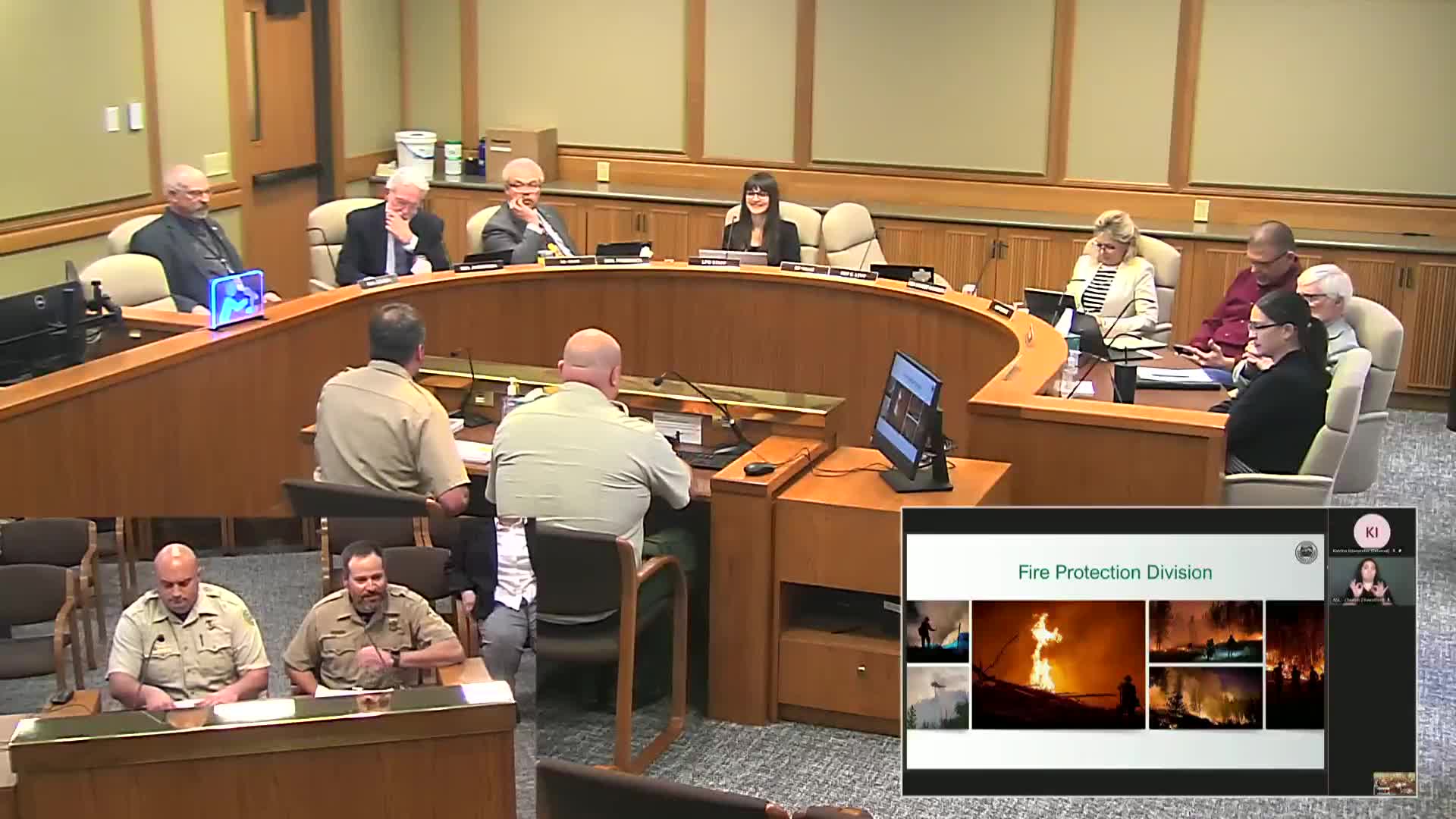
At an informational hearing on March 11, Oregon Department of Forestry officials told the Natural Resources subcommittee that wildfire acres and suppression costs have increased sharply, landowner assessments are straining district budgets, and a legislative work group is drafting funding recommendations tied to Senate Bill 5521.
Co chairs Frederick and Levy convened an informational hearing on Senate Bill 5521 on March 11, where Oregon Department of Forestry officials said wildfire activity, acres burned and suppression costs have risen substantially and are straining the agency’s existing funding model.
The agency’s fire protection chief, Kyle Williams, Deputy Director of Fire Operations, told the subcommittee that human-caused starts account for roughly 77% of Oregon Department of Forestry (ODF) fire starts while lightning-caused fires drive the majority of acres burned. “Human cause is anything people might be doing that could cause a fire,” Williams said. He added that lightning storms can create hundreds of starts at once in remote areas that quickly exceed initial attack capacity.
The rising acres are already driving higher costs. Williams said that including the 2024 season, ODF’s average annual gross suppression cost is about $99,500,000; the agency’s average annual net cost — after expected federal reimbursements — is about $42,600,000. He warned the committee that federal reimbursements can lag by one to four years, creating a cash‑flow burden on the state.
Why this matters
ODF staff described a multi-tiered funding model that begins with per‑acre assessments to landowners and then layers state general fund support and a severity program for surges. The agency estimates roughly $85,000,000 is derived from assessments, divided across general fund and public/private landowner shares. Those assessment-derived budgets are set by local landowner budget committees for protection districts and then approved by the Board of Forestry.
Michael Curran, ODF’s fire protection division chief, told lawmakers the agency is following “an identified process that's in state statute” to dispose of the Toledo property once the new facility is complete, and that the replacement facility is on track for an estimated completion this fall. Curran said the agency will remain at the existing location through completion to preserve readiness during fire season.
Key details from the hearing
- Causes and acres: Williams summarized that although about 77% of fire starts are human-caused, lightning-caused fires drive most total acres burned because lightning events create many starts at once. He displayed a long-term trend showing a roughly fivefold increase in acres burned on ODF‑protected land since 2005 and noted 2024 set a statewide record of about 1,930,000 acres burned.
- Costs and cash flow: Williams said the agency’s 2024 gross suppression cost was included in the annual average of about $99.5 million and that the net average — the portion the state expects not to be reimbursed — is about $42.6 million per year. He highlighted the cash‑flow challenge of delayed federal reimbursements.
- Severity program and starting funds: ODF said the severity program budget is $10 million annually (split roughly $7 million general fund, $3 million from landowner‑derived dollars). When incident costs exceed initial protection, ODF currently can match landowner funds dollar‑for‑dollar with general fund up to a total of $20 million; beyond that point costs come from the general fund. The agency said it typically starts the season with about $15 million available across those buckets.
- Local budget stress: Williams told the committee that two districts in Northeast and Central Oregon rejected proposed protection budgets two years in a row, saying landowners could not afford the increased assessments. That creates statutory and operational strain because the Board of Forestry is ultimately responsible for approving budgets that meet the adequate level of protection.
- Legislative work group: The agency convened a fire funding work group of about 35 stakeholders to develop options for a sustainable funding model. ODF representatives told the committee they expect the work group’s recommendations to inform legislative language; one committee member indicated a draft bill could be available soon. Williams said the work group focused on (1) investing in resilient landscapes and large‑scale response capacity, (2) creating affordability for landowners who pay assessments, and (3) addressing the state’s cash‑flow challenge for reimbursement delays.
Questions and follow up
Committee members pressed agency leaders on whether current performance measures — for example, the target to keep 98% of fires to 10 acres or less — remain achievable given recent trends. Williams called the 98% target a “stretch goal” and said staff are reviewing whether the measure remains meaningful.
The subcommittee was also told that ODF will provide additional questions and answers in writing and will notify legislators as Toledo disposal steps proceed in coordination with the Department of Administrative Services.
Looking ahead
April, the committee staffer, announced that the subcommittee will take public testimony on Senate Bill 5521 the following day. ODF officials said they will continue to brief lawmakers as the funding work group’s recommendations and any bill drafts become available.