Get email alerts on the Animal Welfare topic
No spam. Unsubscribe anytime.
Committee hears testimony on bill to set stray-cat holding rules, provide limited immunity for rescues
Summary
The House Judiciary Committee heard public testimony on House Bill 3604, which would set minimum holding periods and notification rules for cats taken by animal holding agencies and provide civil-immunity protections for qualifying agencies; advocates and shelter officials urged passage while noting remaining technical issues.
House Committee on Judiciary members heard about a proposal to set statewide minimum holding periods and notification requirements for stray cats and to grant limited civil immunity to qualifying animal holding agencies.
Supporters told the committee that current uncertainty about liability prevents rescues and some shelters from taking in stray cats and contributes to the stray and feral-cat population. The introduced version of House Bill 3604 would require an animal holding agency that takes possession of a cat to keep the animal for three business days if it lacks a license, tag, or microchip, or five business days if it has identifying information; to post a photograph and information on the agency’s website within 24 hours; to attempt other reasonable owner-notification steps; and to permit transfer of ownership to the agency if the owner does not redeem the cat within the holding period. The bill would also define “animal holding agency” to include nonprofit rescues and county or municipal animal-control entities and require agencies to provide necessary medical and preventive care during the holding period.
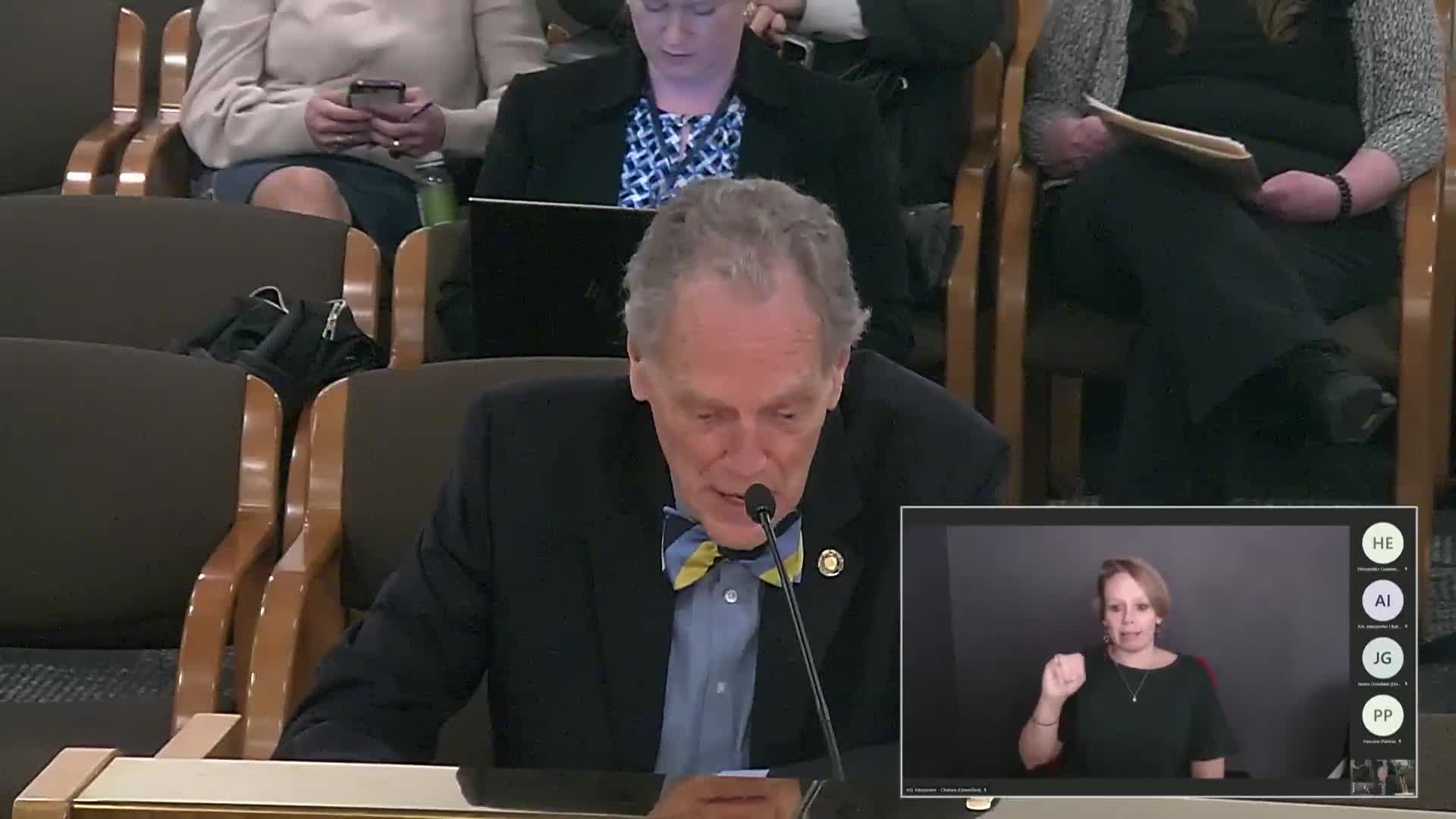
Representative Tom Anderson (House District 19) said passage of HB 3604 with the posted -1 amendment would “be a very important action step” to address the “overwhelming stray community and feral cats crisis” in Marion County. Laura Meisner, executive director of Coalition Advocating for Animals, described repeated instances in which members of the public were told shelters would not accept stray kittens and said rescues and residents are exhausted by the volume of cases. Chelsea Marks, executive director of Friends of Felines, and Veronica Broadley, support services manager in the humane law enforcement department at Oregon Humane Society, also testified in support and described how pandemic-era service disruptions increased the number of unsterilized cats and the demand for intake and spay/neuter services.
Shelter representatives told the committee they analyzed intake policies after a 2022 merger and concluded state law lacked clear authority for intake of stray cats. Broadley noted that county ordinances often do not address cats and that many counties lack shelter capacity for felines; she urged a statewide standard so expert rescues and shelters can fill gaps without fearing civil liability. Broadley also said some shelters currently rely on a “found property” approach that has allowed holding felines for 90 days, a practice that strains kennel capacity and staff time; shorter mandatory holding periods, she said, would allow agencies to serve more animals with existing facilities.
Testifiers offered data to inform the bill’s proposed holding periods: Green Hill Humane Society reported that 72 percent of cats were reclaimed within three days in 2024 and another 16 percent within three to five days; Multnomah County Animal Services reported roughly 60 percent reclaimed within three days, another 20 percent within three to five days, and about 9 percent within five to seven days. Witnesses said those patterns informed the bill’s three- and five-business-day windows but acknowledged some members had expressed concern that the period could be too short and that they were open to adjusting it.
Witnesses also described the -1 amendment posted to OLIS, which removes an abandonment defense that was in the introduced version and refines definitions such as “cat” and the definition of animal holding agency. The amendment, as described to the committee, would add counties and municipal animal-control entities into the statutory definition of animal holding agency and remove the abandonment-defense language.
No formal committee vote took place on HB 3604 during the hearing. The public hearing closed after multiple witnesses testified in support and committee members asked clarifying questions about reclaim rates, agency discretion to accept animals, and resource constraints.
The committee moved on to the next item on its agenda after closing the public hearing.