Get Full Government Meeting Transcripts, Videos, & Alerts Forever!
Get email alerts on the Supplemental Nutrition Assistance Program Snap topic
No spam. Unsubscribe anytime.
Oregon panel hears SNAP budget, fraud and program changes in informational hearing on SB 5526
Summary
Oregon Department of Human Services officials briefed the joint subcommittee on Human Services on SNAP program operations, waivers unwinding, EBT fraud and proposed state policy projects tied to Senate Bill 5526 during an informational hearing March 11.
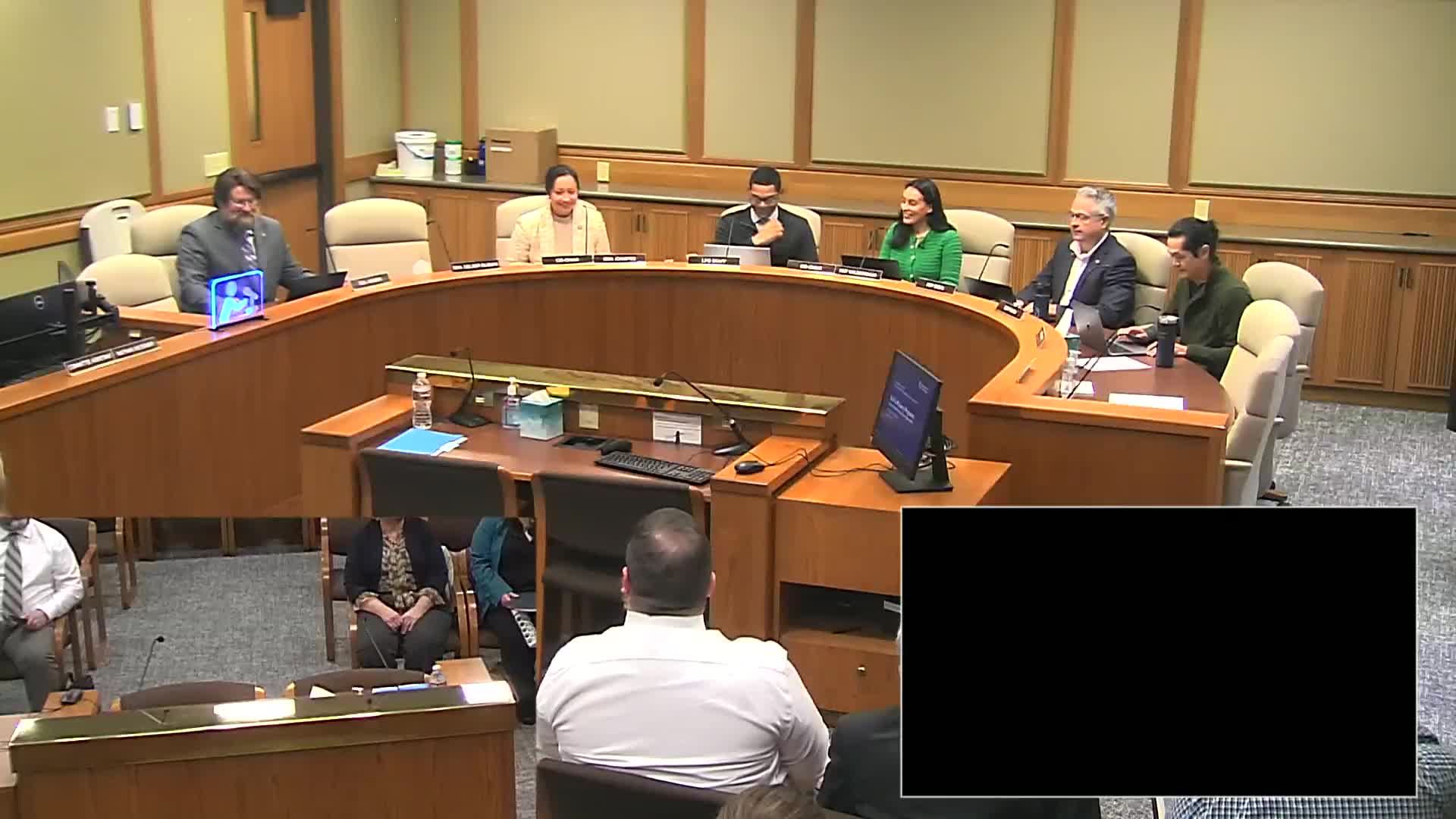
Co-Chair Campos and Co-Chair Valderrama convened a March 11 informational hearing on Senate Bill 5526, the Department of Human Services’ primary budget bill, focusing on the Supplemental Nutrition Assistance Program (SNAP).
Claire Seguin, director of self-sufficiency programs at the Oregon Department of Human Services (ODHS), opened the presentation and outlined SNAP’s reach and outcomes in Oregon. “SNAP provides a critical lifeline of benefits to families with low incomes to supplement their grocery budget,” Seguin said, adding that SNAP participation in Oregon serves more than 420,000 cases—representing over 700,000 individuals.
The department emphasized the program’s public-health and economic effects. Seguin said SNAP reduces the chance of a household being without enough food by as much as 30 percent and that Oregon’s SNAP participation rate is among the highest in the nation. Heather Miles, SNAP program manager at ODHS, described the range of allowable purchases on EBT cards (groceries, seeds, dairy and similar items) and items that remain ineligible (alcohol, tobacco, vitamins and hot prepared meals).
Why it matters
Legislators pressed ODHS on program costs, implementation questions and recent changes to federal rules that have affected benefits. Committee members focused on three recurring concerns: (1) the end of pandemic-era emergency allotments and resulting reductions in household benefits, (2) rising incidents of electronic benefit theft that have prompted consideration of new EBT card technology, and (3) state proposals to simplify access for older adults and people with disabilities.
Emergency allotments and economic impact
Seguin and Miles reviewed the end of the emergency allotment (EA) program, a federal measure created in March 2020 that provided extra SNAP dollars during the COVID-19 public-health emergency and ended nationally in December 2022. ODHS told the panel that emergency allotments in Oregon provided more than $2 billion in additional food benefits above regular SNAP allotments. The department said the abrupt end of EAs reduced monthly benefits for some older adults from approximately $281 to $23 in specific cases and that the loss of EA dollars also reduced retail and farmer-market revenues in communities.
EBT security and chip-and-tap cards
ODHS officials described increases in counterfeit-card fraud and “skimming” that have led multiple states to consider replacing magnetic-stripe EBT cards with new chip-and-tap cards. Seguin said California will test such technology and that Oregon retailers on the California border are already updating point-of-sale equipment. “This is a very complex project,” Seguin said, noting that a magnetic stripe would remain as a fallback and that vendor, retailer and system programming costs would be substantial. ODHS is gathering cost estimates and information from its EBT vendor; the department expects both initial setup costs and increased ongoing costs per case and per card.
On the question of adding personal identifiers to cards, Miles told the committee that federal rules currently prohibit EBT cards from carrying a photo. Miles added that replacement cards in Oregon sometimes include a name but that household-level cards are often used by multiple authorized household members or representatives, which creates program flexibility but complicates individualized security.
Fraud reporting and benefit replacement
ODHS reported improvements in tracking and response capacity. The department said it approved 492 replacement requests in the first quarter of 2024, replacing about $190,000 in stolen benefits, and that district-level tracking of replacements—implemented in April 2024—helps identify local fraud “hot spots.” ODHS also warned that federal funding that previously allowed replacement of stolen electronic benefits ended in December 2024, which affects the state’s ability to fully replace stolen benefits going forward.
SNAP program options, waivers and workforce supports
ODHS described federal SNAP waivers and state policy options that Oregon uses to streamline access, including broad-based categorical eligibility, the Standard Medical Deduction (SMD) project for households with older adults or people with disabilities, and the use of a standard utility allowance (SUWA) to simplify income deductions.
On work-related supports, ODHS outlined SNAP Employment & Training programs (STEP) and the federal requirement to operate a SNAP employment and training program. The department said STEP is voluntary and designed to support participants into living-wage employment. ODHS also discussed the Able-Bodied Adults Without Dependents (ABAWD) policy: Oregon will not enforce ABAWD work requirements in federal fiscal year 2025 but plans to resume enforcement in federal fiscal year 2026 (starting Oct. 1, 2025). ODHS described exemptions (for pregnancy, disability, veterans, homelessness, certain youth in foster care) and noted the program’s operational complexity.
Nutrition education and outreach
SNAP-Ed and SNAP outreach were described as complementary efforts to stretch benefits and connect people to services. Miles said SNAP-Ed is 100 percent federally funded and is delivered largely through Oregon State University Extension Service and a network of local partners; ODHS reported more than 1,500 SNAP-Ed classes in 2024 and roughly 4,000 individuals directly reached by SNAP-Ed events, plus large online engagement metrics for instructional resources. ODHS said it contracts with community partners on SNAP outreach (16 partners in federal fiscal year 2025) and that outreach partners may receive 50 percent federal reimbursement for certain activities.
Double Up Food Bucks, TFAP, CSFP, and Summer EBT
ODHS reviewed other state and federal food efforts. Double Up Food Bucks, created by HB 5050 (2019) and supported by state general fund and federal grants, operates in 34 of Oregon’s 36 counties and matches SNAP purchases at participating farmers markets and retailers. ODHS said nearly $3.4 million in Double Up Food Bucks were redeemed in the most recent reporting period, with about 800,000 SNAP transactions at participating retailers.
ODHS also described the Emergency Food Assistance Program (TFAP) and the Commodity Supplemental Food Program (CSFP). The department warned of national supply-chain disruptions and federal cancellations that have constrained TFAP purchases of key items (milk, eggs, protein) and said CSFP—an annual discretionary program—served about 2,192 households on average in federal fiscal year 2024. ODHS highlighted the state’s $12 million general fund investment to stand up a permanent Summer EBT program (launched summer 2024) that provided a one-time $120 payment per eligible child.
Restaurant Meals pilot
ODHS summarized the new Restaurant Meals program authorized in 2024 by legislation (Senate Bill 1585). The law directed ODHS to convene a stakeholder task force and budgeted $698,970 in 2024 for staff to design implementation. The task force recommended a pilot in Jackson and Josephine counties (targeted for summer 2026) and proposed a phased statewide rollout by July 2029, subject to federal approval and FNS retailer authorization. The task force asked the legislature to allocate $480,157 in ongoing general funds to support continued implementation and business technical assistance.
Payment error rate penalty and corrective actions
ODHS reported being notified June 28, 2024, of a $15,700,000 federal penalty for exceeding SNAP payment error-rate thresholds for two consecutive years. Seguin told members the state chose a settlement option under which roughly half the penalty would be invested in corrective actions (the department referenced a $7,800,000 investment for corrective work) and the remainder reserved for future liability. ODHS said Oregon’s payment error peaked at 22.99 percent in 2022 and had declined to about 13.4 percent in 2025. The department attributed error causes to deduction and wage-calculation mistakes and household-composition reporting errors, and it described ongoing case reviews, staff training and system improvements to reduce future errors.
Questions and follow-ups
Committee members requested additional data and clarifications. Legislators asked ODHS for sources behind some outcome statistics (for example, the employment outcome showing 59 percent of program graduates holding jobs without government assistance in the second quarter after exit), retailer-level redemption data for fresh-food purchases, total amounts replaced for stolen benefits and details on ESAP financing and system programming. ODHS committed to providing supporting documentation and follow-up figures where available.
Bottom line
ODHS told the committee that SNAP and connected food programs remain central to Oregon’s anti-hunger strategy while the state navigates federal policy changes, fraud challenges and program performance requirements. The department recommended investments to streamline access for older adults and people with disabilities, strengthen fraud detection and replacement procedures, and support pilots—such as the restaurant meals program and EBT-card technology upgrades—pending federal approvals and further cost estimates.
The informational hearing closed with co-chairs thanking presenters and members for questions; no committee votes were taken.