Lifetime Citizen Portal Access — AI Briefings, Alerts & Unlimited Follows
Committee receives testimony supporting 2‑hour suicide prevention training for physicians, with calls to clarify lethal‑means language
Loading...
Summary
The House Committee on Emergency Management, General Government, and Veterans heard testimony March 11 on House Bill 2,538, which would require two hours of continuing‑education training every six years on suicide risk assessment and lethal‑means counseling for physicians and physician associates.
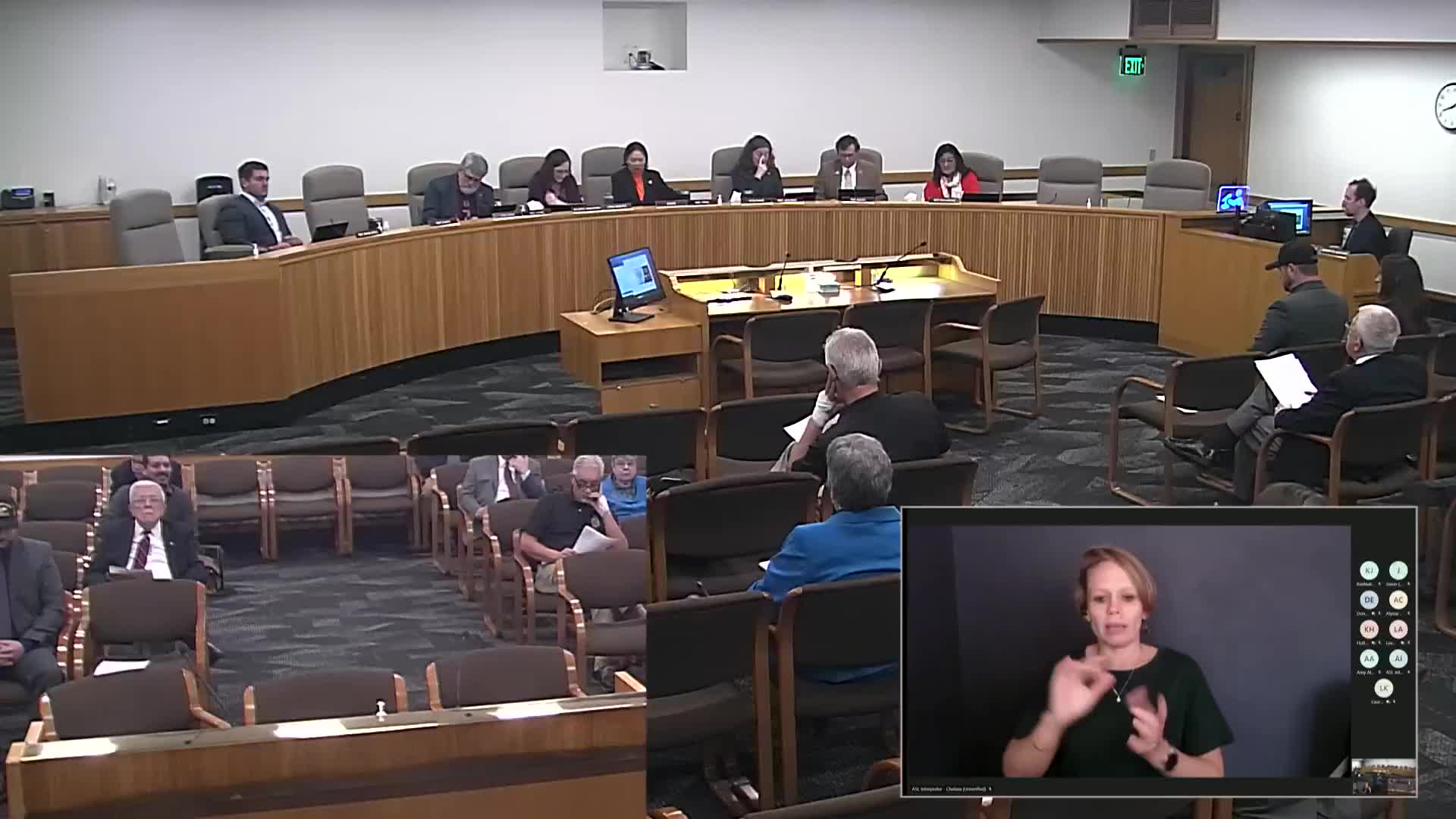
The House Committee on Emergency Management, General Government, and Veterans held a public hearing March 11 on House Bill 2,538, a measure that would require the Oregon Medical Board to adopt rules requiring a physician or physician assistant to complete at least two hours of continuing education on suicide risk assessment, treatment and management — including lethal‑means counseling — every six years.
"Three out of four veterans die by suicide. They saw a primary care provider in the year before their death," sponsor Chair Thuy Tran told the committee in support of the bill, arguing the training will make primary‑care providers better able to identify and intervene with patients at risk.
Supporters — including clinicians, suicide‑prevention groups and veterans with lived experience — told the committee that most people who die by suicide see a primary‑care provider in the year before their death and that many providers report they have not received specialized suicide‑prevention training. Steve Schneider, a veteran and firearms suicide‑prevention program manager, described lethal‑means counseling as an evidence‑based tool that can be taught quickly and used in primary‑care settings.
Several witnesses described military cultural competency as essential to effective training. Representative Evans and other lawmakers warned the committee to ensure that any curriculum is not inserted as a generic box‑checking exercise and urged quality controls on vendors and content. "If we pass this and whoever is responsible for putting together the training had better do a good job or they will face the wrath of a lot of us," Representative Evans said.
Laurie Kimmel and another witness asked the committee to clarify statutory language in the bill: Kimmel asked whether the bill’s reference to "lethal means counseling as defined by the board" could be misread and requested an explicit definition to distinguish suicide‑prevention counseling from other concepts such as assisted dying.
Testimony emphasized practical benefits: speakers described cases in which culturally competent lethal‑means counseling and safety planning added time and distance between a person in crisis and unsecured firearms, and they cited studies showing reduced suicidal behavior when lethal‑means counseling is applied.
No formal action or vote occurred at the hearing. Committee members said amendments and details about rulemaking will be considered as the bill moves to the next stage of the process.
Ending: The committee closed the public hearing on HB 2,538 and moved on to a subsequent hearing; staff and members flagged the need for clear statutory language and careful selection of training providers.