Get Full Government Meeting Transcripts, Videos, & Alerts Forever!
Get email alerts on the Ell Program Review topic
No spam. Unsubscribe anytime.
Longmeadow officials review DESE audit of English‑learner services, outline follow-up steps
Summary
Longmeadow Public Schools presented a Department of Elementary and Secondary Education review of its English‑language learner (ELL) program. The district was largely compliant but will tighten registration, increase interim progress monitoring, expand translation at events and formalize annual opt‑out notices.
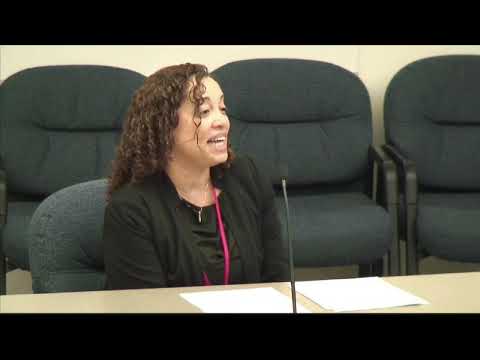
Nilda Azari, director of student and family support for Longmeadow Public Schools, presented findings from a Department of Elementary and Secondary Education (DESE) audit of the district’s English‑language learner program, saying the review found the district largely in compliance while identifying several areas for improvement.
Azari told the school committee that DESE reviewed “a complete file review” of 12 students and interviewed parents, administrators, teachers and specialists as part of the six‑year audit cycle. “We were fully compliant in [several] areas,” she said, adding that there were “no 0 compliance areas.”
The state’s review identified five improvement areas the district plans to address: registration and initial screening for incoming students, more frequent interim progress monitoring between the start‑of‑year screener and the annual ACCESS test, expanded translation and interpretation at schoolwide events, an annual opt‑out form for ELL services to be sent each year, and ensuring core teachers are SEI‑endorsed when assigned ELL students.
Azari described the district’s model as immersion with targeted pull‑out ESL instruction, and highlighted recent steps already taken. She thanked the committee for approving an additional 0.5 FTE to reduce ELL caseloads and said the district now uses Lexia English for targeted language practice and is implementing Panorama and PowerSchool workflows to centralize records and enable progress monitoring. “We believe that immersion is the best way for students to learn language, with their peers, with their educators,” Azari said.
Azari described planned, concrete steps: a district‑level individualized learning plan for every ELL student that will include ACCESS scores, screener results and classroom strategies; storing ELL documentation in PowerSchool so teachers can access it more easily; using Lexia English and existing MTSS benchmark data as interim “dipstick” measures of language progress; and working with Transfluency to ensure translators are available for parent‑teacher conferences and other events. She also said the district will start sending the opt‑out/in form annually at the start of each school year so families can reaffirm or change their choice.
Committee members asked for detail about which systems will provide interim screeners; Azari said WIDA platform screeners and Lexia English interim checks would be used, with Panorama and PowerSchool housing results. She confirmed administrators who supervise teachers serving ELLs are SEI‑endorsed and said the district encourages more teachers to obtain SEI endorsements through a remote course offered in partnership with Westfield (described as available to staff under contract).
Why this matters: the changes aim to make ELL supports more consistent and transparent to teachers and families, improve early identification and tracking of language growth, and reduce the risk that students who need services are missed or remain opted out without annual reassessment.
Azari said she will return to the committee with additional updates and that the full DESE report is available in the meeting packet.
Ending note: Committee members thanked Azari for the presentation and for direct contact she said she maintains with families. Several members asked the administration to return with follow‑up reports as the district implements the recommended changes.