Get Full Government Meeting Transcripts, Videos, & Alerts Forever!
Get email alerts on the Teacher Development topic
No spam. Unsubscribe anytime.
Board hears report on Advanced Teaching Roles; district says state supplements are ongoing
Summary
Moore County Schools staff reviewed the district's Advanced Teaching Roles (ATR) implementation, describing cohorts, roles, and state-funded supplements for teacher leaders; board members pressed for public outreach, sustainability and data on effectiveness.
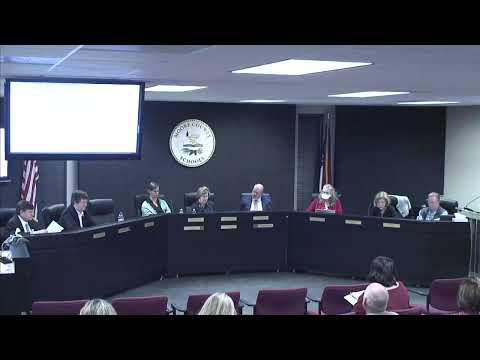
Moore County Schools presented an update on its Advanced Teaching Roles (ATR) initiative on March 10, outlining the program design, staffing cohorts and funding sources and answering board members' questions about sustainability and public notification.
The district described ATR as a state-supported program designed to recognize teacher leaders who extend instructional reach without leaving the classroom. Dr. Metcalfe and other staff told the board that the district's ATR design includes multi-classroom leaders (MCLs), REACH associates and an optional classroom-excellence model; the state-provided salary supplements are $10,000 for adult leadership teachers (MCLs) and $3,000 for classroom-excellence roles.
Implementation and cohorts The district reported that Cohort 1 is implementing with seven MCLs and four REACH associates; Cohort 2 is in planning and is expected to add five MCLs and one REACH associate. Staff said schools selected for ATR participation were chosen based on principal engagement, demonstrated need (schools with higher turnover or more early-career teachers) and readiness to design school-level models.
Funding and sustainability Dr. Metcalfe emphasized that salary supplements for MCLs are funded through the State Board of Education and that, per district staff, those supplements are recurring unless the General Assembly eliminates the funding. The district said implementation and transition support has been funded through an ATR implementation grant, with grant funds used for consultants, professional development and design work (the district said the initial local grant request was for $500,000 and additional support of $150,000 was provided for 2024-25 to support implementation planning).
Board questions and requests Board members pressed staff to provide the ATR grant application and the district's responses showing how it will meet requirements for public notification and long-term supplemental compensation if state funding changes. Board members asked specifically how the district would comply with requirements in the statute and asked for clarity on cap limits, selection criteria, monitoring and the district's public communication plans. Dr. Metcalfe and staff said the district will provide those materials to the board and noted that some monitoring and academic-effectiveness data will take one to three years to demonstrate outcomes.
Outcome and next steps The presentation did not require a board vote; staff said the district will continue to implement ATR at identified schools and will provide required data to the state and ongoing reports to the board. Staff also said grant-funded consultants (public impact) have supported implementation design and professional development for principals and MCLs.
Ending: The ATR update outlined how Moore County Schools has deployed teacher-leader roles to support early-career teachers and build capacity; board members requested fuller public disclosure of the district's grant submission and sustainability plan.