Get Full Government Meeting Transcripts, Videos, & Alerts Forever!
Get email alerts on the Commercial Grant Guidelines topic
No spam. Unsubscribe anytime.
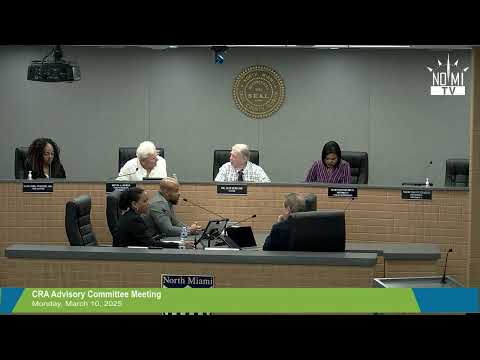
North Miami CRA advisory committee approves major revisions to commercial grant guidelines
Summary
The North Miami Community Redevelopment Agency (NMCRA) advisory committee approved a suite of changes to commercial grant programs, including renaming the beautification grant, raising award caps, requiring longer maintenance periods and adding milestone-based reimbursements and capital verification requirements.
The North Miami Community Redevelopment Agency advisory committee on Monday approved revisions to the CRA’s commercial grant guidelines that reshape how façade, business attraction, commercial rehabilitation and capacity-building grants will be structured and delivered.
The changes, presented by CRA staff member Annabelle, would rename the “beautification” program the Facade Grant Program, raise its single-project funding cap from $25,000 to $30,000, and extend the required maintenance agreement from three years to five years. The committee also approved a proposal to limit façade funding to street-facing businesses and to create a preapproved contractor pool for small-business grantees.
“We are proposing to rename the beautification program to Facade Grant Program to focus solely on exterior improvements, increasing the funding cap from $25,000 to $30,000 and require a five-year maintenance agreement,” Annabelle said during the presentation.
Staff also proposed separating mural funding into its own program to be developed later, and keeping two larger programs—Business Attraction and Commercial Rehabilitation—that have previously operated with similar rules. The Business Attraction program currently allows awards up to $150,000; staff proposed raising that cap to $200,000 to make incentives more competitive for relocating, established businesses.
To reduce the risk of partially funded projects stalling, the CRA will require proof that applicants can access the remaining capital before releasing a first reimbursement. The committee endorsed a phased reimbursement schedule tied to project milestones to control disbursement: small initial release on project start, larger releases at construction milestones, and a final holdback until the project shows final permits or certificate of occupancy. The presentation described an example milestone structure and percentages, but committee members asked staff to finalize exact percentages and reporting mechanics when drafting the implementing procedures.
The revised guidelines also include program-level protections aimed at reducing displacement: staff recommended a rent-stabilization or rent-related covenant to limit sudden rent hikes after a grant-funded redevelopment, and a 30% local-hiring requirement for grants that receive guideline waivers. For the smaller Capacity Building and Retention grant, staff proposed raising the cap from $7,500 to $10,000 and requiring a six-month impact report tied to tracked growth metrics. The proposal includes business mentoring and training requirements as a condition of receiving funds.
Committee members asked for follow-up data and monitoring. Committee member (and long-serving advisory member) voiced concern that past investments had gone to businesses that later closed or were sold, and asked the CRA to prepare a historical report showing which funded businesses succeeded and which did not. Annabelle said staff would prepare that report for the committee.
The advisory committee moved and seconded approval of the guidelines and voted unanimously to send the revised guidelines forward to the CRA board.