Get Full Government Meeting Transcripts, Videos, & Alerts Forever!
Get email alerts on the Water Infrastructure topic
No spam. Unsubscribe anytime.
Witnesses at House panel urge simpler WIFIA, SRF rules and more direct funding for small water systems
Summary
Witnesses at a House Transportation and Infrastructure Committee hearing urged streamlining the Clean Water State Revolving Fund (SRF) and EPA's WIFIA program to help small and tribal water systems finish projects faster with less administrative burden.
Witnesses at a House Transportation and Infrastructure Committee hearing urged streamlining the Clean Water State Revolving Fund (SRF) and the Environmental Protection Agency's WIFIA loan program to help small and tribal water systems complete projects faster and with less administrative burden.
The recommendation came during a panel discussion on ways to improve federal water infrastructure programs. Mr. Walker, a witness, said Texas has about 7,000 water systems, “most of them under 500 connections,” and that smaller systems cannot meet the program mandates and reporting requirements imposed on larger utilities. “They just can't do it,” he said.
The witnesses described three types of barriers: upfront costs, ongoing administrative requirements and program design limits that favor larger, sophisticated borrowers. Mr. Walker said one upfront barrier is WIFIA's application fee, which he said is $100,000 and nonrefundable, and added that consultants and other costs further strain small systems. He also noted that WIFIA financing generally covers up to 49% of a project, requiring the remainder to come from other sources such as SRF programs.
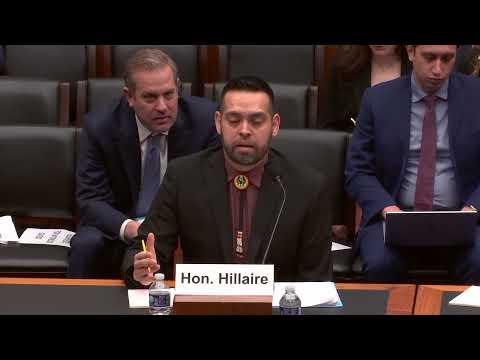
Arnold Hillier, a witness, said tribes and very small communities would benefit from more direct grant funding or tribal set-asides and from streamlined applications and reporting. "It can be strenuous on our team just to compile and gather the funding," Hillier said, citing the cumulative hurdles of local, state and federal requirements.
Mr. Buckley, a witness who said he relies on utility owners for technical detail, called grant applications particularly onerous. "The strings attached to grants and the list of requirements... are just too great," he said, adding that many small utilities lack the personnel to prepare grant submissions.
On program design, Mr. Matitic, a witness, recommended wider use of two existing mechanisms to reduce repeated application steps: WIFIA's master agreement approach, which he said can allow a single letter of interest and application to secure multi-year approvals spanning 10 to 15 years, and SRF programmatic financing, which some states already offer. "More widespread use of that mechanism would reduce some of the application requirements and bureaucracy," Matitic said regarding WIFIA.
No formal committee action or vote on changes was recorded during the discussion. The panel's comments focused on options for Congress and the EPA to consider, including lowering or subsidizing WIFIA application fees for small borrowers, expanding direct grant or tribal set-aside funding, simplifying grant application paperwork, and promoting programmatic financing and master agreements to reduce repetitive application work.
Committee members did not adopt or direct specific regulatory changes during the hearing; next steps and any formal proposals were not specified in the transcript.