House Transportation and Infrastructure Committee hearing stresses loan benefits of Clean Water State Revolving Fund

2574460 · March 11, 2025

Get AI-powered insights, summaries, and transcripts

Subscribe
AI-Generated Content: All content on this page was generated by AI to highlight key points from the meeting. For complete details and context, we recommend watching the full video. so we can fix them.

Summary

Witnesses told the House Transportation and Infrastructure Committee that the Clean Water State Revolving Fund’s low-interest loans can be leveraged to finance more projects than one-time grants, but acknowledged some rural communities still need grant assistance.

At a House Transportation and Infrastructure Committee hearing, committee members and witnesses debated whether the Clean Water State Revolving Fund (SRF), which provides low-interest loans to rural cities for water projects, should be converted into federal grants.

The issue matters because the SRF’s revolving-loan structure can multiply initial federal capital into larger pools for multiple projects, while one-time grants provide immediate relief but do not replenish a funding pool. An unnamed committee member asked witnesses to explain the trade-offs between converting SRF loans to grants and keeping the program as a loan revolving fund.

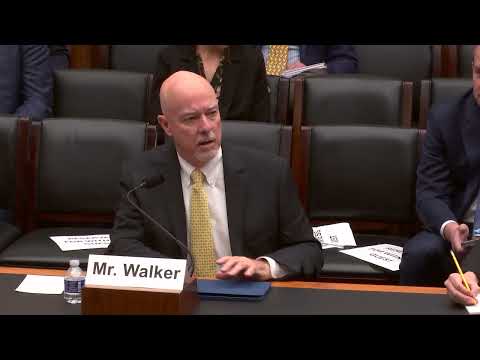
Mister Walker, a witness, defended the loan structure, saying its leverage is a central advantage. “You give me a $50,000,000 grant and I give away $50,000,000 — that’s it. But I can turn that $50,000,000 into $300,000,000 or $400,000,000 and it will revolve back and forth by leveraging,” Walker said.

Walker added that grants alone would not meet current needs: “Most of the time, the cost of projects now is so large that there’s not enough grant money in the world to deliver all those things.” He said SRF packages and subsidized loans can make projects more affordable and spread costs over time, although he acknowledged some rural communities still cannot afford needed projects and therefore require some grant support.

The discussion remained at the informational level: no motions or votes on changing the SRF’s federal structure were recorded during the exchange. Committee members pressed for clarification about how loan leverage works and for more detail on how grant funding could be targeted to communities unable to assume debt, but the transcript does not record further proposals or formal direction to staff.

Outcomes: The hearing produced a hearing record and witness testimony but no committee action to convert SRF funds to grants was taken or recorded.