Get Full Government Meeting Transcripts, Videos, & Alerts Forever!
Get email alerts on the Zoning And Hospital Property Transfer topic
No spam. Unsubscribe anytime.
Lake City and Lakeshore Hospital Authority begin Chapter 164 conflict talks over hospital property, downtown safety concerns raised
Summary
An initial Chapter 164 conflict-resolution meeting focused on whether the Lakeshore Hospital property has lost legal nonconforming status and on concerns about Meridian’s planned mental‑health use of the downtown hospital building, including security, policing and community compatibility.
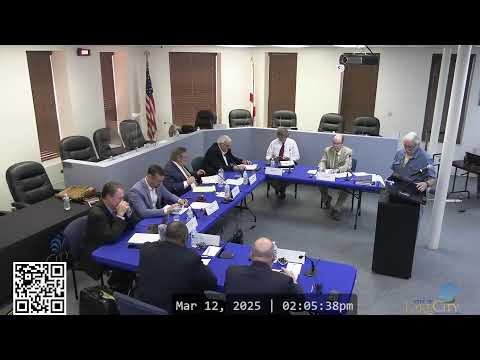
City of Lake City and Lakeshore Hospital Authority representatives met under Florida’s Chapter 164 process on Jan. 13 to assess a dispute over whether the former hospital property retains legal nonconforming status and to consider terms tied to a proposed transfer to Meridian.
The meeting, required under Chapter 164, Florida Statutes, opened with officials from the city and the authority describing competing concerns: the city cited public‑safety, fiscal and downtown‑compatibility risks tied to Meridian’s proposed mental‑health services for the main hospital building; the authority and Meridian emphasized security plans, continuity of health services and economic benefits.
Terrell Arline, special land‑use counsel to the Lakeshore Hospital Authority, summarized the procedural history: City Manager Don Rosenthal sent a letter dated Oct. 24, 2024, asserting the hospital had lost its legal nonconforming ("grandfathered") zoning status; the authority responded with legal analysis, and on Jan. 13 the authority adopted a formal resolution to initiate conflict resolution under Chapter 164. Arline said the process requires representatives to "discuss the issues pertaining to the conflict and an assessment of the conflict from the perspective of each governmental entity." (Arline)
Dale Williams, executive director of the Lakeshore Hospital Authority, told the panel the authority has maintained the property and pursued a buyer. He said the authority has been spending roughly $50,000 a month to maintain security and utilities on the campus while seeking a new operator, and that the authority’s agreement with Meridian has been approved by the authority subject to resolution of the zoning dispute. Williams said negotiators expect Meridian to create jobs — he cited an estimate of about 240 employees, roughly 80 of them new positions.
City staff and the mayor expressed concerns that Meridian’s proposed uses for the main hospital building — described in discussions as crisis stabilization units (CSUs), inpatient crisis programs and inpatient psychiatric beds — may not be compatible with the downtown land‑use mix of retail, restaurants, government offices, residences and passive recreation. City representatives raised three categories of concern: public safety (including recurring emergency responses), uncompensated fiscal burdens on taxpayers if the property is tax‑exempt, and general compatibility with the civic core.
Residents who spoke during public comment voiced location and safety concerns. Tim Atkinson, a Lake City resident and former behavioral‑health director, said CSUs are licensed under Florida Administrative Code chapter 65E‑12 and have security and operational standards that differ from general hospital care. Debbie Griffin, a downtown resident and business owner, said Meridian had discussed 30 "forensic beds" with an average stay she cited as about six months; she said fencing and outdoor secure recreation areas required for certain crisis settings could affect views and the public’s use of nearby parks. (Atkinson; Griffin)
Lake City Police Chief Ballmer outlined operational concerns for enforcement and first responders. Ballmer said the police department currently responds to the existing facility several hundred times a year and worried that expanded services could increase calls for Lake City officers even when patients are dropped off by residents of other counties. The chief asked for clarity about the proposed security model inside the building (orderlies or clinical staff able to de‑escalate) as distinct from perimeter alarms or off‑site monitoring. (Chief Ballmer)
Meridian’s counsel, David Evans, and Meridian representatives said the company plans a 24/7 on‑site security program and expressed willingness to coordinate with the police department, share information and discuss co‑responder or other collaborative models to reduce law‑enforcement burden. Meridian representatives said similar facilities in other Florida cities have not produced the kinds of safety problems the city fears and invited officials to tour Meridian sites. (David Evans)
Attorneys for both governmental entities told the meeting that the Chapter 164 initial session is intended to narrow issues, consider safeguards and, if possible, propose resolutions that could be adopted by each governing body rather than litigating. Suggestions made during the meeting included drafting specific security‑service definitions and responsibilities, having city and authority managers negotiate zoning‑related language, and preparing a draft resolution for consideration by each board.
No formal vote or final agreement was reached at the session. Participants agreed to short, focused follow‑up meetings: counsel recommended Meridian and city designees jointly define the type and duties of security personnel and to have the city manager and authority executive director continue negotiations on zoning and property lot issues.
The meeting record also noted that the hospital authority previously received requests from other public entities to acquire certain lots associated with the campus and that a state appropriation bill to help Meridian fund repairs and remodels is being tracked by the authority. Authority staff said that if a legislative appropriation is not finalized before an unresolved zoning dispute is settled, the appropriation may be dismissed.
The Chapter 164 process allows either further negotiations and a joint resolution or, if unresolved, litigation in circuit court; speakers repeatedly urged settlement to avoid intergovernmental lawsuits. The parties scheduled follow‑up work between managers, counsel and the police chief to define security measures and address policing and zoning concerns before returning to their respective governing bodies.
Ending: Officials framed the meeting as an initial step in the statutorily required conflict‑resolution process. City and authority counsel said they will try to draft concrete language on security and zoning safeguards for consideration by each governing body; if those efforts fail, the statute contemplates court review.