Get Full Government Meeting Transcripts, Videos, & Alerts Forever!
Get email alerts on the Veterans Claims Accreditation Protection topic
No spam. Unsubscribe anytime.
Committee advances bill to restrict unaccredited providers assisting veterans’ claims
Summary
The committee voted to release HB 31, which would add state remedies and restrictions targeting for-profit companies that assist veterans with VA disability claims without VA accreditation.
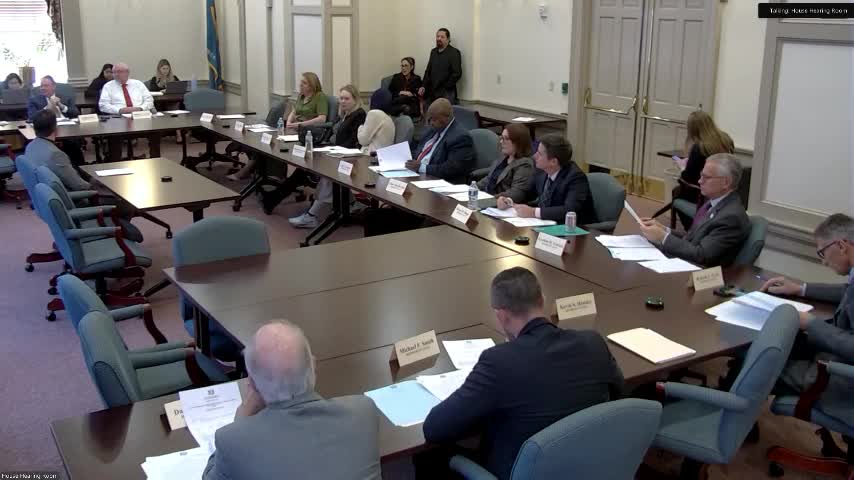
The House Economic Development, Banking, Insurance, and Commerce Committee on Oct. 12 released House Bill 31, legislation that would create state-level remedies and restrictions aimed at for-profit businesses that assist veterans with Department of Veterans Affairs disability claims without VA accreditation.
Sponsor Representative Pulaski and veteran-service leaders described an alleged pattern of commercial firms charging large fees to prepare and file claims or to market services to veterans while not meeting VA accreditation requirements. Witnesses from veterans’ service organizations — including representatives of the Veterans of Foreign Wars, the Disabled American Veterans and the Delaware Commission of Veterans Affairs — urged passage without amendment, arguing accredited VSOs perform a “cradle-to-grave” representation that protects veterans and is available at no cost to the veteran.
Proponents cited a federal court case, Veterans Guardian v. Plankin, and federal statute language in Title 38, U.S. Code, regarding accreditation and the prohibition on acting as an accredited agent without authorization. They said those authorities distinguish protected speech from prohibited conduct and support state remedies for firms that they say mislead or charge veterans for services that accredited VSOs provide free.
Representatives of Veterans Guardian and its outside counsel urged caution about eliminating private options. Witnesses for the company said some veterans choose to pay for assistance, that firms transparently disclose fees and that federal-level staffing reductions at the VA may make private options necessary for some claimants. Veterans Guardian’s COO said the company does not act as a VA-accredited agent or attorney and that company practices are constitutional; he also said litigation challenging certain state laws is pending.
Public comment included veterans who said private assistance had expedited their claims and national trade-group representatives who urged regulated private alternatives rather than a ban. State veteran-service leaders, including the director of the Delaware Commission of Veterans Affairs, described how the VA system assigns claims to the Veterans Benefits Administration for adjudication and said accreditation requires training and a background check; they also said local VSO capacity varies by program and that delays in adjudication are often at the federal level.
After the witness panel and public comment, the committee approved a motion to release HB 31 by roll call; leadership announced the bill had obtained the required number of votes and was released from committee.
Ending
Committee members asked for time after the hearing to review written claims and correspondence submitted to the committee about specific companies. The sponsor and proponents urged that the committee move the bill forward with no amendments; proponents said amendments offered by some witnesses could allow companies to exploit veterans while avoiding the VA accreditation process. The committee released the bill; future amendment or votes could appear on the House floor calendar.