Get Full Government Meeting Transcripts, Videos, & Alerts Forever!
Get email alerts on the Finance— Taxonomy topic
No spam. Unsubscribe anytime.
Panel weighs bill to let South Carolina towns with no millage adopt property tax capped at one-third of general fund
Summary
A Senate subcommittee heard a bill and amendment options that would let municipalities without an operating millage impose one that could generate up to one-third of prior-year general fund expenses; stakeholders debated timing, referendum requirements and protections for towns that previously repealed millage.
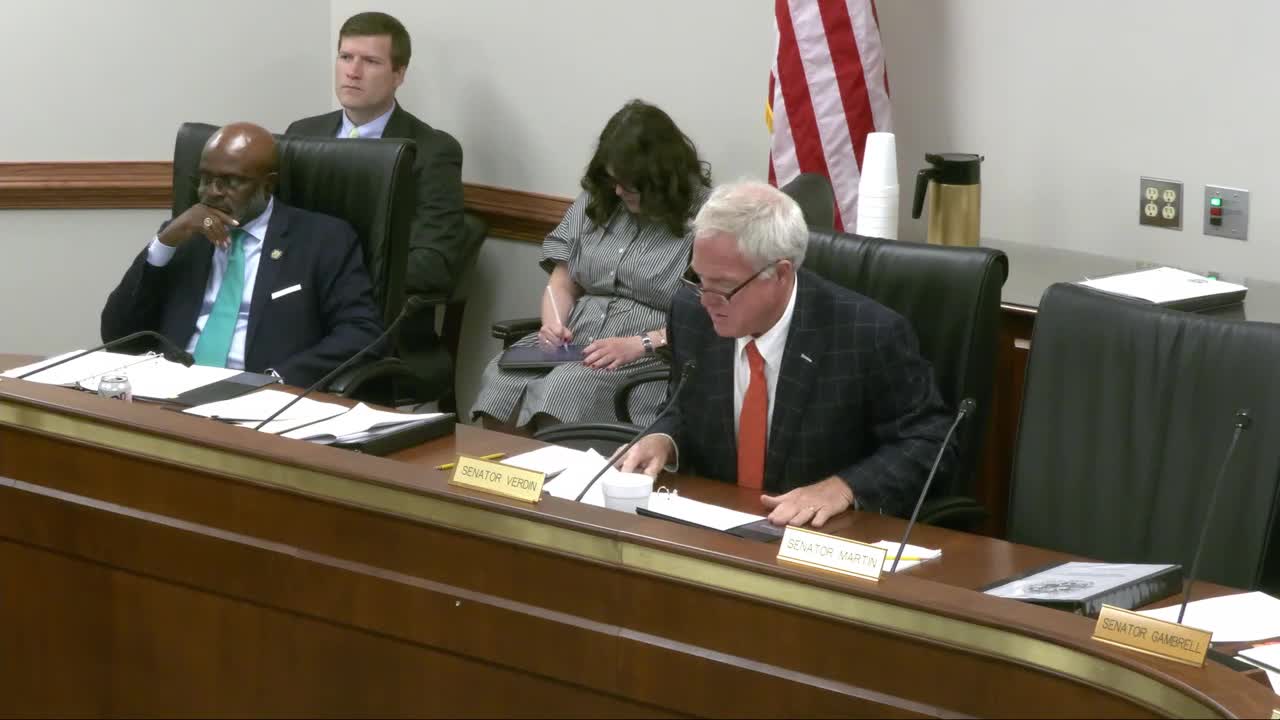
A South Carolina Senate Finance subcommittee on Oct. 12 heard testimony on a bill to clarify that municipalities with no operating millage may adopt an operating millage that would be limited to raising no more than one-third of the municipality’s previous fiscal year general fund expenses.
The bill, described by staffer Grant Gibson as “a bill dealing for cities that have no millage rates,” would let a city that had no operating millage on Jan. 1, 2025 — or a city incorporated after that date — impose an operating millage capped at funding one-third of prior-year general fund expenses. Gibson said the measure also would allow a municipality that previously repealed its millage to reimpose the former rate “plus the cumulus amount of the increase that would have been allowed since” the repeal, using the CPI and population adjustments.
The measure aims to resolve legal uncertainty that has kept some towns from imposing property taxes even though municipal leaders say they need the revenue. Erica Wright of the Municipal Association of South Carolina told the subcommittee the association identified the item as a 2025 priority and said the state has “212 municipalities that have an operating millage” while “59 of our cities and towns do not have an operating millage.” Wright said the bill is intended to “clarify in law what we believe we can already do.”
Former Pelser mayor and current state Representative Blake Sanders, who said he represents District 9 and works with small towns as a landscape architect, told the panel the bill would give towns like Pelser and Bethune a means to fund police, fire, roads and parks with a lower reliance on fees. “I believe it would be in their best interest, to have this opportunity for those elected officials to establish, a third of that general fund,” Sanders said.
Senators on the panel pressed several technical and policy questions. Senator Campbell said the measure grew from difficulties faced by textile towns that lost mill-related revenue and by subsequent statutory changes, referencing Act 388. Panel members debated three categories in the draft language: (a) towns that have never had an operating millage; (b) towns that previously had and then repealed a millage (citing Edgefield as an example); and (c) newly incorporated municipalities.
A recurring concern was timing and accountability. Representative Sanders proposed an approach to ensure voter involvement, suggesting that an elected body should not implement a new millage until after the next general election so voters would have an opportunity to respond. Sanders said: “An elected body could vote to institute a millage, but it would not occur until the next general election had occurred.” Erica Wright said she needed to consult her membership on that suggestion, noting some communities said they were “crying for help now” and might not be able to wait years for revenue.
Subcommittee members also asked how the measure would treat new municipalities that have no prior-year budget. Grant Gibson and others said the amendment before the committee addresses that by using projected budgets prepared as part of the incorporation documentation and charter process.
Panel members agreed to continue work in subcommittee and to develop amendment language. The committee asked staff and the Municipal Association to craft alternatives — including the referendum timing language suggested by Sanders — and to consult affected towns (including the town of Edgefield) before the next meeting. No formal committee vote or final action was recorded at the hearing.
The discussion included references to an attorney general’s opinion that some members said has created hesitancy among municipalities to impose millage without an explicit statutory authorization. The bill’s sponsors and supporters characterized the draft as a clarifying statutory fix rather than a new tax authority beyond what supporters believe municipalities can already do.
What happens next: staff and stakeholders will draft and circulate amendment language; the subcommittee will reconvene and may move a recommendation to the full committee once the members have reviewed revised text and feedback from the affected municipalities.